
I went to a wedding in northern Greece this summer and came away thinking about something much bigger than a wedding.
Marina and Yanni are Greek Americans, descendants of families whose stories stretch across Pontos, Asia Minor, Chios, Lesvos, the Peloponnese and Macedonia. I have known Marina’s mother, Julie, for years and consider her family my family, which made being there deeply personal.
But what moved me most was what happened on the dance floor.
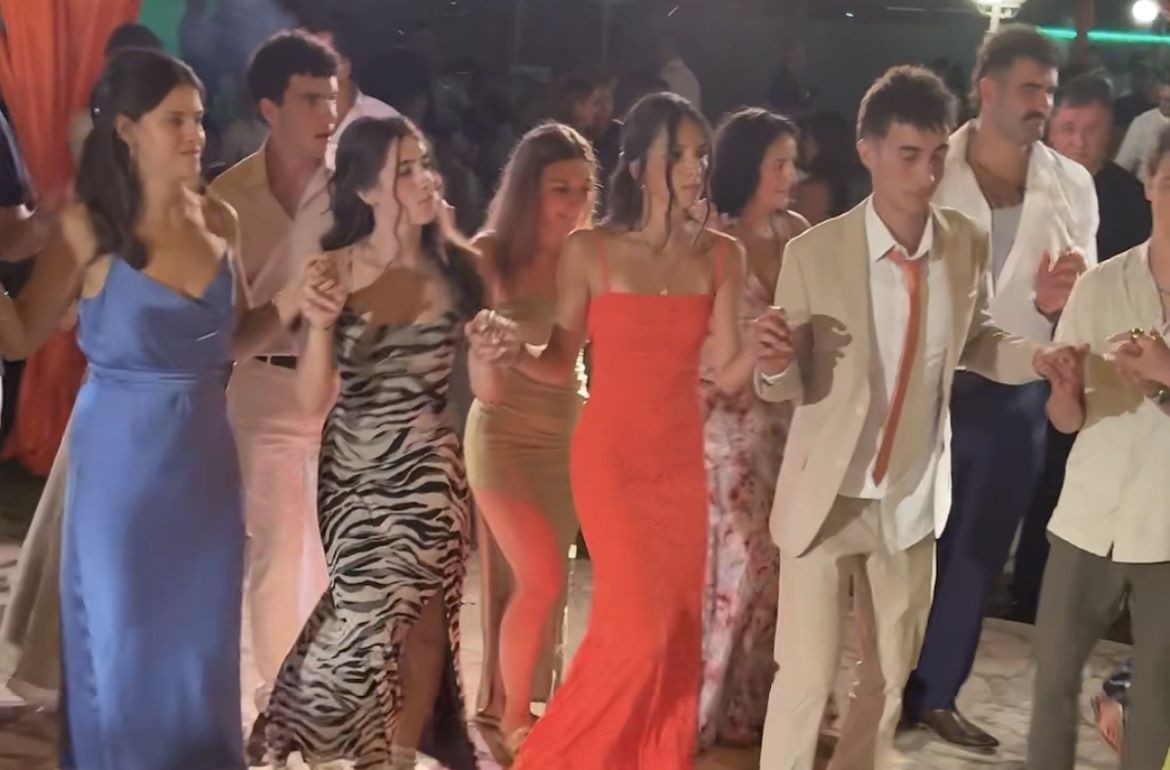
It was filled with young Greek Americans—many third and fourth generation—dancing until the early hours of the morning. They knew the steps. They knew the songs. They formed circles, grabbed each other’s hands and danced traditions that had traveled through their families for generations.
I shared some of these moments from the wedding on my personal Instagram, and the videos tell this story better than words ever could. Watch them here.
I stood there watching them and thought: This is how culture survives.
For some of these families, the places their ancestors once called home no longer even exist in the same way. Their grandparents and great-grandparents came from Pontos and Asia Minor, from communities destroyed by genocide, forced displacement and the population exchange. Others left Greek villages because of poverty, war or simply the promise of something better in America.
They crossed oceans. They assimilated. Their children became Americans, and their grandchildren and great-grandchildren became even more American.
And yet, somehow, the circle remained unbroken.
A song survived. A dance survived. A recipe survived. A few words of Greek survived. A grandmother’s story survived.
And generations later, their descendants brought all of it back to Greece and danced with it.
There is something extraordinary about that.
Maybe it struck me so deeply because I was one of the lucky ones.
I had my own Greek summers growing up in Chania, Crete. Those summers gave me a connection to Greece that no Greek school textbook ever could.
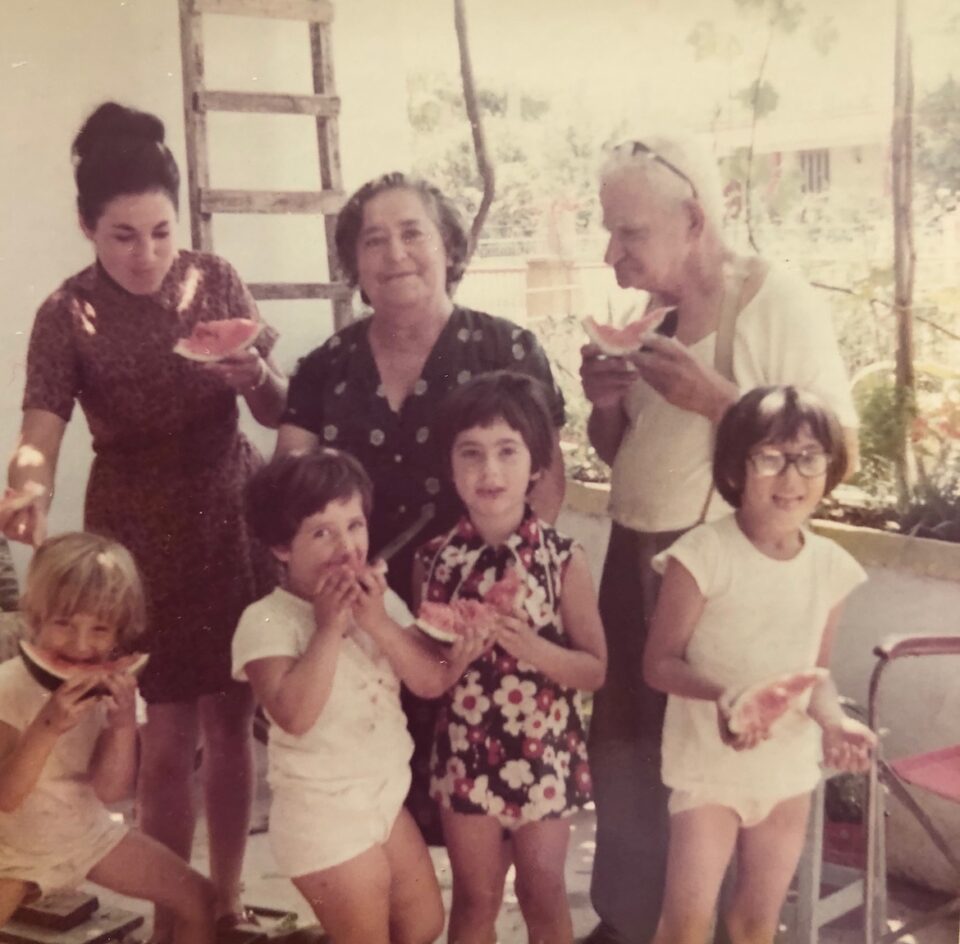
I remember eating watermelon on the veranda with my first cousins who had come from Australia, all of us children of the Diaspora meeting in the place our families had started.
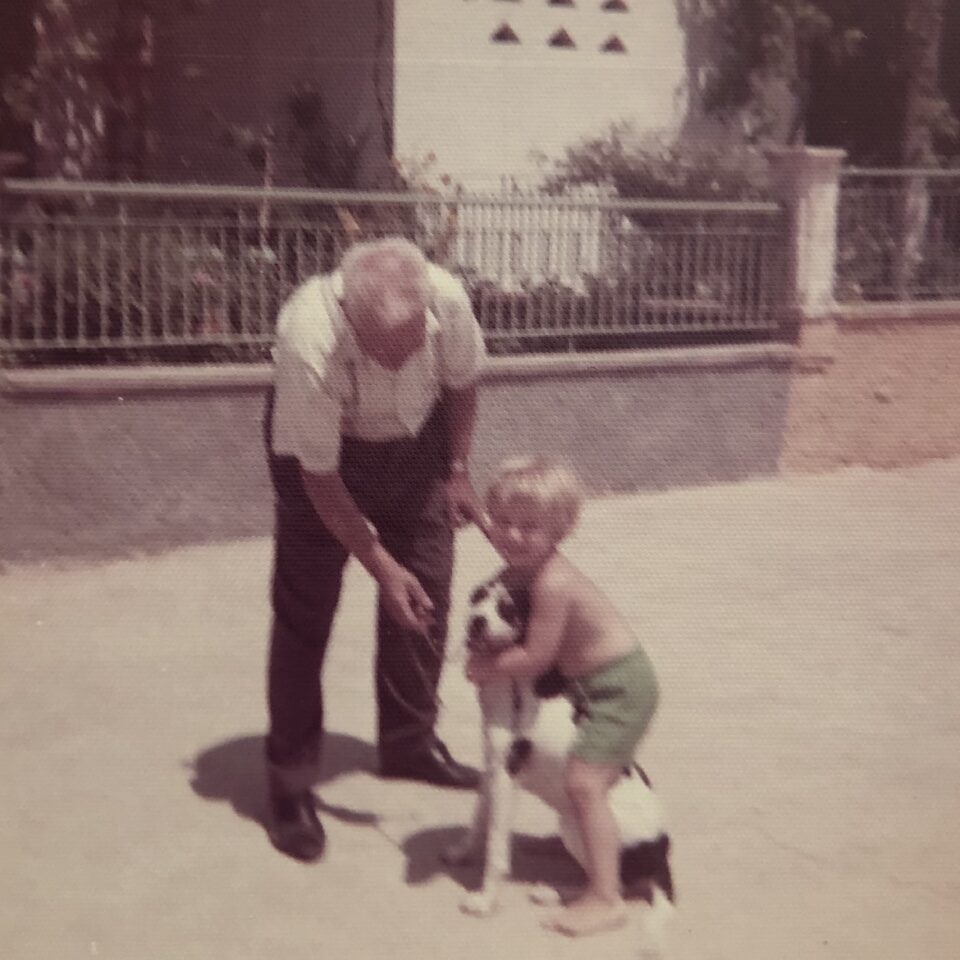
I remember my first dog, Bella. I remember sitting with my grandparents and hearing their stories—not as history lessons, but as family stories told by the people who had actually lived them.
At the time, I didn’t understand that these ordinary moments were building something inside me. I was simply a kid spending the summer in Crete. At the time it may have seemed like a foreign place to me, but eventually I embraced it as home.
Looking back, I realize those summers were teaching me where I came from.
And this summer, I found myself smiling as I watched friends doing the same thing for their own children.
Bill and Elena from Chicago brought their teenagers to Kefalonia and Rhodes, places embedded in their family heritage. Troy and Annika brought their three kids to Greece and introduced them to islands they had never experienced before. Diana brought her daughters to Paros, and one of them later described it on Instagram simply as the “best summer ever.”
I loved seeing those posts.
Because that is how the next Greek summer begins.
Not every child of the Diaspora has a grandparents’ house waiting for them anymore. Not everyone has cousins in the village or a yiayia cutting watermelon on the veranda. Families scatter. Houses are sold. Grandparents leave us. With every generation, the physical connections can become a little more fragile.
But that doesn’t mean the connection has to end.
We can build new ones.
A child doesn’t necessarily need to inherit our Greek summer. They need the chance to discover their own.
That might mean returning to the island where their great-grandfather was born. Or it might mean discovering an island where nobody in the family has ever set foot. It might be a panigyri, a plate of tomatoes and feta after the beach, learning a dance, hearing Greek all around them or simply staying out until midnight with cousins and friends.
These experiences become memories. And memories become attachment.
We talk constantly about preserving Hellenism in the Diaspora. We build churches and cultural centers. We create organizations and Greek schools. All of that matters.
But culture ultimately survives because people live it.
So take your children to Greece.
Even if the village house is gone. Even if the grandparents who once waited for you at the airport are no longer there. Even if the cousins have scattered across the world. Even if your children speak imperfect Greek—or none at all.
Create your own Greek summer.
Rent the little house. Find the local panigyri. Let them stay out too late in the village square. Let them hear Greek around them at the bakery in the morning. Teach them one dance. Introduce them to the food, the music, the landscape and the beautiful chaos of a place that belongs to them in some small way, even generations later.
It doesn’t have to look like the Greek summers we remember.
Give them their own.
Because connection doesn’t survive automatically. Someone has to make the decision to carry it forward.
My grandparents did that for me in Chania. My friends are doing it for their children today. And at Marina and Yanni’s wedding, I watched a dance floor full of third- and fourth-generation Greek Americans show me what can happen when we do.
Their ancestors carried Greece across oceans.
Now it is our turn to make sure the next generation knows the way back.