
The legendary singer recorded more than 1,200 songs during a career spanning seven decades and formed one of Greek music’s most celebrated partnerships with Manolis Chiotis.
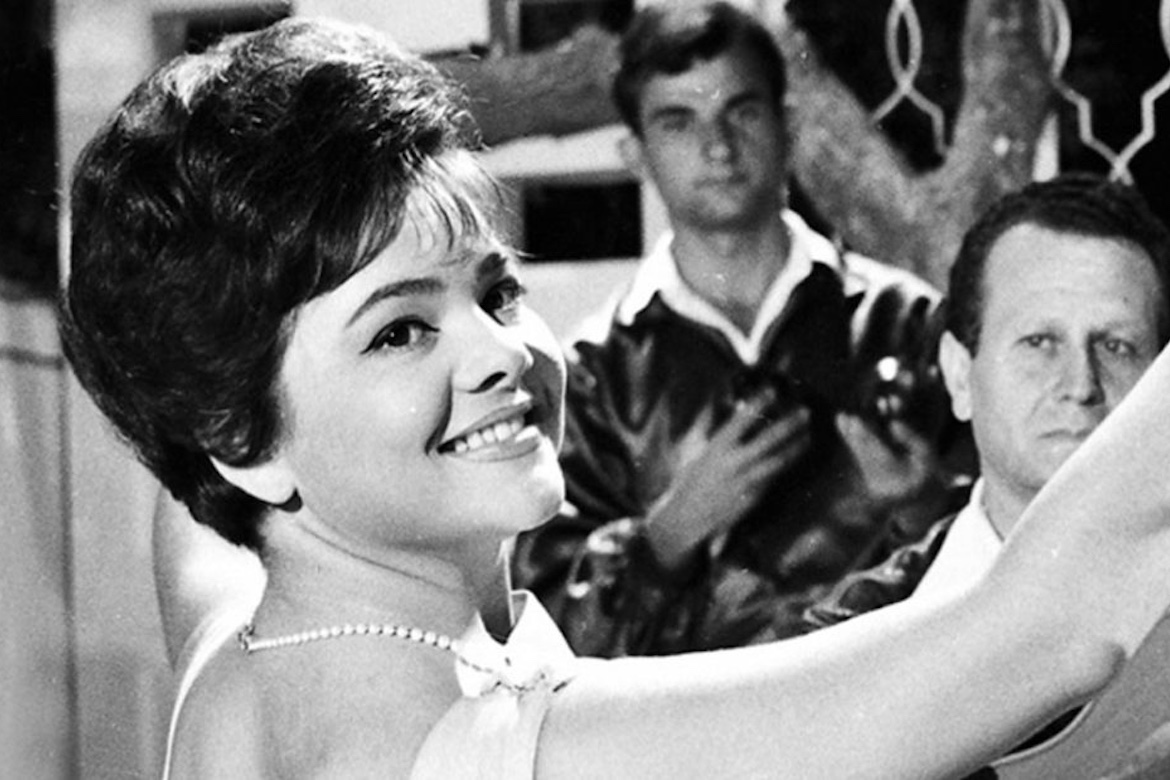
Mary Linda, one of the most distinctive and enduring voices in the history of Greek popular music, died Wednesday morning in Athens. She was 90.
The singer had been living at the Athens Nursing Home during the final years of her life and had recently been hospitalized. According to ERT News, she died from pathological causes at approximately 5 a.m. on July 22.
Born Maria Dimitropoulou on November 9, 1935, in Pyrgos in the western Peloponnese, Linda moved with her family to the Athens neighborhood of Kolonos when she was a young child.
Her career began at the age of seven, when she persuaded her parents to take her to a talent competition organized by filmmaker and poet Orestis Laskos at the Alkazar theater. After hearing her sing, Laskos gave the young performer the stage name Mary Linda.
She soon began appearing in the variety theaters, cabarets and entertainment venues of postwar Athens. At the age of 11, she met bouzouki virtuoso and composer Manolis Chiotis, beginning a personal and professional relationship that would become one of the most important partnerships in modern Greek music.
Together, Linda and Chiotis helped define the polished and cosmopolitan sound of Greek popular music during the 1950s and 1960s. Her clear, agile voice and commanding stage presence became a natural counterpart to Chiotis’ innovative bouzouki playing and arrangements.
Their recordings and live appearances brought Greek laïkó music to theaters, nightclubs, cinemas and audiences far beyond Greece. The two were married from 1959 until 1966.
Linda recorded more than 1,200 songs and collaborated with many of the leading figures of 20th-century Greek music, including Vassilis Tsitsanis, Yiannis Papaioannou, Giorgos Mitsakis, Mikis Theodorakis and Manos Hadjidakis.
Her first recording under her own name, Kostas Kaplanis’ “Irthe o Cheimonas,” was released in 1953.
Among the songs closely associated with her voice are “Perasmenes Mou Agapes,” “Iliovasilemata,” “De Thelo Pia Na Xanarthis,” “Esi Eisai I Aitia Pou Ypofero,” “Laos kai Kolonaki,” “To Teleftaio Potiraki,” “Myrtia,” “Rodostamo,” “An Thymitheis To Oneiro Mou” and “Margarita Margaró.”
From 1964 to 1967, Linda and Chiotis worked extensively in the United States, performing for Greek diaspora audiences in cities including New York and Chicago.
Their popularity was also amplified by the Greek cinema of the era. Linda’s musical performances appeared in dozens of films, frequently alongside Chiotis. Her Finos Film appearances included O Atsidas, O Dimos apo ta Trikala, O Filos Mou o Lefterakis and I Villa ton Orgion.
Although her name remained closely connected with Chiotis, Linda sustained a long and successful career following the end of their marriage and professional partnership. She continued performing in Greece and abroad and later appeared alongside leading singers from younger generations, including Haris Alexiou, Glykeria and Anna Vissi.
Greek Culture Minister Lina Mendoni described Linda as one of the most expressive voices in the history of Greek song, saying her talent and distinctive interpretations had left an indelible mark on the country’s musical history.
“Life has flowers and thorns,” Linda once said in a reflection preserved in her Finos Film biography. “There is nothing I did not do, nothing I missed, and I enjoyed it all.”
Mary Linda leaves behind a vast recorded legacy and a voice that remains inseparable from one of the most transformative eras in Greek popular culture.
It is one of the songs most closely identified with Mary Linda and features her performing with Chiotis in the 1961 film Φτωχαδάκια και Λεφτάδες. That makes it much stronger for the obituary than a modern concert recording or a static-image audio upload: readers see Linda during the partnership and period that defined her career. The music was written by Chiotis, with lyrics by Eftychia Papagianopoulou.