
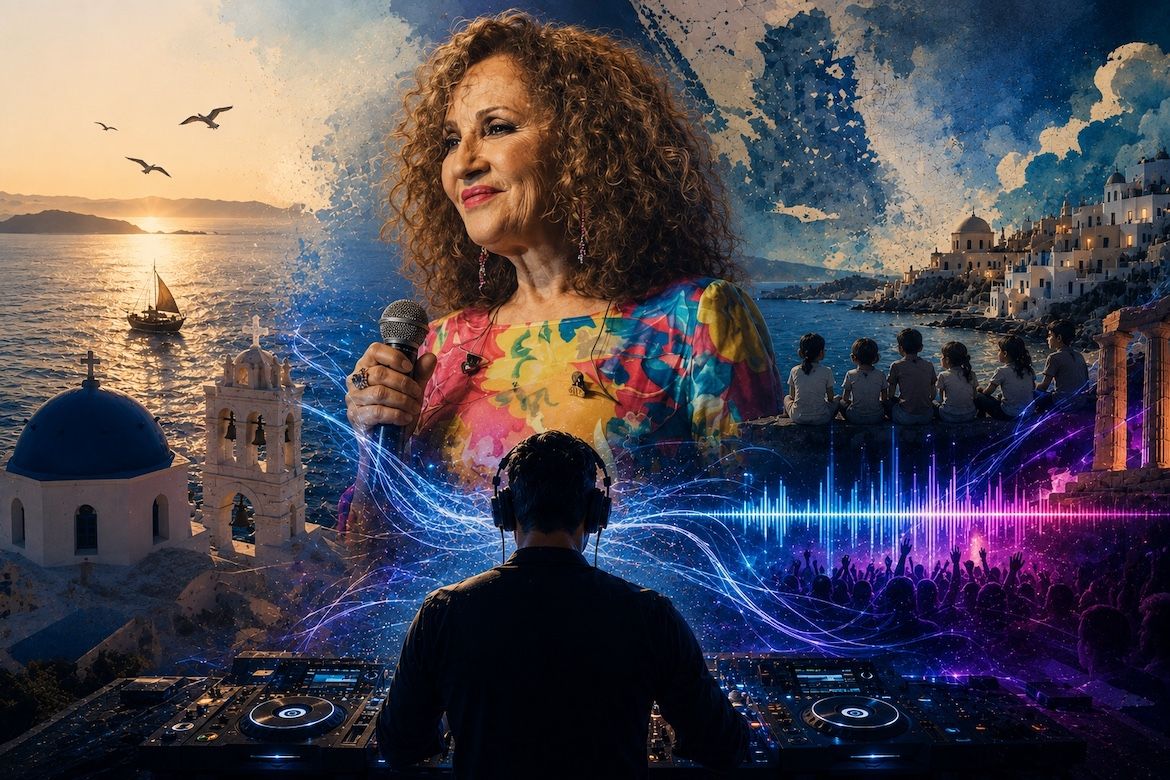
There are songs you don’t learn from Spotify.
You inherit them. They enter your cultural DNA while your mother is cooking. Or you hear them again and again at weddings or celebrations, or on your summer pilgrimage to visit the family in Greece.
They become part of you before you even know what they mean.
“Mes Tou Aigaiou Ta Nera” — “In the Waters of the Aegean” — is one of those songs that I’ve been listening and dancing to all my life.
It is a traditional island song, but that almost sounds too small for what it carries. Because this is not just a song about the sea. It is a song about distance. Longing. Memory. Return. The emotional geography of every Greek who has ever left one place while still belonging to it.
At one point, the song becomes a prayer to the Panagia (Virgin Mary) to calm its waters so the “ξενάκια” can come home — the foreigners, the ones who are far away, the children scattered across the world.
That word alone can break you if you let it. Ξενάκια.
It is tender and painful at the same time. It carries the whole Greek immigrant story in one word. The ones who left. The ones who had to leave. The ones who were born elsewhere but still feel something ancient pulling them back across the water.
That is why this song has always stayed with me.
«Αιγαίο μου, γαλήνεψε τα γαλανά νερά σου, να ’ρθούνε τα ξενάκια σου στα ποθητά νησιά σου.»
“Aigaio mou, galínepse ta galaná nerá sou, na ’rthoune ta xenákia sou sta pothitá nisiá sou.”
“My Aegean, calm your blue waters, so your faraway children can return to your beloved islands.”
A few years ago, I had the unexpected privilege of producing a contemporary version of “Mes Tou Aigaiou Ta Nera”.
When the pandemic brought the world to a standstill, borders closed, flights were canceled and millions of Greeks living around the world came to a painful realization: there would be no Greek summer that year.
No return to the village. No crowded family tables. No island sunsets, village festivals or afternoons by the sea.
As someone who has spent most of my life telling stories—through writing, publishing, film and community-building—I found myself searching for a different way to respond.
I asked a simple question: How could we bring Greece to people who could not come to Greece?
Music became my next story.
I had the privilege of working with Glykeria—a voice that, for so many of us, carries generations of memories inside it—and together with her talented team, we created a contemporary version of Mes Tou Aigaiou Ta Nera.
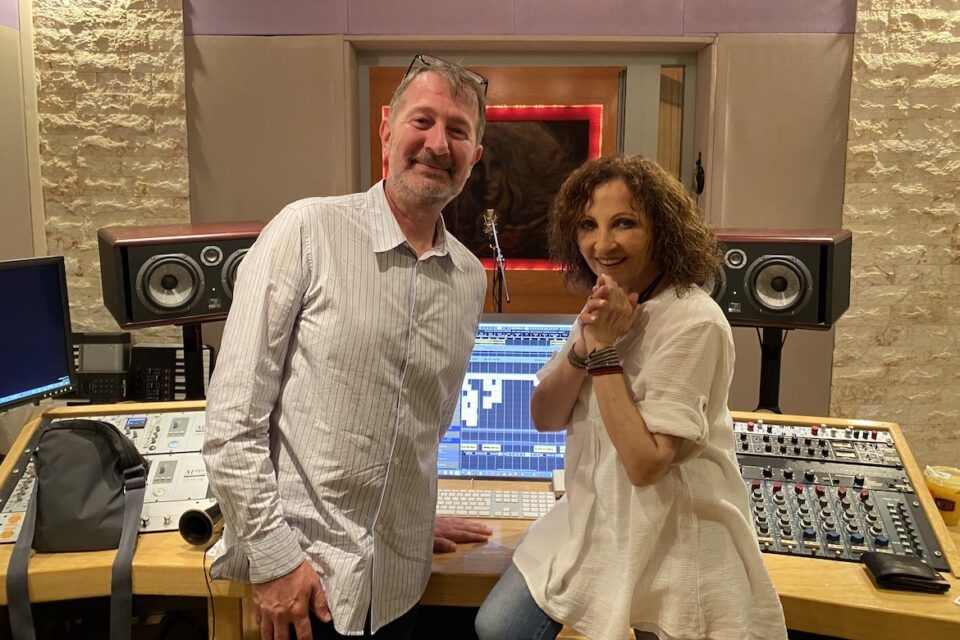
Through the Greek America Foundation, we invited people around the world to send us photographs of their favorite Greek summer memories.
Hundreds of images poured in from across the diaspora: family gatherings, village festivals, grandparents’ homes, fishing boats, beaches, churches and island sunsets. Those photographs became the heart of a music video—a virtual Greek summer created for people who could not physically be there.
For a few minutes, on computer and phone screens around the world, people were able to return to Greece through music, memory and emotion.
The project also raised thousands of dollars to support Greece’s COVID recovery efforts.
It was our response to an unprecedented moment: a way to bring people closer to Greece when the world had forced them apart.
Now, that song has found another life.
The incredibly talented DJs The Mode, together with their creative partner Northsider Music, have taken the foundation of the original track — Glykeria’s unforgettable vocals — and built something completely new around it.
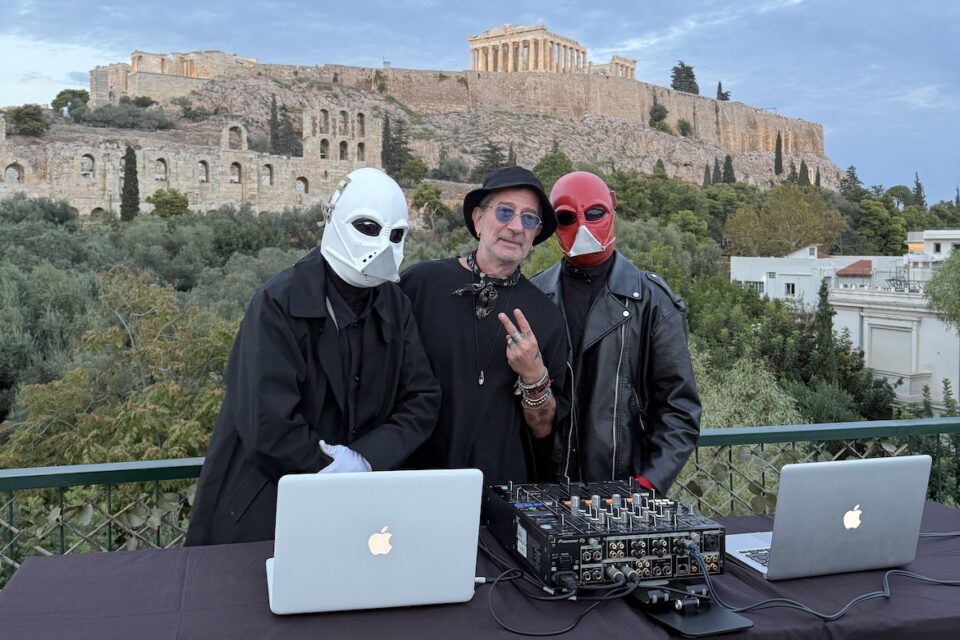
A melodic techno version.
Different. Unexpected. Contemporary. Completely their own.
And yet, somehow, still connected to the same heartbeat.
Sony Music has now added its influence and reach to the project, helping bring this new version into the world and onto new dance floors, new playlists and new spaces where traditional Greek music might not ordinarily appear.
And that is the part of this story that matters most.
Because culture is not supposed to sit still.
It is not a museum object. It is not something we lock behind glass and visit politely once a year. Culture is alive only when it is moving. When it is being touched, questioned, remixed, reinterpreted and passed forward.
Sometimes it lives in a village panigyri.
Sometimes it lives in your mom’s kitchen.
Sometimes it lives in a nightclub at five in the morning, wrapped around a beat nobody saw coming.
That does not make it less Greek. It makes it alive.
This new version of “Mes Tou Aigaiou Ta Nera” is not a replacement of the old song. It is a continuation. A conversation between generations. A way of honoring where we come from while refusing to pretend that culture only belongs in the past.
At the center of it all is still the same DNA.
The same Aegean. The same longing. The same scattered children trying, in one way or another, to find their way home.
And maybe that is why this song still matters.
Because every generation has its own waters to cross. Every generation has its own distance to explain. Every generation has to decide whether it will simply preserve what it inherited, or breathe new life into it.
This time, the Aegean came back with a new beat.
Have a listen on YouTube here or stream on Spotify here.
PS: If you’re a producer or DJ and would like the extended track, please message me via Instagram and I’ll make sure we get you the files to add to your collections to help perpetuate the jam!
The Greek America Foundation’s 2020 project with the original electronic dance version, with the video collage mentioned above is here to view.