

Greece recorded the highest percentage of weekend workers in the European Union in 2023, according to new data published by Eurostat in May of this year.
The figures show that 32.3% of employed people in Greece worked during the weekends that year, a number that’s significantly above the EU average of 22.4%.
Greece was followed by Italy (30.9%) and Cyprus (26.4%) as the countries with the highest rates of weekend employment. The lowest weekend work rates were found in Lithuania (3.0%), Poland (4.5%), and Hungary (6.6%).
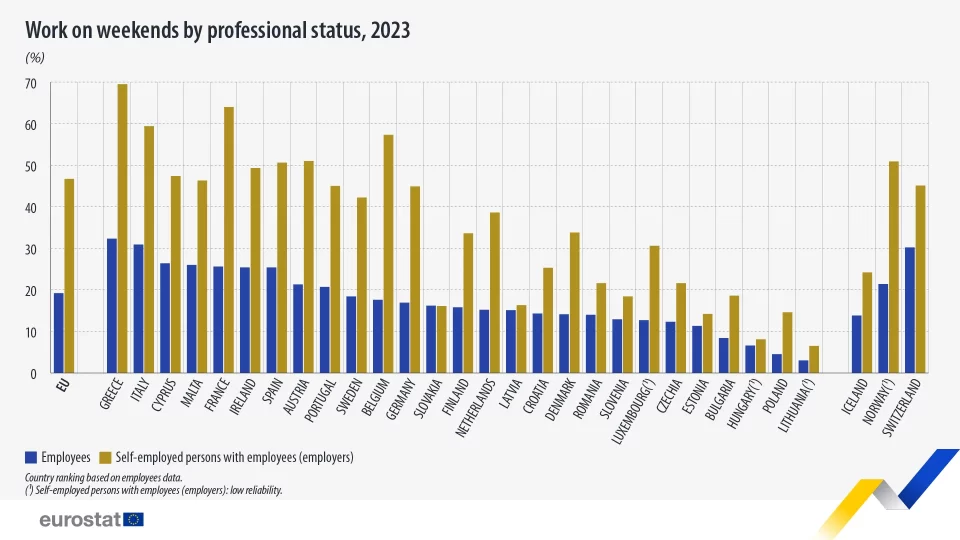
Eurostat’s EU wide statistics showed that working on weekends was more common among skilled agricultural, forestry and fishery workers (49.5%), service and sales workers (48.9%) and people with elementary occupations (26.7%). While 19.2% of employees usually worked during weekends, this was also the case for 46.7% of self-employed persons with employees (employers) and 37.8% of self-employed people without employees (own-account workers).
Weekend work in Greece is especially prevalent in the retail, service, and tourism sectors, where shop employees, waiters, and drivers are familiar with the extended hours demanded during peak season. It is also widespread in agriculture, which relies heavily on seasonal labor to produce many of the goods for which the country is known. Additionally, Greece’s approximately 800,000 freelancers also work outside standard schedules, contributing further to the country’s high weekend employment rate.