


Deloitte’s 14th annual Global Gen Z and Millennial Survey has given an updated portrait of the Greek workforce, based on the views of 424 respondents. Their answers show young Greeks are financially and mentally stressed, look to their friends and family for a sense of identity, and consider that work must align with their ethics and beliefs.
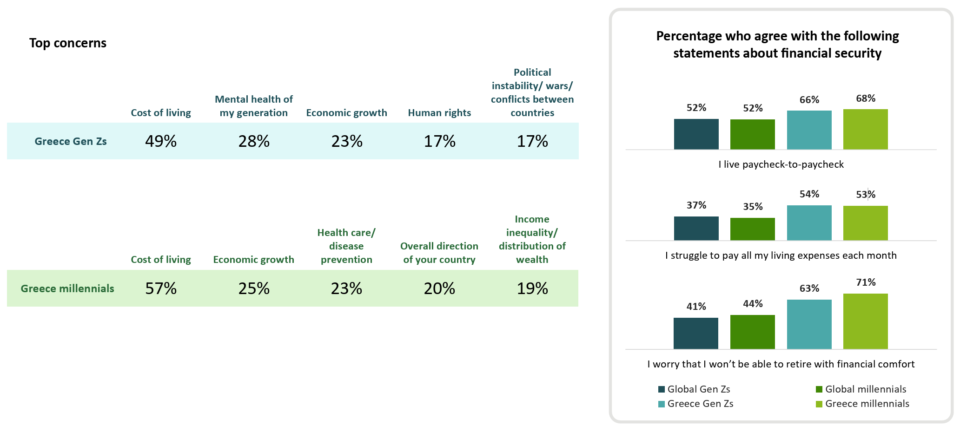
The economic reality for young Greeks continues to be stark. 66% of Gen Zs and 68% of Millennials in Greece are living paycheck-to-paycheck—figures that drastically exceed the global average of 52%. Young Greeks are also worse off than their global counterparts as they struggle to pay their living expenses and worry they won’t be able to retire in comfort.
Source: Deloitte Global 2025 Gen Z and Millennial Survey
While the cost of living is a top concern for both Gen Zs and Millennials in Greece, a large percentage of Gen Zs also feel that their financial hardship is fueling a mental health crisis for their entire generation.
Source: Deloitte Global 2025 Gen Z and Millennial Survey
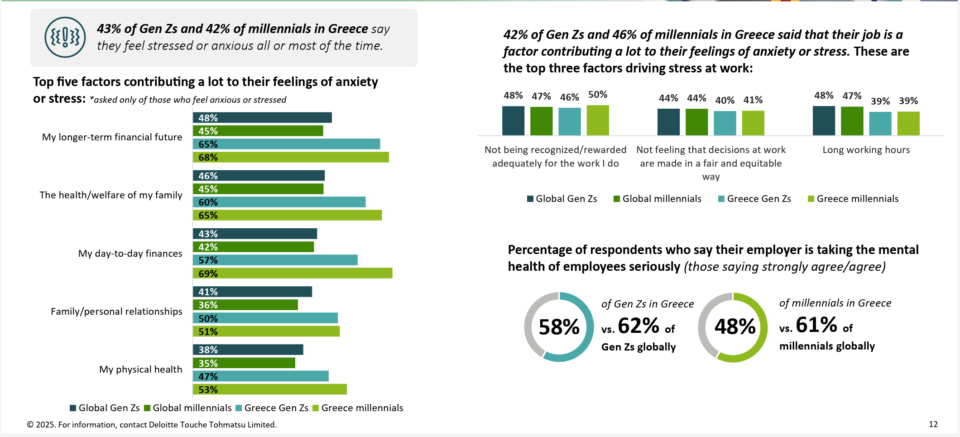
43% of Gen Zs and 42% of Millennials in Greece say they feel stressed or anxious all or most of the time. Overall, Greek Gen Zs and Millennials are much more stressed about their finances, family, personal relationships and physical health than the global average.
58% of Gen Zs in Greece say that their employer is taking the mental health of employees seriously (vs. 62% globally), but Millennials in Greece are finding the workplace environment tougher as only 48% believe this to be true (vs. 61% of Millennials globally).
Source: Deloitte Global 2025 Gen Z and Millennial Survey
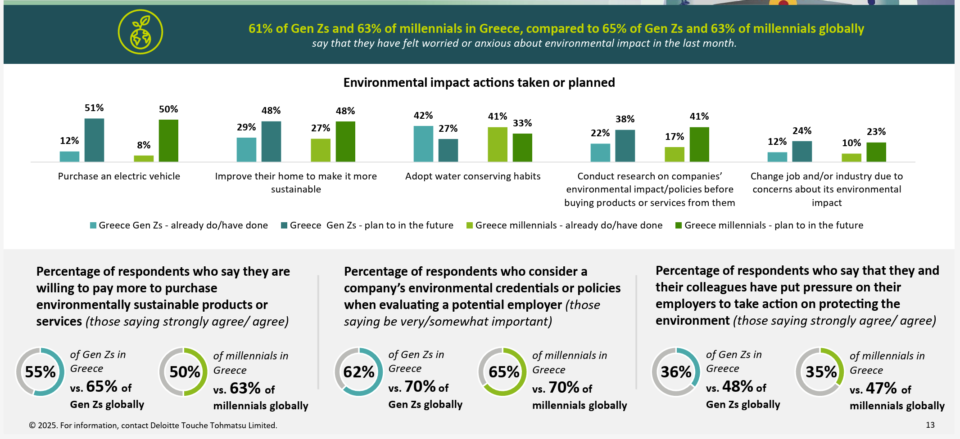
Adding to young Greeks’ stress is anxiety about the environment. Though Greek Gen Zs and Millennials experience similar levels of anxiety over the environment as their counterparts around the world, their financial situation means that they are less willing to pay more for environmentally sustainable products and services. Furthermore, they are less likely to consider a company’s environmental credentials when evaluating a potential employer or to put pressure on employers to take environmental action compared to the global average.
Source: Deloitte Global 2025 Gen Z and Millennial Survey
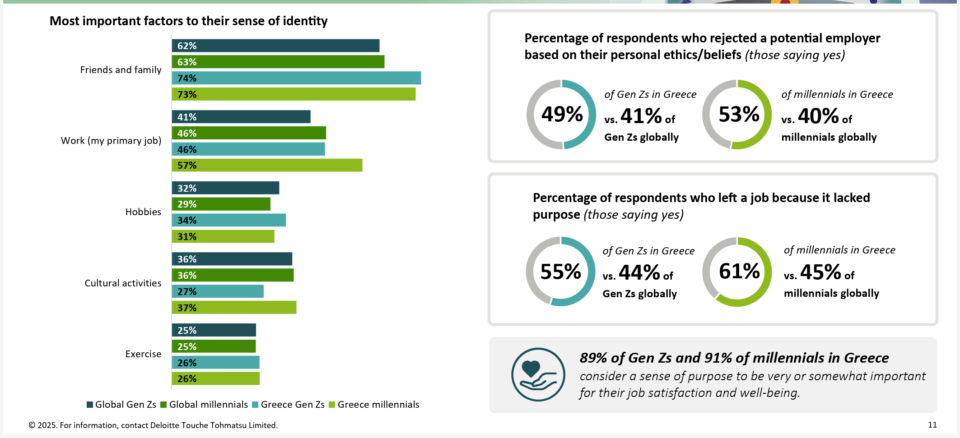
The Deloitte survey also highlights a fundamental difference in identity amongst young Greeks compared to the global average. Though work isn’t the defining pillar of their lives for Gen Zs and Millennials, young Greeks seem to place even more importance on friends and family. Greek Gen Zs and Millennials are also more likely to reject a potential employer based on their personal ethics or beliefs, or because a job lacks purpose.
Source: Deloitte Global 2025 Gen Z and Millennial Survey
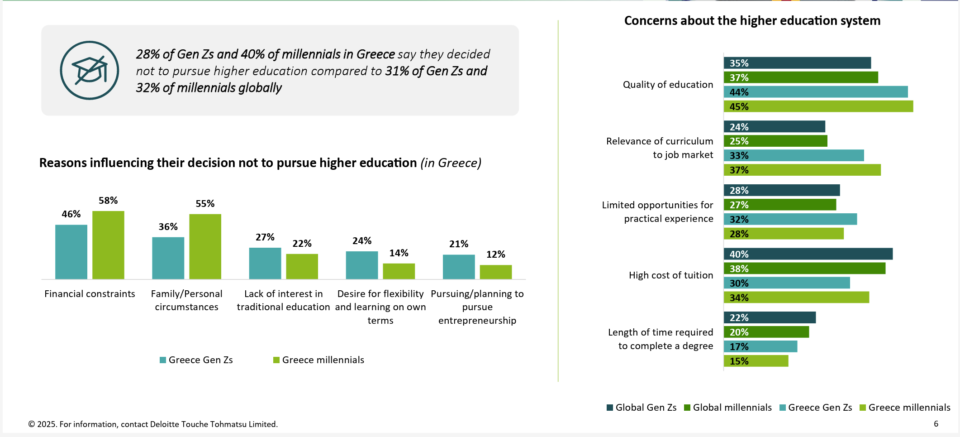
Greek Millennials are much more likely to decide against pursuing higher education due to financial constraints than Gen Zs. Both Greek Gen Zs and Millennials express concern regarding the country’s higher education system, specifically citing the quality of education and the curriculum’s relevance to the job market as major issues.
Read the full Global and Greek surveys here.