
This week, New York City Mayor Zohran Mamdani’s administration launched its Immigrant Heritage celebration—a citywide initiative honoring the immigrant communities that have shaped New York and continue to power its economy, neighborhoods and culture.
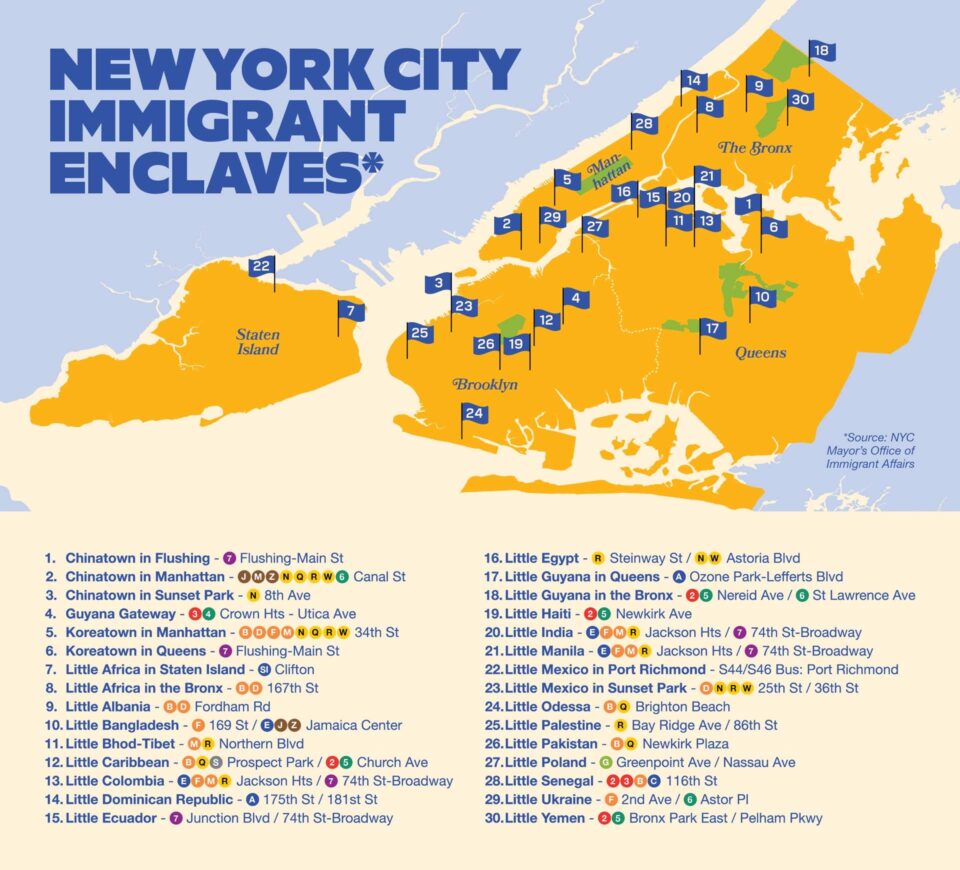
As part of that campaign, the city released a map and a series of illustrations highlighting what it calls New York’s immigrant enclaves.
It was exciting to see this great city continuing doing what it’s been doing, since its founding– welcoming people from all corners of the planet. Mayor Mamdani was showing what the world already knows– New York is indeed, the capital of the world.
But for for many New Yorkers, something immediately stood out.
Little Italy wasn’t there. Several historic Orthodox Jewish neighborhoods weren’t there.
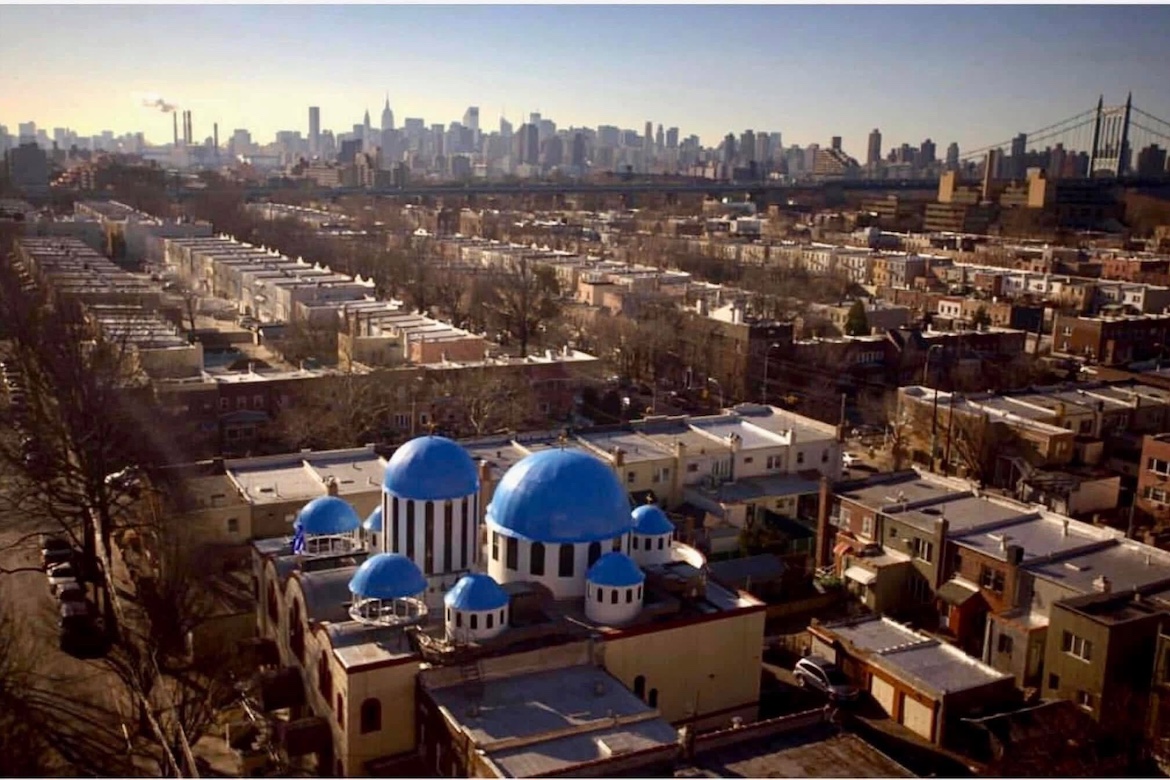
And neither was Astoria— arguably the most recognizable Greek neighborhood outside Greece.
The omissions sparked criticism across multiple communities. And while every New Yorker is entitled to speak for their own neighborhood, let me speak for ours.
Astoria welcomed me when I first moved to the city over a decade ago. It’s where my own New York City roots were planted. Although I ended up moving into Manhattan a few years later, returning to Astoria for me is always like returning home. And I do it often.
Back to Mayor Mamdani’s immigrant enclave map and his blatant omission of Greektown.
Because when it comes to Astoria, the omission simply doesn’t make sense.
Not historically.
And not statistically.
The mayor’s office has explained that the campaign is based on demographic data identifying immigrant communities. That’s a perfectly reasonable objective.
But this is exactly why Astoria’s absence is so difficult to understand.
Because the City of New York already has the data.
Its own Department of City Planning maintains the NYC Language Explorer, a public tool designed to help city agencies better understand the linguistic makeup of neighborhoods across the five boroughs.
Search Queens Community District 1. Astoria. The results are unmistakable.
Greek is the second most common limited-English-proficiency language in Astoria— behind only Spanish.
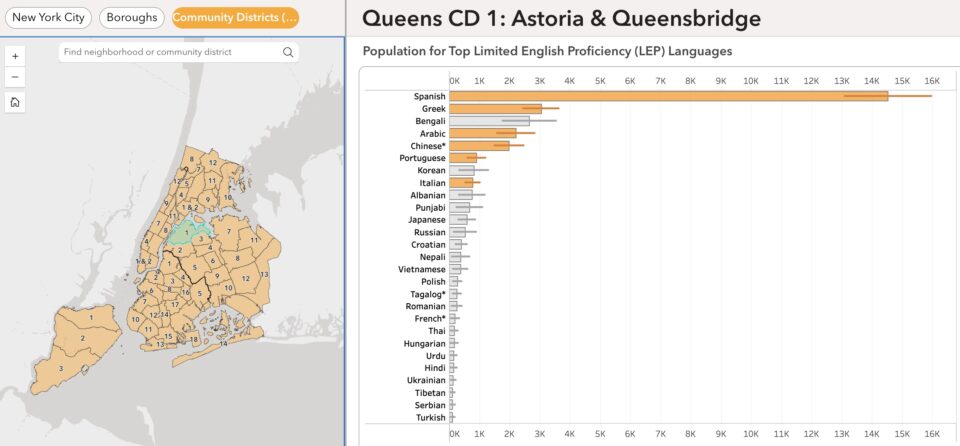
Ahead of Bengali and Arabic. Ahead of Chinese and Portuguese. Ahead of Korean and a multitude of other languages that are spoken in the neighborhood.
This isn’t data assembled by a Greek-American organization trying to make a point.
And I’m not making an emotional argument based on Greek pride.
It’s New York City’s own data, based on U.S. census statistics. Click here to see for yourself.
Which raises a simple question.
If New York City’s own planning department recognizes Greek as one of Astoria’s defining languages, why does New York City’s official Immigrant Heritage campaign fail to recognize Astoria as one of the city’s defining immigrant communities?
That’s not an accusation. It’s a fair question. Because Astoria didn’t become synonymous with Greek America by accident.
Beginning in the years before World War II—and accelerating through the 1950s, 60s and 70s— tens of thousands of Greek immigrants transformed a neighborhood in western Queens into what became the largest and most influential Greek community outside Greece.
They built churches that became anchors of the neighborhood. They opened restaurants, diners, bakeries and cafés that introduced generations of New Yorkers to Greek hospitality. They founded schools so their children would know the language of their grandparents and social service organizations to support newly-arriving immigrants.
They published newspapers, established cultural organizations, supported local businesses and filled the streets with festivals that celebrated a heritage. They did all of this while embracing a new homeland and becoming fully American, while simultaneously remaining fully Greek. Because New York was the place that not only has always allowed this paradox, New York is that place that encourages it.
Astoria wasn’t simply where Greeks lived. It became the symbolic capital of Greek America.
Over the years, Astoria may have changed. Many families became successful and moved to the suburbs. Businesses came and went. Other ethnic groups moved in and made the neighborhood their own, as well. Mosques went up next to Greek Orthodox churches and falafel stands began competing with souvlaki trucks.
But Astoria never stopped being Greektown.
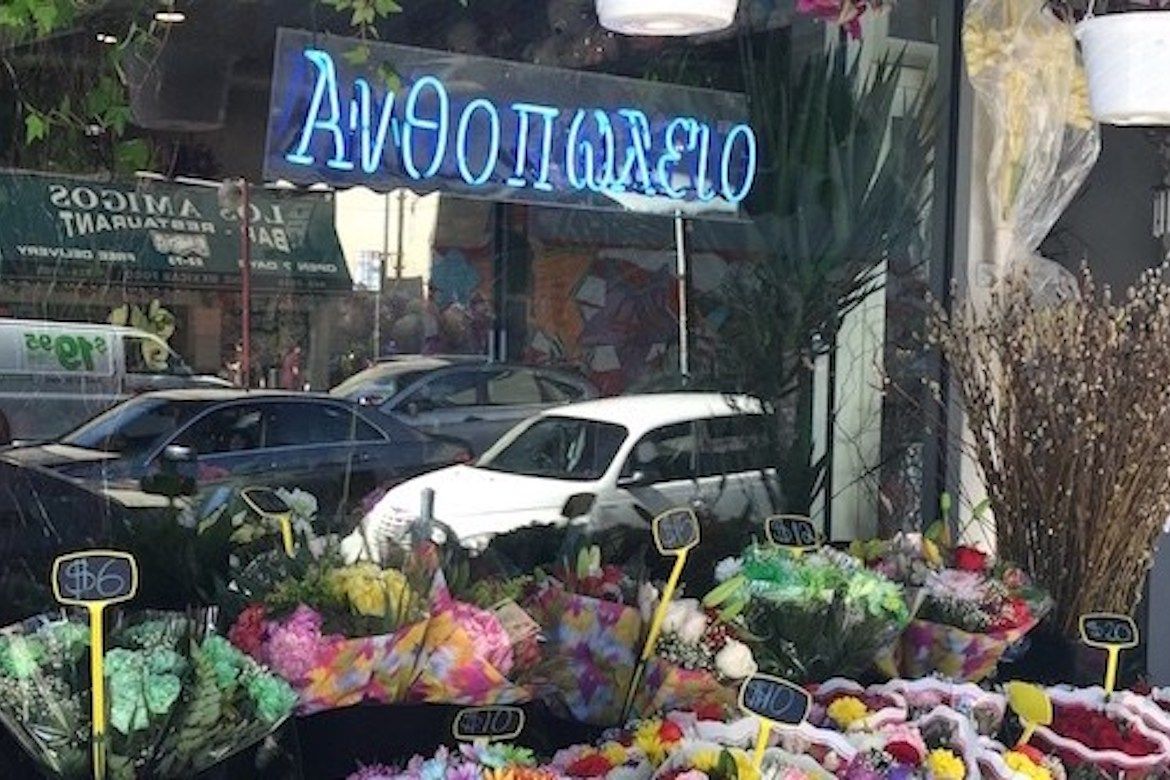
Walk through Athens Square Park. Spend an afternoon on Ditmars Boulevard. Attend a festival at St. Demetrios. Listen to the conversations around you. The history is visible. The culture is alive.
And according to New York City’s own data, so is the language and the people.
This story is about more than one map.
Mayor Mamdani, It’s about how New York tells its own story.
The mayor’s Immigrant Heritage campaign celebrates the communities that built this city. It encourages New Yorkers to recognize the neighborhoods that generations of immigrants transformed into cultural landmarks, new and old. It’s a worthy initiative, and one that deserves praise.
Millions of immigrants built this city and are the reason it’s the greatest and most diverse city in the world.
Which is precisely why these omissions matter.
Official campaigns become part of the historical record. They teach visitors, students and future generations how New York— and New Yorkers— understands themselves.
If we’re going to celebrate the immigrant communities that shaped this city, we should strive to tell that story as completely—and as accurately—as possible.
Mayor Mamdani has visited our churches. He has celebrated alongside our community and acknowledged the contributions Greek New Yorkers have made to this city. We appreciate that.
Which makes this omission all the more surprising.
Because this isn’t really about politics.
It’s about getting New York right.
And perhaps that’s the most important point of all.
Astoria didn’t become Greektown because a politician declared it so. It won’t stop being Greektown because a city bureaucrat forgot to include it.
Astoria is Greektown because generations of immigrants arrived with little more than hope and determination and built something extraordinary.
They created a neighborhood that became the beating heart of Greek America— a place where faith, family, language and culture took root and flourished. They’re still building it today. Astoria is still flourishing.
Young entrepreneurs continue opening businesses.
Thousands still carry the Epitaphios in the streets under the tracks of the N Train every Good Friday.
Children still learn Greek.
Thousands still fill the streets and celebrate when Greece wins soccer matches half way across the world.
The aroma of souvlaki still drifts from neighborhood tavernas and food trucks.
Greek is still spoken in coffee shops, bakeries and parks.
Athens Square Park still proudly bears the name of the city from which so many journeys began. Even the graffiti and homeless people are Greek.
The police officers who serve the community say “kalimera” as they walk the sidewalks and the guy driving down Ditmars Boulevard that you accidentally cut off still screams ‘MALAKA” out the window as he passes you.
That’s why Astoria is Greektown.
Not because a politician says it is.
Not because a map labels it that way.
And not even because New York City’s own data— which it does— shows Greek remains one of Astoria’s defining languages.
Astoria is Greektown because generations of people made it so.
Long before this administration. Long before the last administration.
And long after today’s maps have been replaced by tomorrow’s and Mayor Mamdani is but a mere memory and a new Mayor has taken up residence at Gracie Mansion.
Whether it was intentional or just an honest mistake: a city campaign may omit Astoria’s Greek identity.
History won’t.
Neither will the millions of Greek Americans who, whether they live in Queens or thousands of miles away, still look at Astoria and see a neighborhood that tells their family’s story.
A map of New York without Greek Astoria is like a map of Athens without the Parthenon.
You can publish it.
But everyone knows something important has been left off.