
There is an old saying that character is revealed not when doing what benefits you, but when doing what is right.
This week, Greece quietly reminded the world what that looks like.
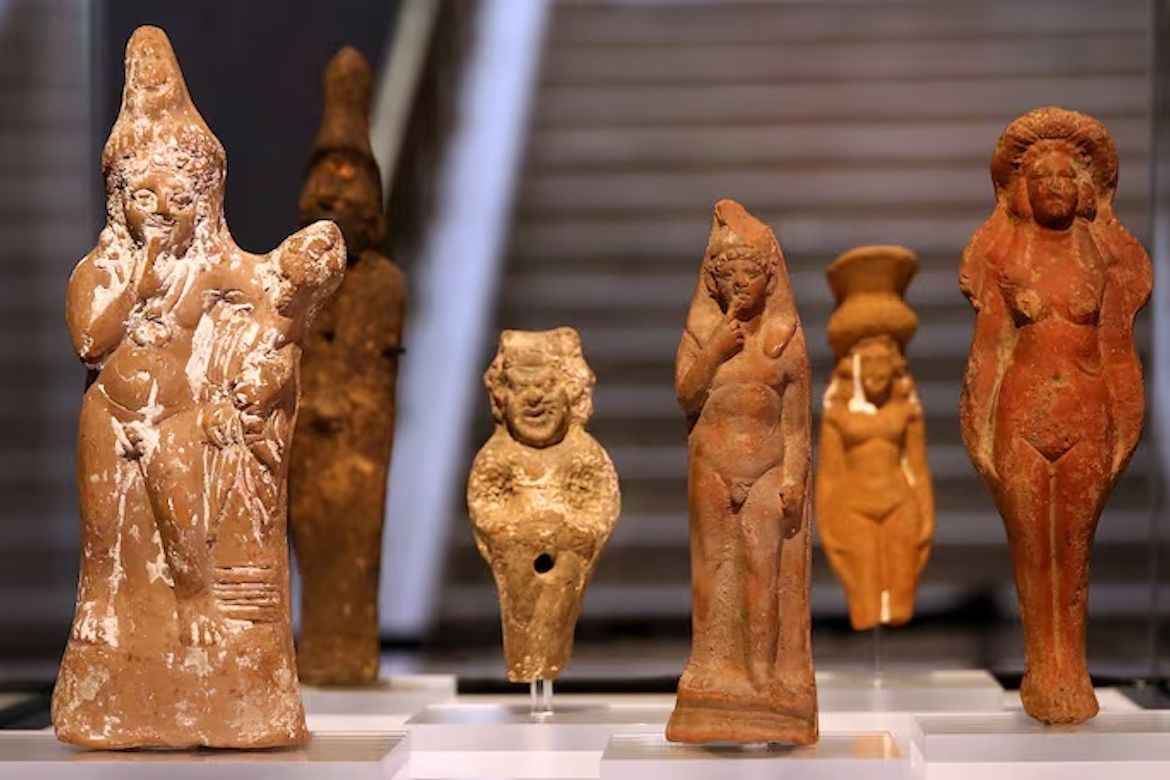
Six ancient Egyptian figurines—small funerary objects dating back more than 2,000 years—were formally returned to Egypt after investigators determined they had been illegally trafficked out of the country before making their way into Greece. Their journey home followed years of cooperation between Greek and Egyptian authorities, archaeologists, prosecutors and cultural ministries, who worked together to establish their origins and facilitate their return.
The ceremony itself was understated. There were no triumphant speeches or grand declarations. Just representatives of two ancient civilizations acknowledging a simple truth: these objects belonged somewhere else.
There is something quietly powerful about that.
For nations whose histories stretch back thousands of years, antiquities are far more than museum pieces. They are fragments of memory. They tell stories about the people who carved them, prayed beside them, buried their dead with them, and built civilizations around them. Once removed from that context, they become beautiful objects. Returned home, they become part of a living historical narrative once again.
Greece understands that perhaps better than almost any nation on earth.
For generations, Greece has watched pieces of its own cultural inheritance leave its shores—sometimes through conquest, sometimes through excavation, sometimes through legal arrangements that remain fiercely debated today. Greek museums, churches and archaeological sites have spent decades working to recover objects scattered across Europe and beyond.
That history makes this week’s decision especially meaningful.
Greece could have held onto these Egyptian artifacts. It could have pointed to paperwork, possession, technicalities or the familiar legal arguments that often become substitutes for ethics. Instead, it chose a simpler principle.
Cultural heritage belongs, whenever possible, with the civilization that created it.
That principle doesn’t become less true because the artifacts are Egyptian instead of Greek.
In fact, it becomes more powerful.
For years, critics of Greece’s campaign to reunite the Parthenon Sculptures have dismissed the issue as nationalism or sentimentality. But this week’s decision demonstrates something entirely different. Greece is not asking for a special exception. It is embracing a universal standard.
No two cases are identical. The six Egyptian figurines were identified as trafficked antiquities. The Parthenon Sculptures have been the subject of more than two centuries of legal and political debate. History rarely offers perfect parallels.
But the underlying principle remains remarkably similar.
When a civilization asks for an integral part of its cultural heritage to be reunited with the place that gave it meaning, should possession alone outweigh history?
This week, Greece answered that question—not with speeches, but with actions.
It demonstrated that returning cultural heritage is not an act of loss. It is an act of respect.
Perhaps it is time for Britain to demonstrate the same.