
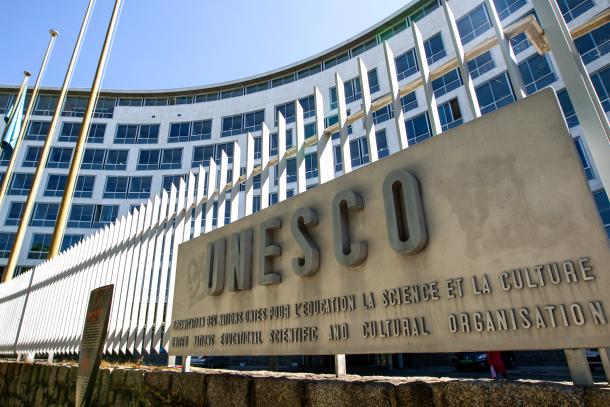
In a historic decision, UNESCO has officially designated February 9 as World Greek Language Day, recognizing the enduring influence and global significance of the Greek language. The resolution was adopted unanimously by the UNESCO Executive Board during its recent session in Paris, marking a symbolic moment of cultural recognition for Greece.
The choice of February 9 holds special meaning, as it coincides with the anniversary of the death of Dionysios Solomos, Greece’s national poet and author of the “Hymn to Liberty,” which became the Greek national anthem. Solomos’ contributions to modern Greek language and literature played a pivotal role in its evolution and prominence.
The proposal was introduced by Haiti, a nation with historical ties to Greece as the first to recognize its independence. A total of 88 UNESCO member states supported the initiative, with 41 of the 58 countries represented in the Executive Board expressing endorsement during the session. The decision was made by consensus, without a formal vote—an uncommon occurrence that highlights the broad international support behind the initiative.
In its official statement, UNESCO acknowledged the Greek language’s unique legacy, citing its unbroken continuity over 4,000 years of spoken tradition and at least 2,800 years of written history using the alphabet. The organization emphasized that the Greek language is not only a tool of communication but also a vessel of culture, values, and identity.
The resolution also notes the unparalleled cultural contribution of the Greek language through figures such as Homer, Plato, Aristotle, Hippocrates, and the Church Fathers, whose works laid the foundation for Western literature, science, philosophy, and theology.
Greece’s Permanent Representative to UNESCO, Giorgos Koumoutsakos, described the decision as a “day of joy and pride” for Greece, as it symbolizes the universal value and timeless presence of the Greek language in global civilization.
Cover Photo Credit / UNESCO