

Amidst the ongoing centuries-old campaign to return the Parthenon Marbles to Greece from Britain, Greek president Prokopis Pavlopoulos referred to Britain’s national museum as a “murky prison” on Monday.
Pavlopoulos made the remarks during a speech at the Acropolis Museum in Athens — the location where cultural heritage activists wish to see the marbles returned.
The president’s statement further escalates debate between London and Athens regarding the return of the 2,500-year-old sculptures, which British Lord Elgin took from the Acropolis in the early 19th century.
“Let the British Museum come here and make the comparison between this (Acropolis) museum of light, and the murky — if I may say — ‘prison’ of the British Museum where the Parthenon Marbles are held as trophies,” Pavlopoulos said.
His statement came during an international workshop titled, “Reunification of the Parthenon Sculptures.”
According to a tweet from the Athens-Macedonian News Agency, Pavlopoulos said returning the Parthenon marbles to Greece is “fair” and “obligatory.”
British Museum officials have not issued a response at the time of this article’s publication.
About the Parthenon Marbles
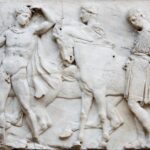
Lord Elgin looted the sacred marbles circa 1805 toward the end of Ottoman occupation in Greece. Also known as the “Elgin Marbles,” the sculptures remain on display in an illuminated gallery within the British Museum.
Since Greece became independent in 1832, national officials have called for Britain to return the marbles. The campaign gained further momentum in 2009 after the Acropolis Museum officially opened.
Pavlopoulos has made similar calls for the marbles’ return in the past, including a March 2018 interview with state-owned Greek television broadcaster ERT News (video below).
“We are fighting a losing battle to hold on to our spoils,” he said. “Although there are many novel ways to exchange our knowledge, naturally I must support the exchange and return of the sculptures here, where they belong, in the Acropolis Museum.”
The British Museum has claimed that Elgin acquired the sculptures legally through an agreement with the Ottoman empire. In addition to other national institutions, the museum has resisted repatriation campaigns citing legislation that prevents them from breaking up historic collections.
Pavlopoulos March 2018 Interview With ERT