

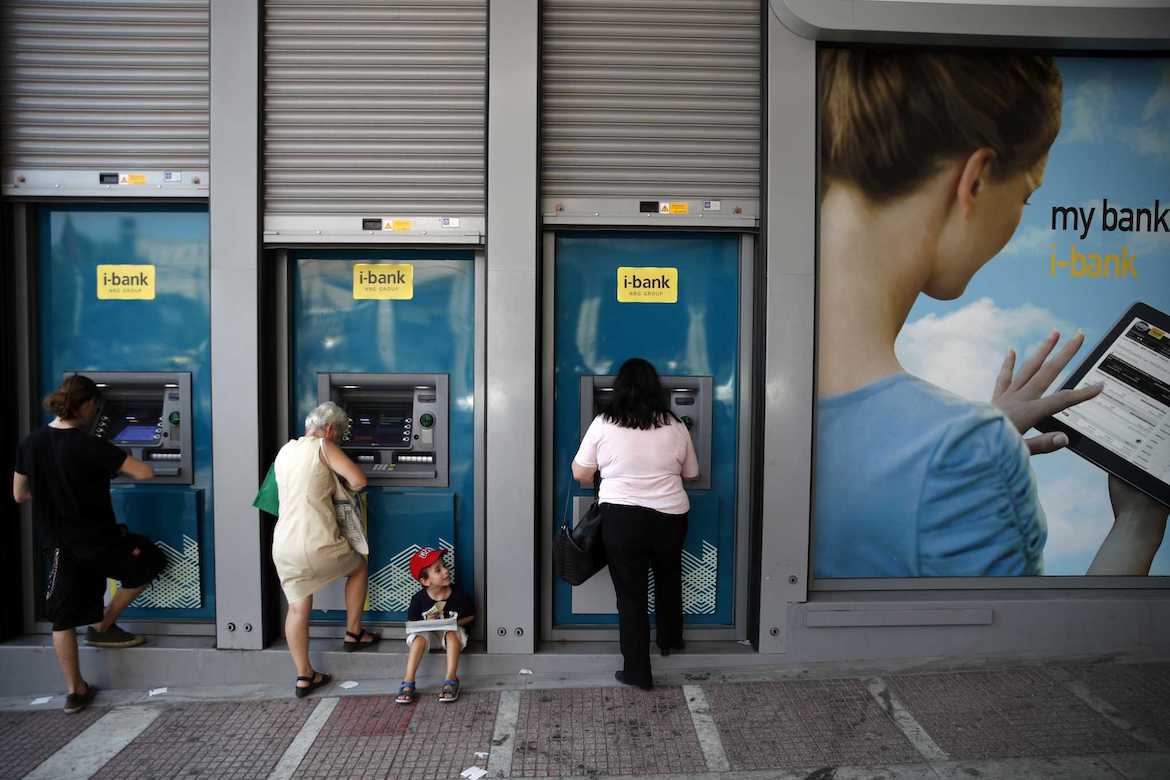
The Greek government will remove capital controls starting September 1 — following four years of restrictions on international transfers by companies and individuals, according to a finance ministry announcement on Monday.
After proposing the maneuver last month, Greece’s central bank reached an agreement with the Single Supervisory Mechanism — the European Central Bank’s banking supervisory agency. Finance minister Christos Staikouras made the announcement during a parliamentary meeting.
“Restoring free movement of capital will contribute significantly to strengthening confidence [in Greece] and attracting investments,” Staikouras said, adding that it “will lead to further upgrades of the country’s credit rating.”
The Greek government had implemented capital controls during summer 2015 — when a bank run took place due to widespread fear that Greece could abruptly leave the EU. In response, the European Central Bank cut off emergency funding to Greek banks while the country’s leftwing Syriza government engaged in deteriorating disputes with international creditors — particularly Germany.

Since the peak of Greece’s economic crisis in mid-2015, the government has gradually loosened the original capital controls. But domestic companies still have to obtain permission from the central bank to transfer more than €100,000 per day. Individual transfers are limited to €4,000 every two months.
During their campaign, recently elected prime minister Kyriakos Mitsotakis and his center-right New Democracy party promised to lift capital controls — which they championed as a priority in stimulating Greece’s economy via domestic and foreign investments.
Following the finance ministry’s announcement, Mitsotakis wrote the following celebratory tweet (translated from Greek):
“Today I am announcing yet another campaign promise that is being implemented sooner than the timetable we had set: We are fully restoring the normality of capital movements. After 50 months, capital controls are abolished!”