
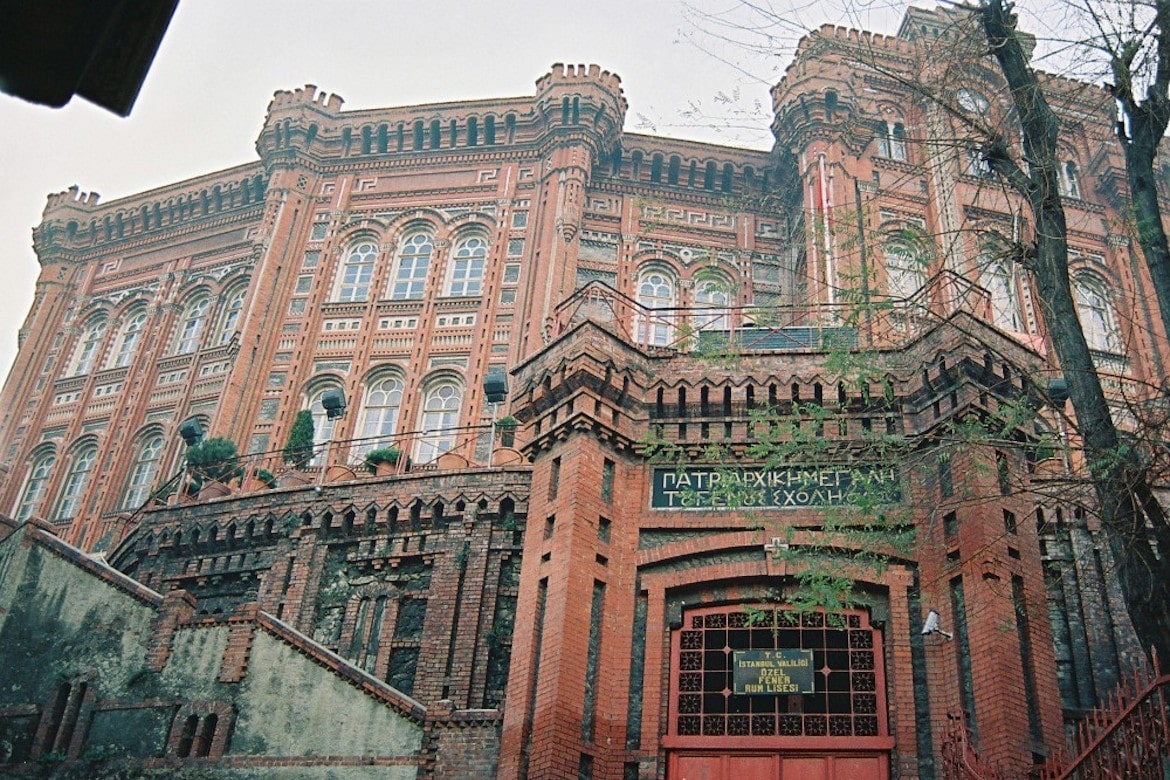
For centuries, even after the 1453 fall of Constantinople, a Greek population flourished in the city whose name eventually changed to Istanbul.
But despite attempts to “Turkify” it, the city retained its Greek linguistic characteristic.
Istanbul actually comes from the Greek words “eis tin poli” or “to the City.” The phrase refers to the nickname for the Queen of Cities, or “the City,” as Constantinople was known.
Greeks still refer to the city as “Konstantinoupoli.”
Today, Istanbul or Constantinople — however you prefer to refer to the city — is the seat of the Ecumenical Patriarchate of Constantinople, the spiritual head of the world’s 300 million Orthodox Christians.
A few thousand Greeks native to Turkey still reside here. Known as “Rums,” they take their name from the word “romios” which referred to Greeks.
The population decline began in the early 1900s during war between Greece and Turkey. In the 1920s, almost 140,000 native Greeks lived in the city.
Successive Turkish governments placed a stranglehold on the local Greek population over the past century. They imposed unjust taxes, confiscated property and in 1955 they perpetrated the largest anti-Greek riot in history. Repressive explosions subsequently followed in 1964.

According to late Byzantine and Greek historian Spyros Vryonis Jr., the 1955 anti-Greek riots all but marked the end of a once-thriving community.
“The lethal pogrom of September 6-7, 1955 delivered a fatal blow to the Hellenism of Constantinople in seven hours,” Vryonis wrote in an article for The Pappas Post. “Well planned (for some years), masterfully carried out in a well organized manner by the Turkish government, the Turks destroyed 71 churches, 41 schools, 4,008 stores, the offices and printing presses of eight newspapers, and approximately 2,100 dwellings, all the property of the Greeks and their communities.”
Much of the Greek elements in Istanbul were lost. But remnants of the once-thriving community still remain.
Turkish TV produced a short video featuring a native Greek retired teacher named Andon Pariziyanos. For a few minutes, Pariziyanos takes viewers on a tour through some of Istanbul’s old Greek neighborhoods.
Featured image / Chapultepec via Wikimedia Commons
Watch the video