

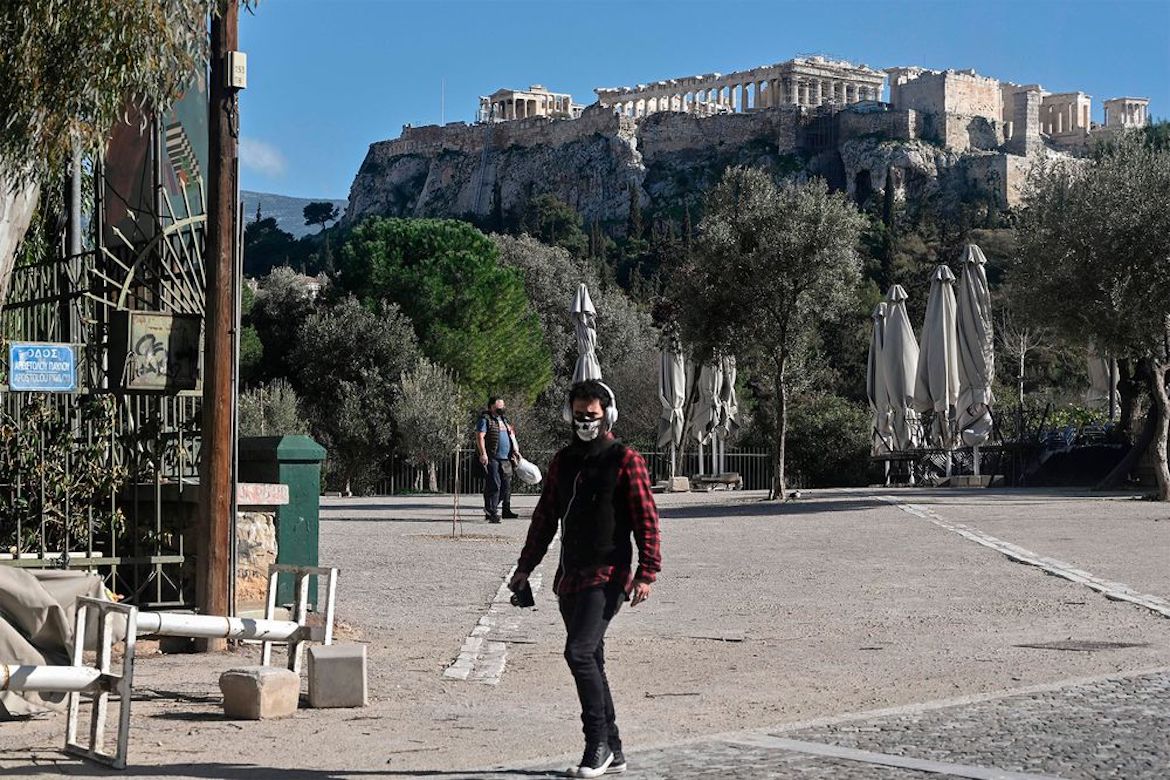
The Greek government announced on Wednesday that it will extend lockdowns in many parts of the country and tighten already strict COVID-19 restrictions amid a surge of infections and pressure on the national health system.
With 6,597 deaths, Greece has fared better than other European countries since its first case was reported on February 26, 2020. But despite a lockdown in Athens for more than two weeks, infections have not decreased and hospitalization rates continue to increase, causing concerns among government officials.
Authorities reported 2,702 infections on Wednesday, the highest daily figure recorded in 2021, which was up from 2,353 the previous day.
“The health system is under unbearable pressure,” Health Minister Vassilis Kikilias said during a regular news briefing.
The lockdown in the wider Athens region, where intensive care units have faced severe pressure, has been extended by a week to March 16, Deputy Civil Protection Minister Nikos Hardalias said.
To avert overcrowding, the government, which is counting on the summer tourist season to bring desperately needed revenues, imposed tighter curbs on movement, including on outdoor exercise, and has restricted supermarket shopping to a 2-kilometer (1.2-mile) radius from people’s homes.
Kikilias called on the public to “take care, abide by the restrictions, and do not relax” saying that Greece is in its “most difficult phase” of the pandemic.
Non-essential shops and schools in Athens remain closed and most workers are encouraged to work from home.
Approximately 10% of the country’s 10-million population has been vaccinated. Another 750,000 vaccinations are expected by the end of the month, health authorities said.
Featured image credit: People walk past closed cafes under the Acropolis in Athens on February 9. Photographer / Louisa Gouliamaki, AFP/Getty Images