
Although Greece anticipates a strong tourism season for 2025, the industry is already grappling with a shortage of seasonal workers needed to meet labor demand. The Guardian reports that 80,000 jobs remain unfilled in the hotel and food service industry. These sectors are critical to the Greek tourism industry which makes up about a quarter of the country’s GDP.
“It’s partly a legacy of the [Covid-19] pandemic, which all of Europe has felt but in Greece the problem is particularly acute,” said Giorgos Hotzoglou, president of the Panhellenic Federation of Workers in Food Service and Tourism (POEET) while speaking to the Guardian. “What we’re seeing is an unprecedented lack of qualified and experienced workers, especially in the hotel and food industry, following the exodus of employees during the lockdown. Many never returned. As a result an estimated 80,000 jobs are now needed.”
Hotzoglou also attributed the lack of personnel to the sector’s seasonality. “Once the season is over workers are entitled to only three months of unemployment benefit. When there’s a cost of living crisis, how are they expected the rest of the year to possibly survive?” he wonders.
According to the Guardian article, the Greek government is looking to address the problem by legalizing approximately 30,000 unregistered migrants, and by signing bilateral agreements with countries like Egypt, Vietnam, Bangladesh, Georgia, India and Moldova.
At the same time, the Halkidiki Hotels Association is taking a novel approach by partnering with the Greek NGO METAdrasi. Over the next 6 months, the two organizations will jointly organize job fairs to connect Greek hotels with up to 200 candidates from refugee reception centers in Central Macedonia, assisting candidates with their CVs, helping them obtain their necessary employment documentation, facilitating their placement and integration in the workplace, and providing mid-season labor substitutions when operational needs of hotels change.
During the first job fair held March 17 at the Velideion Conference Center, more than 100 refugees from Thessaloniki and nearby reception facilities were interviewed by hotel representatives. By the end of the day, 70 candidates had received job offers.
The president of the Halkidiki Hotels Association, Grigoris Tasios, emphasized the value of the program in Greece’s Voria newspaper. “This year’s first effort lays the groundwork for a long-term solution in the labor market, offering flexible employment for as many months as the business requires, with a minimum of four months.”
Employment conditions “will be exactly the same as those for Greek workers,” Tasios clarified, “in accordance with the sectoral agreement of the Hellenic Hoteliers Federation.”
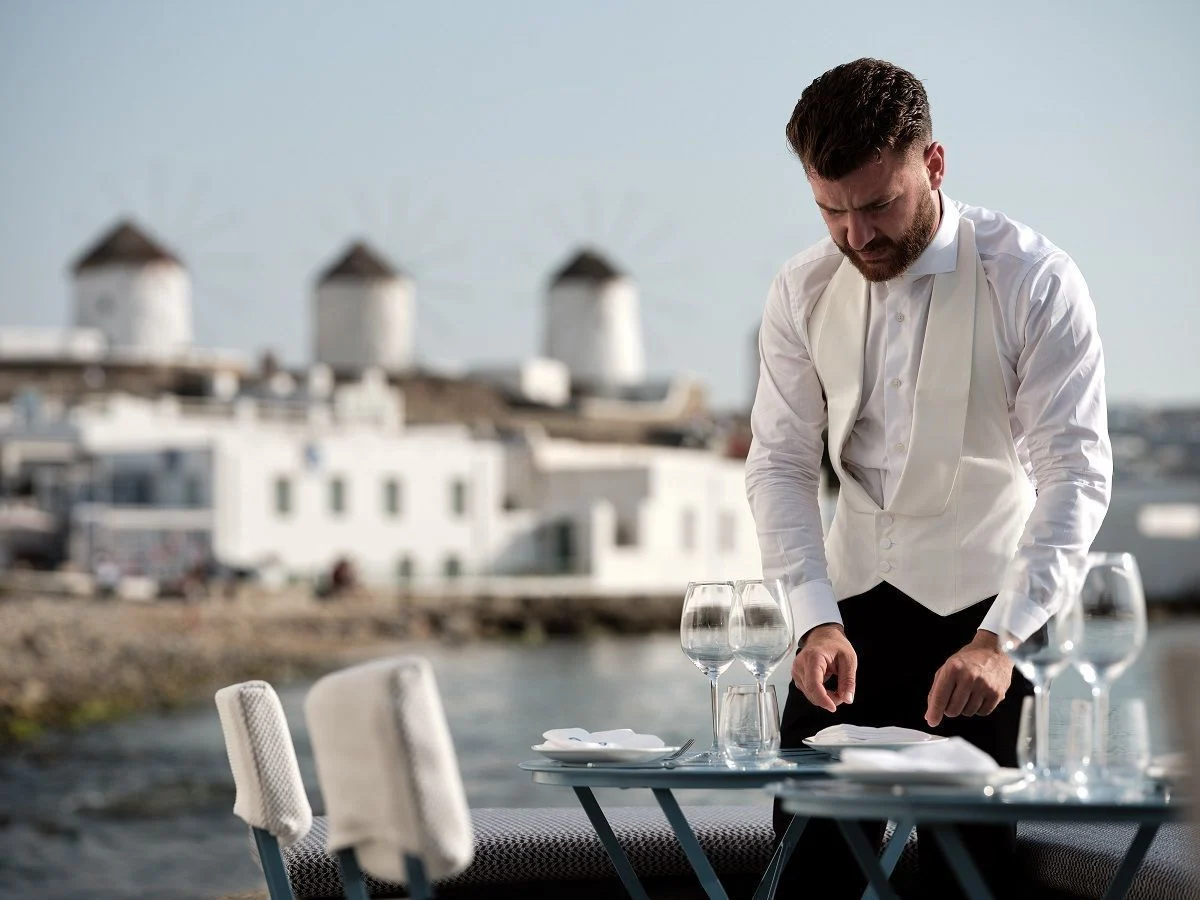
Cover Photo Credit: Cocco Mykonos