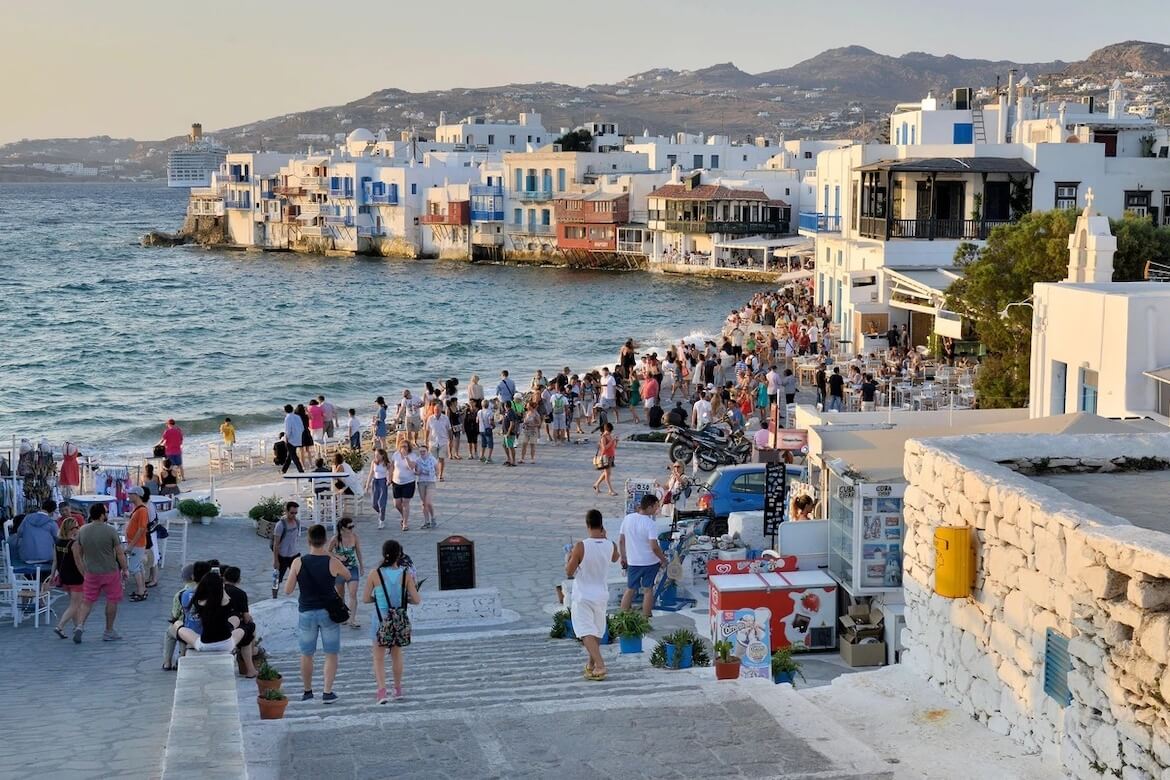

Greece has spent decades selling paradise to the world, creating a place often hash tagged #HeavenOnEarth.
It invited millions to come live their myths in the land chosen by the gods. And they came. They came by the millions. They came for the islands, the beaches, the ancient ruins, the sunsets, the food, the light and the fantasy of a country that somehow manages to be both ancient and endlessly new, to remain authentic and true.
But as we’ve seen in places like Venice, Barcelona and other European “paradises,” heaven can quickly turn to hell.
Thankfully, Greece appears to be taking steps to make sure the hashtag isn’t changed to #HellOnEarth.
To make sure the myths don’t become misery. Not only for the visitors who come searching for authentic Greece, but for the locals who actually have to live there.
That is why the recent moves by Greek officials to confront over-tourism should not be seen as anti-tourism. They should be seen as pro-Greece.
In Athens, Mayor Haris Doukas has sounded the alarm over the transformation of the city’s historic center into what he bluntly described as a “giant hotel.” He announced measures to limit new tourism-related development in areas like Plaka, where the pressure from hotels, short-term rentals, rooftop venues and tourist-focused businesses has become impossible to ignore.
The issue is not whether visitors should come to Athens. Of course they should. The issue is whether Athenians can still live in Athens.
That distinction matters.
Because a city without residents is not a city. It is a stage set. A neighborhood without neighbors is not a neighborhood. It is a backdrop. And Greece, of all places, must never allow itself to become a backdrop.
If tourists want a stage-set and backdrop, they can go to Epcot Center or Disneyland. They can go to an all-inclusive resort in the Caribbean.
At the same time, the Greek government has moved to protect hundreds of beaches from the endless creep of commercial development. More than 250 beaches are now being placed under restrictions that ban sunbeds, umbrellas and other forms of tourist infrastructure.
In other words, some beaches will remain beaches. Not beach clubs. Not branded lounges. Not overpriced oyster bars with a QR code menu and a DJ booth.
They will remain beaches. Imagine that. These days, there is something almost radical today about leaving nature alone.
For years, anyone who has traveled through Greece has seen the slow privatization of public beauty. A beach becomes popular. Then come a few umbrellas. Then a bar. Then a louder bar. Then reserved seating. Then ropes. Then bottle service. Then suddenly the Greek coastline disappears.
This is not development. It is erosion. And not only erosion of sand dunes, habitats and coastlines. It is erosion of the very thing that made people fall in love with Greece in the first place.
Greece’s magic has never been luxury alone. It has never been about turning every view into a commodity. The magic of Greece is access to beauty, to history, to simplicity, to the sea, to memory, to something older and more human than the global tourism machine.
That is what must be protected.
We have already seen what happens when places wait too long.
Barcelona is now a case study in what happens when a city becomes so overwhelmed by tourism that residents begin to revolt against the very visitors who sustain part of the economy. Protests, anger over housing, backlash against short-term rentals and even viral images of tourists being sprayed with water pistols have become part of the city’s global image.
Barcelona has already announced plans to phase out tourist apartment rentals in an effort to make the city livable again for residents.
Venice, one of the most extraordinary cities on earth, has had to introduce entry fees for day-trippers—an almost unimaginable development for a city that has become a symbol of beauty under siege. Officials there are trying to manage crowds after years of being overwhelmed by mass tourism, cruise ships and visitors who come for a few hours, take their photos, clog the streets and leave little behind except pressure on infrastructure and daily life.
Both cities had to REACT to the crisis that was already upon them.
Greece still has a chance to avoid that fate.
That is the key point. Greece is acting proactively. But it’s a race. Airlines are constantly adding new flights. Developers are encroaching on once-protected areas of pristine islands.
This is not a moment for panic. It is a moment for planning.
The difference between Greece and some other overrun destinations is that Greece still has the opportunity to be proactive instead of reactive. To act before the resentment becomes louder than the welcome. To set limits before damage becomes irreversible. To protect the soul of its places before those places become hollowed-out versions of themselves.
And Greece has already begun.
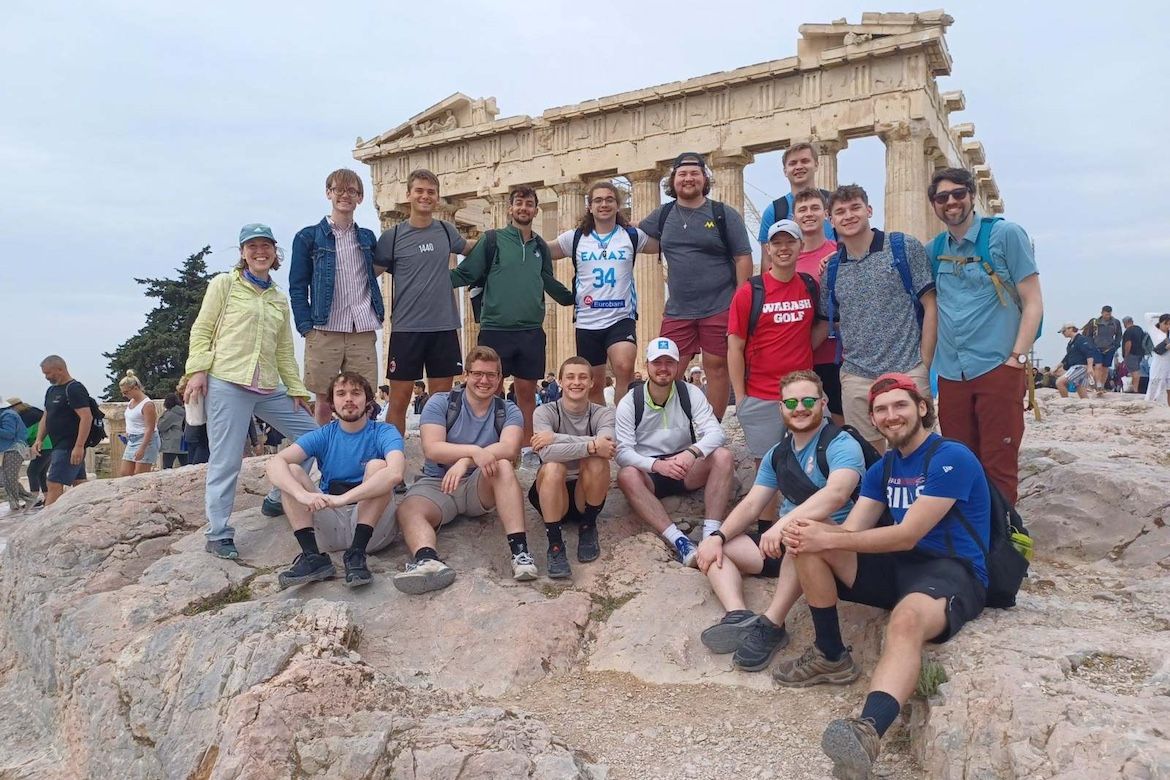
The Acropolis, the sacred rock of Athens and one of the most important cultural sites in the world, now has a daily visitor cap of 20,000, along with timed entry slots to better manage crowds. This is common sense.
The Parthenon is not an amusement park attraction. It is not meant to absorb unlimited human traffic simply because demand exists. Some things are too important to be consumed without limits.
The government has also moved to impose cruise passenger fees, including a higher peak-season levy for Santorini and Mykonos— two islands where the strain of mass arrivals has become painfully visible. These fees alone will not solve over-tourism, but they represent an important shift in thinking: visitors cannot simply take from a place without contributing to the infrastructure and preservation that make that place possible.
This is not about punishing tourists. It is about respecting Greece. And frankly, responsible visitors should welcome these measures.
Anyone who truly loves Greece should want Greece to remain Greece. They should want Athenians to live in Athens. They should want islanders to afford homes on their own islands. They should want beaches where children can still put down a towel without paying for the privilege of looking at the sea. They should want archaeological sites that are protected, not trampled. They should want villages that remain communities, not Instagram props.
Tourism is vital to Greece.
No one can deny this.
It supports families, businesses, restaurants, hotels, guides, farmers, fishermen, artisans, museums, ferry workers, taxi drivers and countless small entrepreneurs across the country.
But tourism must serve Greece. Greece must not become a servant to tourism. There is a difference.
A healthy tourism model brings prosperity while preserving identity. An unhealthy one extracts charm until there is nothing left but the logo, the souvenir and the inflated real estate listing.
Greece should not aspire to receive the maximum number of visitors possible. Government ministers shouldn’t hold press conferences announcing visitor records being broken from the previous year. More visitors shouldn’t be a benchmark for success. Quality needs to become the new benchmark, not quantity.
Greece should aspire to receive the right visitors, in the right way, at the right pace, with the right respect for the people and places that make the country extraordinary.
That means spreading tourism beyond the same handful of overwhelmed destinations.
It means encouraging travel in the shoulder seasons. It means investing in infrastructure before collapse. It means protecting public access to beaches. It means regulating short-term rentals so that young Greeks are not pushed out of their own neighborhoods. It means saying no—sometimes—to development that may bring quick money but long-term damage.
And it means understanding that preservation is not nostalgia. Preservation is strategy.
The countries, cities and islands that will thrive in the future are not the ones that sell themselves fastest. They are the ones that protect what makes them irreplaceable.
Greece is irreplaceable.
But it is not indestructible.
That may be the hardest truth for us to accept. We sometimes speak of Greece as eternal, and in one sense, it is. The idea of Greece has survived empires, occupations, wars, poverty, dictatorships and financial collapse.
But the physical places we love are not eternal unless we choose to protect them.
So yes, let the world come to Greece.
Let the world come to Greece. Let them discover its beauty, its history, its food, its islands, its cities, its villages and its people. But let them come to a Greece that has had the wisdom to protect itself before protection becomes desperation. That is the difference between being proactive and being reactive. Barcelona and Venice waited until the crisis was already at their doorstep.
Greece still has the chance to write a different story—one where tourism remains a blessing, not a burden; where growth is measured not only in arrivals, but in preservation, balance and respect for the places that make Greece unlike anywhere else on earth.
These new measures are not the end of the conversation. They are the beginning of a smarter one. And if Greece continues on this path, it may not only save itself from the fate of other overrun destinations. It may show the rest of the world how paradise is supposed to be protected.