
Drawing on historical data from the Reuters Institute for the Study of Journalism, a recent analysis by the Greek think-tank Dianeosis shows a sharp decline in the Greek public’s interest in current events and a fundamental change in how it consumes news online.
Coupled with a second study focusing on the prevalence of fake news, the findings illustrate how growing disengagement makes it harder for the Greek public to identify reliable news sources, leaving it increasingly vulnerable to targeted disinformation and conspiracy theories.
Between 2016 and 2021, about 7 out of 10 Greek internet users expressed interest in the news, but this figure has dropped to just 47% in 2026. News avoidance has reached striking levels, with eight out of ten Greeks reporting that they avoid the news “sometimes” or “often.”
Meanwhile, the number of Greek internet users showing “little interest” in the news has jumped from 5% in 2016 to 14% in 2026, although the number is slightly lower than the 2024 high of 16%.
This places Greece sixth highest among 48 surveyed countries in terms of news avoidance.
What do Greeks avoid, “sometimes” or “often”? According to a 2023 survey referenced by the Dianeosis analysis, participants indicated that the most frequently avoided topics were the war in Ukraine (38%), sports news (35%), crime news (34%), lifestyle news (32%), celebrity news (31%), and health news, such as Covid-19 (29%), and economic news (28%).
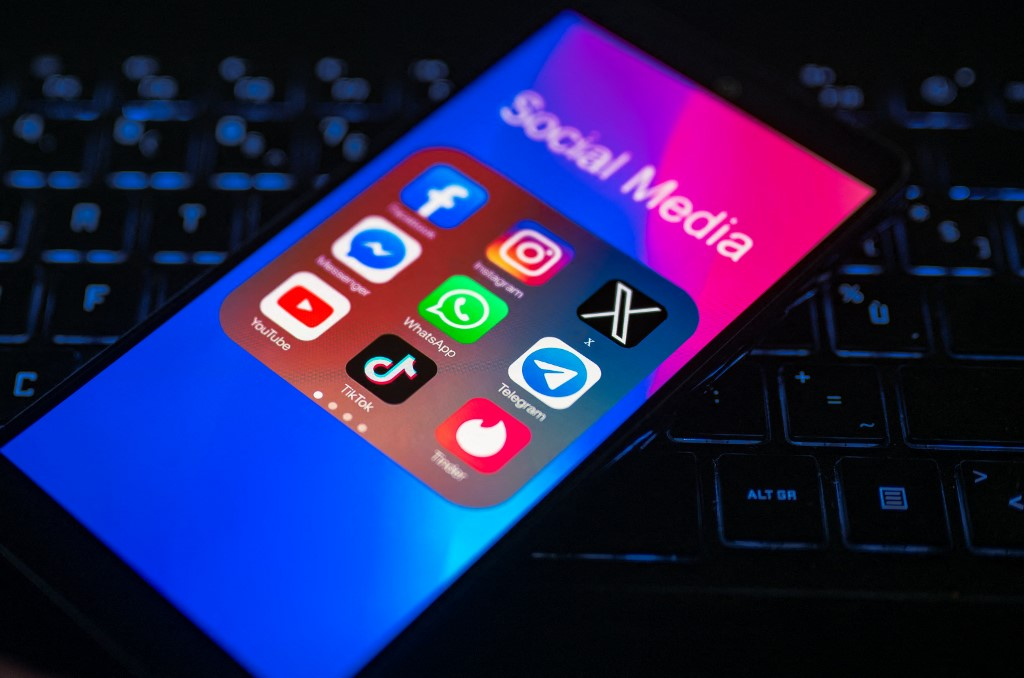
The channels through which Greeks consume information have also fundamentally changed, with social media now the primary source of news for 35% of the population. This trend is driven heavily by younger demographics (18-24), who forego older platforms like Facebook (from 75% in 2016 to 22% in 2025), and prefer to consume news on Instagram (41%) and TikTok (35%). This shift frequently diminishes the visibility of professional journalists, giving more prominence to influencers and ordinary users.
The adoption of AI in news consumption is accelerating rapidly as well, with 12% of Greeks now using LLMs for news—the highest rate among surveyed European countries and the US, up from 6% the year before. Of that percentage, 42% want a synopsis of the news, 28% ask for a more comprehensible version of the article, 26% want to know more information about a story, 25% are asking for the latest news, while 19% are asking for the tool to find or rate a source.
At the core of this evolving trend is a deep-seated trust deficit in Greece. In 2026, only 18% of the Greek public trusts “most news, most of the time,” ranking the country second-to-last in the 48-nation global sample, just ahead of Hungary (17%).
Researchers at Dianeosis argue that this profound cynicism towards institutions and traditional media creates a fertile environment for disinformation.
The result is that, in 2018, almost 30% of Greeks believed in the widely debunked chemtrail theory, while in 2016, 80% of Greeks believed in secret organizations “pulling the strings” in Greece or abroad. In 2024, 50% also believed that climate change is an invention of rich countries at the expense of poor ones.
Dianeosis highlights three recent examples as well, namely opposition to COVID-19 vaccines, fears surrounding 5G technology, and panic over Greece’s new digital national ID cards. In these instances, false narratives successfully exploited public anxieties and anti-elite sentiment, offering overly simplistic explanations for complex societal issues.
To address these compounding challenges, the Dianeosis analysis advocates for proactive policies. For starters, the organization prioritizes public education as the most effective way to combat disinformation. It recommends integrating mandatory media management classes for students aged eleven and above, as well as university students, thus equipping Greek youth with the ability to verify information and approach social media with a dose of skepticism. Equally important for the broader public is free online media training led by independent experts to specifically combat confirmation bias.
Dianeosis also highlights the necessity of strengthening and publicizing independent fact-checking organizations, such as Ellinika Hoaxes and Check4facts. Additionally, it recommends public broadcasters broadcast educational programs and actively expose false narratives. This should be paired with targeted public information campaigns that utilize trusted messengers who can shield citizens from digital manipulation.
Dianeosis also recommends legislation that holds social media platforms accountable for their content, and prosecuting the deliberate spread of fake news using existing laws, while preserving freedom of speech.