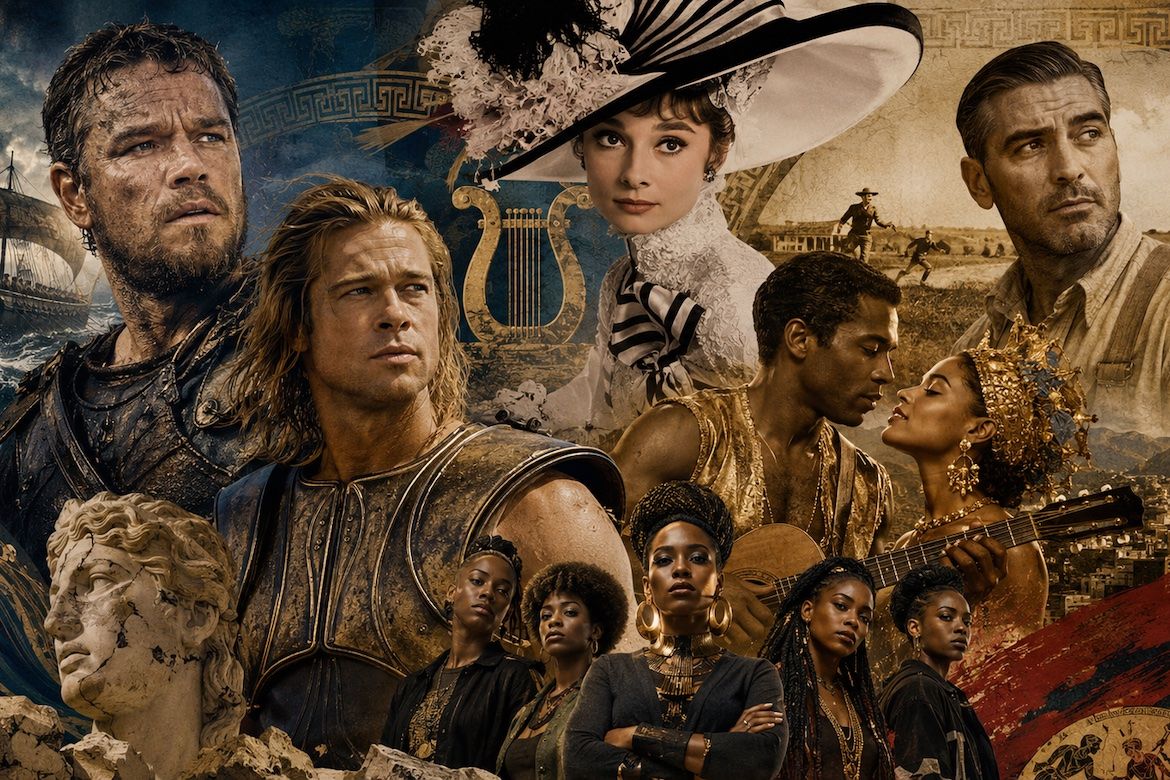

Long before Christopher Nolan transformed The Odyssey into a summer blockbuster, Greek myths had already become Broadway musicals, Black cinema, American novels, political satire—and some of the most beloved stories in modern culture.
Christopher Nolan’s The Odyssey arrives in theaters Friday, July 17, carrying considerably more than its enormous scale, movie-star cast and the expectations attached to one of the world’s most celebrated filmmakers.
It also carries nearly 3,000 years of cultural baggage.
The film stars Matt Damon as Odysseus, Anne Hathaway as Penelope, Tom Holland as Telemachus, Zendaya as Athena, Lupita Nyong’o as Helen of Troy, Robert Pattinson as Antinous and Charlize Theron as Calypso.
Nolan shot the film entirely with IMAX cameras and has assembled the kind of international cast that guarantees global attention before the first ship even leaves the harbor.
It has also generated controversy.
Arguments have erupted over the casting, the absence of Greek actors in the principal roles, the appearance of certain characters, the accents, the costumes and whether Nolan’s version looks sufficiently faithful to the ancient world described by Homer.
Some of those conversations are worth having. Others seem to begin from a questionable assumption: that there was once a single, fixed and historically precise version of Greek mythology that remained untouched until Hollywood arrived to corrupt it.
Nothing could be further from the truth.
Turning Greek stories into something else is not a modern Hollywood invention.
It may be the reason those stories are still alive.
Greek Mythology Was Never Frozen
Greek mythology did not descend through history as a perfectly sealed collection of authorized stories.
The ancient Greeks themselves continually retold their myths. Poets, playwrights and communities changed details, emphasized different characters and offered competing versions of the same events. A hero in one account might be a villain in another. Gods behaved differently depending on who was telling the story and why.
There was never one cinematic canon approved by Mount Olympus.
There were stories— and then there were more stories.
For centuries, writers, composers, filmmakers and performers across the world have continued that tradition. They have moved Greek myths into new countries, new languages, new political realities and entirely different bodies.
Millions of people have encountered Greek mythology without even realizing it.
The Coen brothers turned The Odyssey into O Brother, Where Art Thou?, a bluegrass road movie set in Depression-era Mississippi. George Clooney’s Ulysses Everett McGill becomes a fast-talking American Odysseus trying to return home, while Homer’s Sirens appear as women singing beside a river and the Cyclops becomes a one-eyed Bible salesman. It is Homer with banjos, gospel music and pomade.
The film did not attempt to recreate ancient Ithaca. It took the structure and spirit of The Odyssey and used them to tell a distinctly American story about homecoming, identity, temptation and survival.
Broadway has performed a similar transformation with Hadestown, Anaïs Mitchell’s musical retelling of the stories of Orpheus and Eurydice and Hades and Persephone.
The Greek underworld becomes a dark industrial kingdom. The music draws from American folk, blues and New Orleans jazz. Hades is part god, part factory owner and part authoritarian ruler. Orpheus remains the idealistic musician who believes a song can change the world.
The mythology is unmistakably Greek. The world surrounding it is not. Hadestown has won eight Tony Awards, including Best Musical, and has introduced ancient Greek mythology to audiences who may never have opened a volume of classical literature.
Spike Lee went somewhere even more provocative.
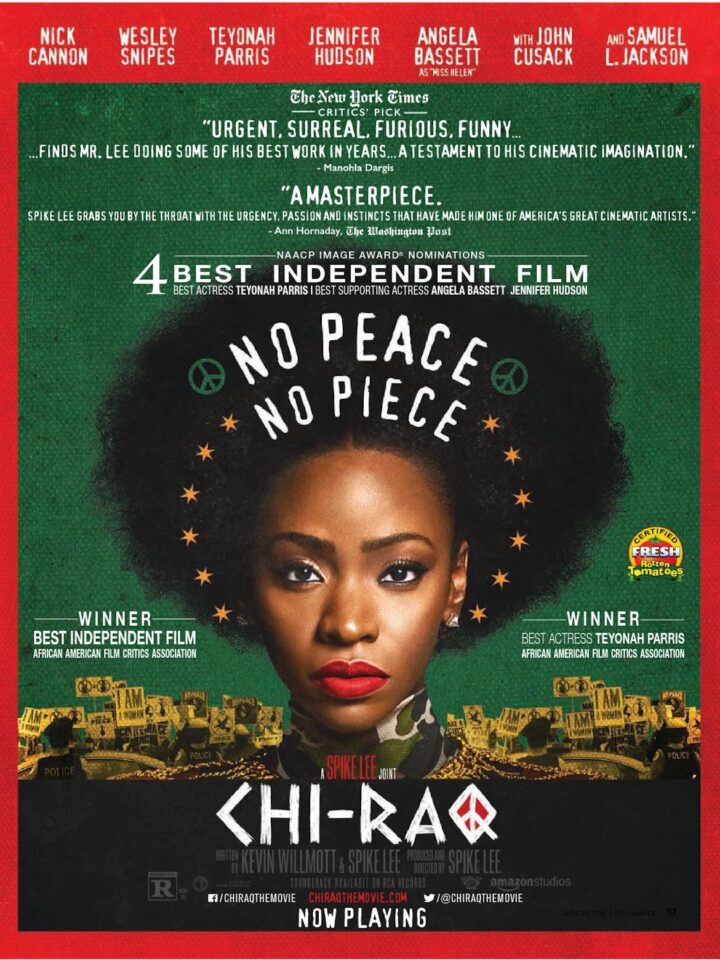
His 2015 film Chi-Raq took Aristophanes’ ancient comedy Lysistrata and moved it to the South Side of Chicago. In the original play, the women of Greece deny men sex until they agree to end the Peloponnesian War. In Lee’s version, women organize the same kind of strike to force rival gangs to put down their guns and end the violence destroying their community.
The anthem of the women was “No Peace, No Piece.”
Spartans and Trojans become Chicago gangs. An ancient Greek antiwar comedy becomes a Black American political satire about gun violence, race, masculinity and power.
Lee did not ask whether Aristophanes would recognize Chicago. He recognized that Chicago might recognize itself in Aristophanes.
From Pygmalion to My Fair Lady
Then there is My Fair Lady. Most people associate the musical with Audrey Hepburn, elaborate hats, English drawing rooms and “The Rain in Spain.” But its creative ancestry reaches back to the Greek myth of Pygmalion, the sculptor who creates his vision of the perfect woman and then falls in love with her.
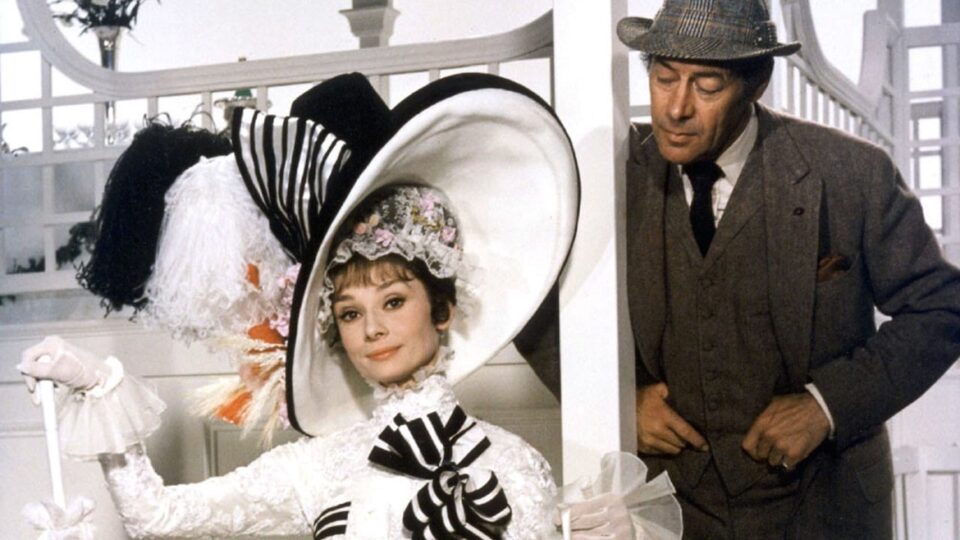
George Bernard Shaw transformed that myth into his 1913 play Pygmalion. The sculptor became Professor Henry Higgins, language became his instrument, and Eliza Doolittle became the woman he attempted to remake.
That play became the Broadway musical My Fair Lady, and an ancient Greek story about creation and transformation became one of the most famous works of musical theater in the English-speaking world.
The Greek myth remained beneath it all, quietly powering the story.
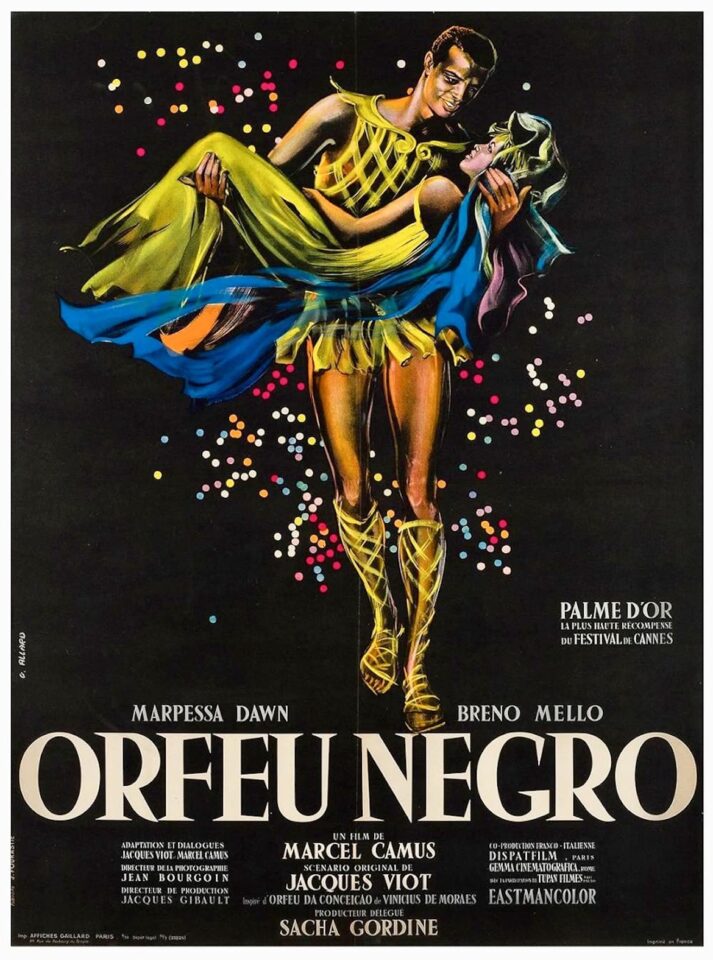
In 1959, French filmmaker Marcel Camus moved Orpheus and Eurydice from ancient Greece to the favelas of Rio de Janeiro during Carnival.
Black Orpheus featured Black performers, Brazilian music, samba and the emerging sound of bossa nova. The film won the Palme d’Or at Cannes and the Academy Award for Best Foreign Language Film, becoming an international cultural phenomenon.
The myth was not diminished by becoming Black, Brazilian and modern. It was reborn.
James Joyce compressed the adventures of Odysseus into a single day in Dublin in his novel Ulysses. Eugene O’Neill transplanted the blood-soaked Oresteia into Civil War-era New England in Mourning Becomes Electra. Disney turned Heracles into Hercules, an American-style celebrity superhero surrounded by gospel-singing Muses.
Again and again, artists have opened Greek mythology, dismantled it and rebuilt it for their own time. And the myths survived every time.
About Those Greek Actors
For my part, I am not particularly scandalized that Nolan did not fill his cast with Greek actors.
It might have been welcome—and perhaps a missed opportunity—but there is no affirmative-action rule of cinema requiring Greek stories to be played by Greeks, Irish stories by Irish actors or German stories by Germans.
Hollywood has never worked that way.
In Captain Corelli’s Mandolin, Nicolas Cage played an Italian captain. Penélope Cruz played a Greek woman from Kefalonia. Christian Bale played her Greek fiancé and John Hurt played her Greek father. Liam Neeson played the German Oskar Schindler in Schindler’s List and Ben Kingsley played Mahatma Gandhi.
Actors act. Their job is to enter lives, cultures, periods and identities beyond their own. We can judge whether they do so convincingly without requiring them to submit ancestral paperwork before accepting a role.
The absence of Greek names from Nolan’s marquee may disappoint some people, but it is not, by itself, a cultural crime—and it is certainly not the most interesting thing about this latest reinvention of Homer.
The far more interesting question is why Greek mythology remains endlessly available for reinvention nearly three millennia after these stories were first written down.
The Price of Becoming Universal
Greeks love to declare that Greece gave its culture to the world.
We celebrate the Greek foundations of Western drama, philosophy, democracy, literature and art. We speak proudly of Greek mythology as a universal inheritance whose heroes and lessons belong to humanity.
But universality comes with consequences.
Once a story belongs to everyone, everyone will interpret it.
They will translate it. Modernize it. Politicize it. Americanize it. Set it to jazz, gospel or bluegrass. Move it to Brazil, Mississippi, Broadway or the South Side of Chicago. They will cast actors who do not resemble the figures painted on ancient pottery—or the version of those figures that modern Greeks carry in their imaginations.
Sometimes the result will be brilliant.
Sometimes it will be ridiculous.
Creative freedom does not guarantee creative success.
Nolan has every right to reinterpret The Odyssey. Audiences have an equal right to decide whether he understood it.
The test should not be whether every costume, accent or face corresponds to an imagined documentary reconstruction of the Bronze Age. The Odyssey itself is poetry, mythology and oral tradition—not a police report filed after the Trojan War.
The better test is whether Nolan understands what has made the story endure.
Does he understand the exhaustion of a man who has spent years trying to return home?
Does he understand Penelope’s endurance, Telemachus’ longing, the seductions that delay Odysseus and the pride that repeatedly endangers him?
Does he understand that Ithaca is more than a location—that it is memory, identity and the place that continues to pull us back no matter how far we travel?
That is where the authenticity of The Odyssey lives.
Not in the passport of the actor playing it.
The Greeks Invented the Remix
Perhaps the most Greek thing Christopher Nolan could do with The Odyssey is not preserve it, but wrestle with it.
The ancient Greeks never treated mythology as an untouchable museum piece. They used familiar stories to explore war, power, justice, loyalty, family, pride and the dangerous behavior of both gods and human beings.
They argued with their myths.
They contradicted them.
They remixed them.
Nolan now joins a procession that includes Homer’s ancient successors, Shakespeare and Shaw, James Joyce and Eugene O’Neill, Marcel Camus and Spike Lee, the Coen brothers, Broadway composers and Disney animators.
He is not the first person to take a Greek story and turn it into something else. He will not be the last.
The question is not whether Christopher Nolan was allowed to remix The Odyssey. Of course he was.
The question is whether, beneath the movie stars, the spectacle and the massive machinery of a Hollywood blockbuster, he has given us anything worth carrying home.
We’ll see what happens on July 17 when his adaptation hits global theaters.