

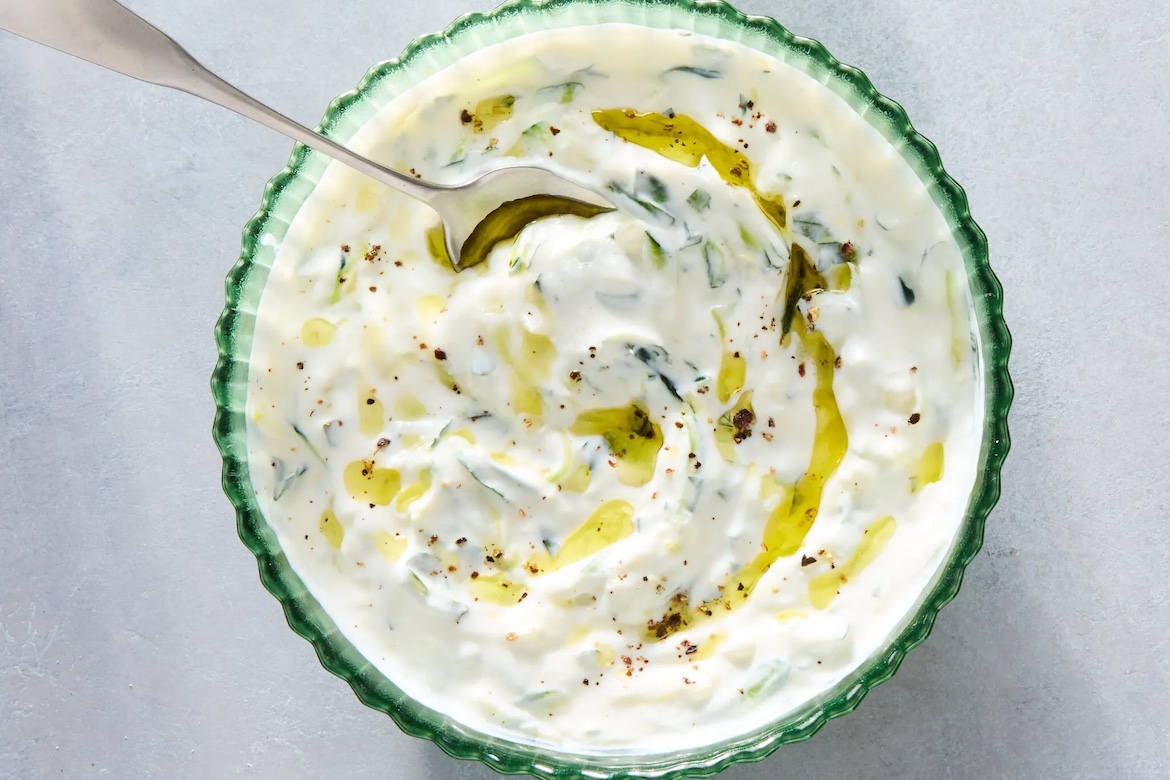
From zucchini and carrots to avocado, beets and even wild purslane, these fresh variations prove that Greece’s most famous yogurt dip can handle a little summer experimentation.
There are certain Greek foods that people do not appreciate seeing tampered with, and tzatziki is high on that list.
The classic combination of thick strained yogurt, cucumber, garlic, olive oil and vinegar has survived quite nicely without avocado, harissa or anything else being folded into it. It does not need fixing.
But summer has a way of filling kitchens with more zucchini, carrots, herbs and tomatoes than anyone knows what to do with. And once you understand the basic logic of tzatziki—cool yogurt, something crisp or vegetal, garlic, acidity and good olive oil—there is plenty of room to play.
Think of these as summer riffs: ten ways to keep a familiar bowl of tzatziki interesting without losing the cool, garlicky personality that made everyone love it in the first place.
Begin With a Good Tzatziki Base
For most of these variations, begin with approximately two cups of thick, whole-milk Greek yogurt, one finely grated garlic clove, two tablespoons of extra-virgin olive oil, one tablespoon of white-wine vinegar or fresh lemon juice and enough salt to wake everything up.
Whenever you use cucumber, zucchini, radish or another watery vegetable, grate it, salt it lightly and leave it in a colander for about ten minutes. Then wrap it in a clean kitchen towel and squeeze hard. The difference between thick, spoonable tzatziki and a watery yogurt puddle usually comes down to this one step.
Argiro Barbarigou explains the importance of properly grating and draining cucumber in her classic Greek tzatziki recipe, while Akis Petretzikis offers another dependable traditional tzatziki foundation.
1. Replace the Cucumber With Zucchini
This is the idea that started the entire list.
Zucchini has the same mild flavor and high water content that make cucumber work so well in tzatziki, but it brings a slightly sweeter, softer summer flavor. Grate one medium zucchini, salt it, let it drain and then squeeze it exceptionally dry before folding it into the yogurt base.
Fresh basil makes this version especially seasonal. Use two generous tablespoons of chopped basil, either alone or mixed with a little dill or mint. Lemon juice works better than vinegar here, keeping the flavor bright and light.
The original inspiration was a zucchini-and-basil tzatziki shared by New York Times Cooking. An accessible full version can also be found in this zucchini tzatziki recipe from Abra’s Kitchen.
Serve it with grilled chicken, salmon, zucchini fritters or warm pita. It is also an excellent answer to that annual midsummer moment when every garden in the neighborhood appears to be producing zucchini at an alarming rate.
2. Make Carrot Tzatziki With Dill—or Mint
Carrots transform tzatziki into something slightly sweeter, brighter and considerably more colorful.
Akis Petretzikis uses grated carrot with strained yogurt, garlic, white-wine vinegar and dill in his carrot tzatziki recipe. Grate two medium carrots, squeeze away any excess moisture and fold them into the yogurt base with a generous handful of chopped dill.
Argiro Barbarigou takes a slightly different direction in her Greek-language carrot tzatziki recipe, pairing the carrot with mint rather than dill. That small change makes the dip taste cooler and a bit more unexpected.
Both versions work. Dill gives it a familiar Greek flavor, while mint plays up the carrot’s natural sweetness. A tiny amount of orange zest can also be added, but use restraint. This is tzatziki, not marmalade.
Serve carrot tzatziki with grilled pork, chicken, roasted vegetables or toasted bread brushed with olive oil and oregano.
3. Add Avocado, Cat Cora Style
Greek American chef Cat Cora adds diced avocado to cucumber tzatziki in the sauce accompanying her pork skewers with avocado tzatziki.
Her version combines yogurt, grated cucumber, garlic, lemon juice, olive oil and avocado. The result is richer and silkier than traditional tzatziki, with enough body to use as a sandwich spread or burger topping.
To make it, prepare a basic cucumber tzatziki using approximately two cups of yogurt and one small grated and well-drained cucumber. Fold in one ripe avocado, cut into small cubes. Stir gently if you want visible pieces of avocado, or more vigorously if you prefer the avocado to partially melt into the yogurt.
Give it at least an hour in the refrigerator before serving. Cat pairs hers with pork skewers, but it would be equally good with grilled shrimp, chicken, lamb burgers or spooned into warm pita with tomatoes and lettuce.
4. Turn It Bright Pink With Beets
Beetroot and yogurt already have a natural affinity, and Argiro Barbarigou’s beet salad with yogurt and garlic is close enough to the tzatziki family to earn a place here.
Her Greek recipe combines strained yogurt with finely grated raw or cooked beet, garlic, dill, vinegar and olive oil. She notes that raw beets produce a more intense pink color, while cooked beets create a softer shade.
For a loose English adaptation, grate one medium raw beet—or use one roasted and cooled beet—and stir it into two cups of strained yogurt with one grated garlic clove, chopped dill, a splash of vinegar and olive oil. Season well and top with pumpkin or sunflower seeds for crunch.
The color alone will wake up a summer table, but this is not merely decorative. The beet brings earthy sweetness that works particularly well with lamb, grilled chicken, roasted potatoes and vegetables. Just wear gloves while grating it unless you enjoy explaining your hands to people.
5. Replace the Cucumber With Radishes
Radishes bring the same refreshing crunch as cucumber but with a sharper, peppery finish.
Ina Garten’s radish tzatziki combines grated radishes with Greek yogurt, garlic, olive oil, lemon juice, scallions and fresh mint.
For a summer bowl, grate six to eight radishes and squeeze them dry in a towel. Fold them into about one and a half cups of thick yogurt with a grated garlic clove, a squeeze of lemon, chopped scallions and plenty of mint.
The finished tzatziki has a bit more attitude than the cucumber original, making it particularly good with pork souvlaki, grilled fish or fatty cuts of lamb. It also looks beautiful finished with thinly sliced radishes and a drizzle of olive oil.
This is one of the easiest substitutions on the list and one of the most convincing. Even the tzatziki purists may quietly return for another spoonful.
6. Empty the Vegetable Garden Into It
Argiro Barbarigou takes the concept much further in the vegetable tzatziki she serves with her homemade souvlaki wraps.
Her recipe includes cucumber, carrot, zucchini, avocado and tomato, along with yogurt, garlic, vinegar, olive oil, dill and mint. It is essentially an entire Greek summer garden held together by yogurt.
The key is moisture control. Seed the tomato and leave the chopped flesh on paper towels to drain. Grate and salt the cucumber and zucchini, then squeeze them dry. Grate the carrot and finely dice the avocado.
Fold everything into thick yogurt with garlic, vinegar, olive oil, dill and mint, stirring enough for some of the avocado to blend into the mixture. The result is chunkier than standard tzatziki and substantial enough to become part of the meal rather than merely a condiment.
Pile it into pita wraps, spoon it onto grilled burgers or serve it as a summer lunch with bread, olives and feta.
7. Try the Cretan Purslane Version
One of the most genuinely Greek variations on this list comes from Crete.
Writing about purslane—known in Greek as glistrida or antrakla—Argiro Barbarigou describes how Cretans serve the tender raw plant with yogurt, garlic, vinegar and olive oil, accompanied by thick pieces of cucumber or the pale Cretan cucumber known as xylangouro.
She calls it a different kind of tzatziki, made with the slightly peppery wild green rather than grated cucumber.
To create a loose version at home, wash and thoroughly dry approximately one cup of tender purslane leaves and soft stems. Chop them roughly and fold them into two cups of strained yogurt with garlic, red-wine vinegar, olive oil and salt.
Wild purslane has a more peppery bite, while cultivated purslane tends to be milder. Serve it with sliced cucumbers, tomatoes, fried zucchini, grilled fish or simply a loaf of good bread.
This one is less of a social-media hack and more of a reminder that Greek cooks have been mixing seasonal greens, yogurt and garlic long before anyone began giving such things clever names online. You can read more about the ingredient and its Cretan uses on Argiro Barbarigou’s website.
8. Fold in Feta for More Bite
Adding feta pushes tzatziki into richer and saltier territory, somewhere between a sauce and a full-fledged Greek cheese dip.
Chef Anne Burrell’s feta tzatziki spread combines yogurt and feta with cucumber, garlic, vinegar, dill and mint.
To make your own, prepare a basic cucumber tzatziki and fold in approximately half a cup of finely crumbled feta. Reduce the added salt until everything has been mixed and tasted, since the cheese will already bring plenty of its own.
For a smoother spread, mash the feta into the yogurt before adding the cucumber. For more texture, leave the crumbles slightly larger.
This version is made for lamb burgers, grilled meatballs, roasted peppers or thick slices of summer tomato. It also makes a strong argument for abandoning mayonnaise on almost any sandwich.
9. Add Harissa for a Slow Summer Burn
Tzatziki is usually brought to the table to cool things down. Adding harissa lets it play both sides.
Jeff Mauro’s harissa tzatziki dip combines grated cucumber and Greek yogurt with harissa paste, lemon juice, garlic and a small amount of honey.
Begin with one tablespoon of harissa for a gentle smoky warmth or use two for a more noticeable kick. A teaspoon of honey rounds off the heat without making the dip sweet.
Because harissa pastes vary considerably in strength and saltiness, taste before adding extra seasoning. Finish with olive oil and perhaps a scattering of chopped mint.
Serve this one with grilled chicken, lamb, roasted potatoes or fried zucchini. It is not traditional Greek tzatziki, obviously. It is also delicious, which tends to end most arguments.
10. Turn Up the Herbs and Lemon, Michael Symon Style
Sometimes the smartest hack is not replacing the cucumber at all, but changing the balance of everything around it.
Greek American chef Michael Symon makes a fast dill-and-mint tzatziki using Greek yogurt, finely diced cucumber, fresh dill, fresh mint, garlic, olive oil and the zest of an entire lemon.
The lemon zest is the important move. It delivers a more fragrant citrus flavor without thinning the yogurt with too much juice.
For this version, keep the cucumber quantity modest and use equal amounts of chopped dill and mint. Add the lemon zest directly to the yogurt and allow the mixture to rest for at least half an hour before serving.
The result is fresh, aromatic and particularly good with skewers, grilled vegetables, lamb burgers or fish. It still tastes unmistakably like tzatziki—just one that spent a little extra time in the herb garden.
The Only Rule That Really Matters
However far you take the experiment, use thick yogurt and get the water out of the vegetables.
Zucchini, cucumber, radishes, tomatoes and even grated beets can release enough liquid to ruin the texture. Salt when appropriate, drain thoroughly and squeeze harder than you think you need to.
Then let the finished tzatziki rest in the refrigerator. Even thirty minutes gives the garlic, herbs and acidity time to settle into the yogurt.
And keep the original nearby. A bowl of classic tzatziki beside one or two summer variations lets everyone decide how adventurous they feel.
There is no need to replace a classic when you can simply make more bowls.
Ten Cookbooks to Bring More Greece to Your Summer Table

Tzatziki may begin the meal, but a proper Greek summer table does not stop there. It stretches from small plates and garden vegetables to grilled fish, slow lunches, island recipes and something sweet eaten long after everyone claimed they were full.
These ten cookbooks offer enough inspiration to keep that table going all summer.
- The Greek Islands Cookbook: Simple Sun-Kissed Recipes by Carolina Doriti captures the uncomplicated pleasures of island cooking, with recipes built around tomatoes, herbs, seafood, yogurt, fruit and the kinds of dishes meant to be eaten outdoors.
- Aegean: Recipes From the Mountains to the Sea by Marianna Leivaditaki is a beautiful tribute to Crete and the wider Aegean, shaped by the author’s childhood in her family’s Chania taverna and filled with food from the sea, land and mountains.
- Lemon, Love & Olive Oil by Mina Stone is personal, modern and deeply connected to the author’s Greek family. Its generous salads, vegetable dishes, dips and unfussy meals feel especially right for relaxed summer entertaining.
- Greekish: Everyday Recipes With Greek Roots by Georgina Hayden takes the flavors of Greece and Cyprus and loosens them up for contemporary home kitchens. It is an especially good choice for cooks who want bold Mediterranean food without spending the entire day at the stove.
- Under the Olive Tree: Recipes From My Greek Kitchen by Irini Tzortzoglou brings together Greek family recipes, personal stories and the kind of abundant, hospitable cooking that makes people linger at the table.
- The Foods of the Greek Islands by Aglaia Kremezi explores the distinct cooking traditions of Greece’s islands through seasonal recipes gathered from local women, farmers, fishermen and bakers.
- The Greek Kitchen by Vefa Alexiadou distills seventy-five essential recipes from one of the most important authorities on Greek home cooking, from mezedes and salads to seafood, skewers, pies and pastries.
- The Greek Diet by Maria Loi and Sarah Toland focuses on the foundational ingredients of the Greek table—olive oil, yogurt, vegetables, beans, seafood and honey—and offers a lighter approach suited to the way many people naturally want to eat during summer.
- Mediterranean Summer Table by Kathy Kordalis moves beyond Greece to the wider Mediterranean but earns its place through its emphasis on seasonal vegetables, shared plates, seafood, sauces, breads and easy meals built for warm-weather gatherings.
- Yiayia: Time-Perfected Recipes from Greece’s Grandmothers by Anastasia Miari travels through the kitchens of grandmothers across Greece, preserving regional dishes and the stories behind them. From Cretan dakos and stuffed zucchini from Lesvos to a Cycladic fourtalia and watermelon cake from Milos, it is a particularly lovely addition to a Greek summer cookbook collection.