
The Acropolis Museum is celebrating its 17th anniversary this summer with a remarkable new exhibition titled Inspirations. Ancient Greek Art living in Italy.
Running from 16 June to 30 August, the exhibition is a unique collaborative cultural effort with Italy that features rare ceramics, bronzes, and marbles, on loan from Italian museums.
The exhibition itself focuses on the profound influence that ancient Greek art, literature, philosophy, and education exerted on the Roman world and the Italian peninsula, spanning from antiquity all the way up to the 20th century.
This cultural exchange started in the 8th century BCE between Greeks and the peoples of the Italian Peninsula—such as the Etruscans and Latins—as well as through significant Greek settlements and colonies in Sicily and Southern Italy, an area known as Magna Graecia.
The fascination the Romans held for Greek culture is perfectly captured in the words of the Roman poet Horace who mused on how “captive Greece captured her savage conqueror” (Graecia capta ferum victorem cepit).
38 rare masterpieces on display at the Museum’s temporary exhibitions gallery straight are have been curated into seven distinct thematic sections:
-Section I – Before Rome: Greek merchants and Etruscan-Italian aristocrats
-Section II – Artists in Magna Graecia
-Section III – The Sea as an Archive
-Section IV – The Romans’ Greece
-Section V – Living the Greek way
-Section VI – The Aristocratic Collecting of Modern Era
-Section VII – Italian Looks: Canova, Savinio, de Chirico
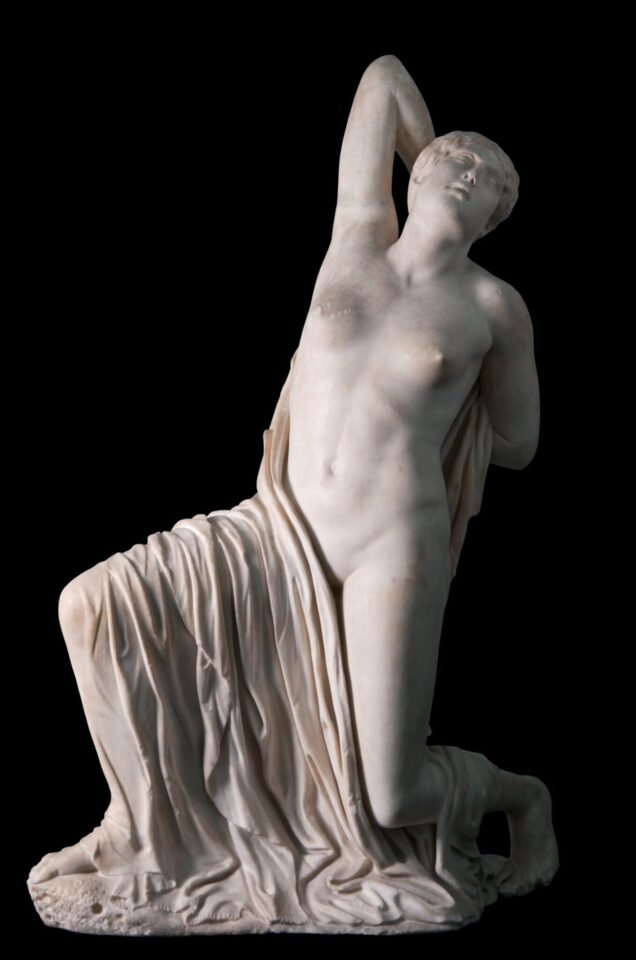
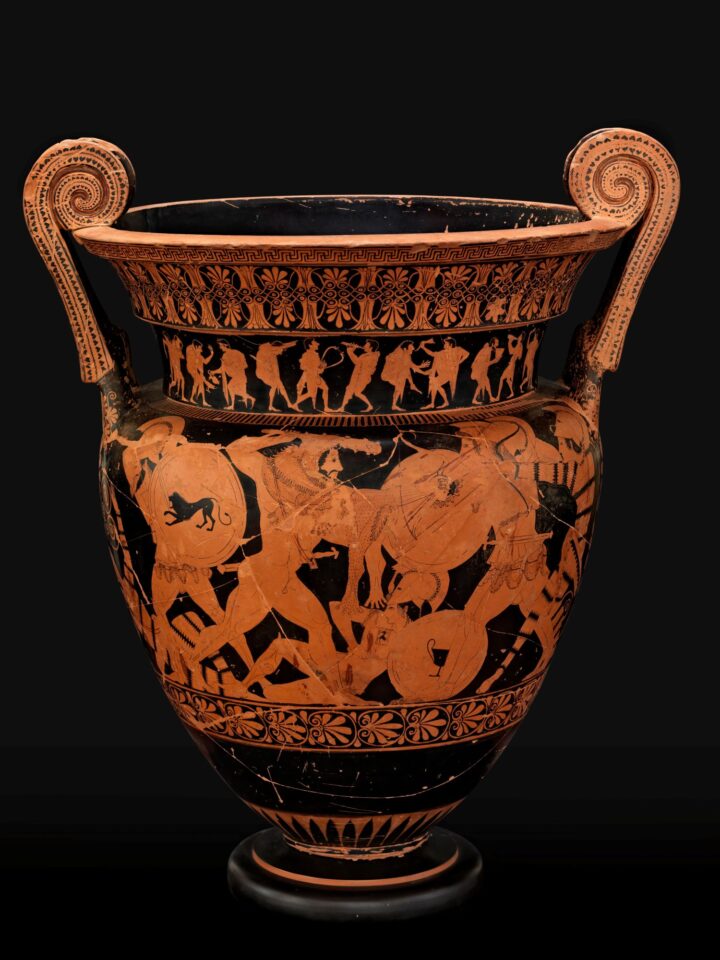
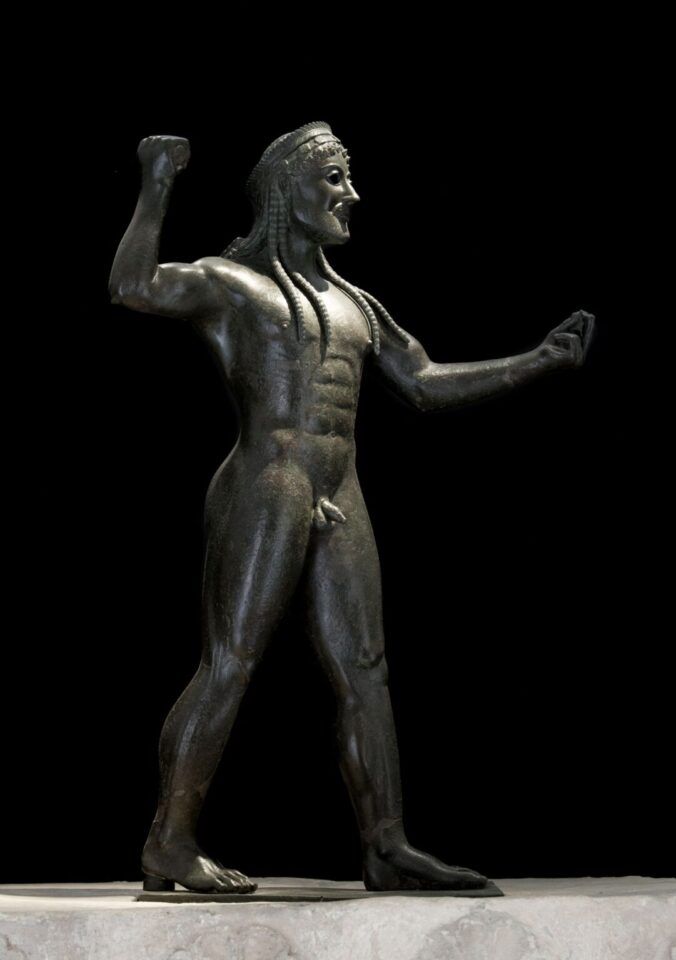
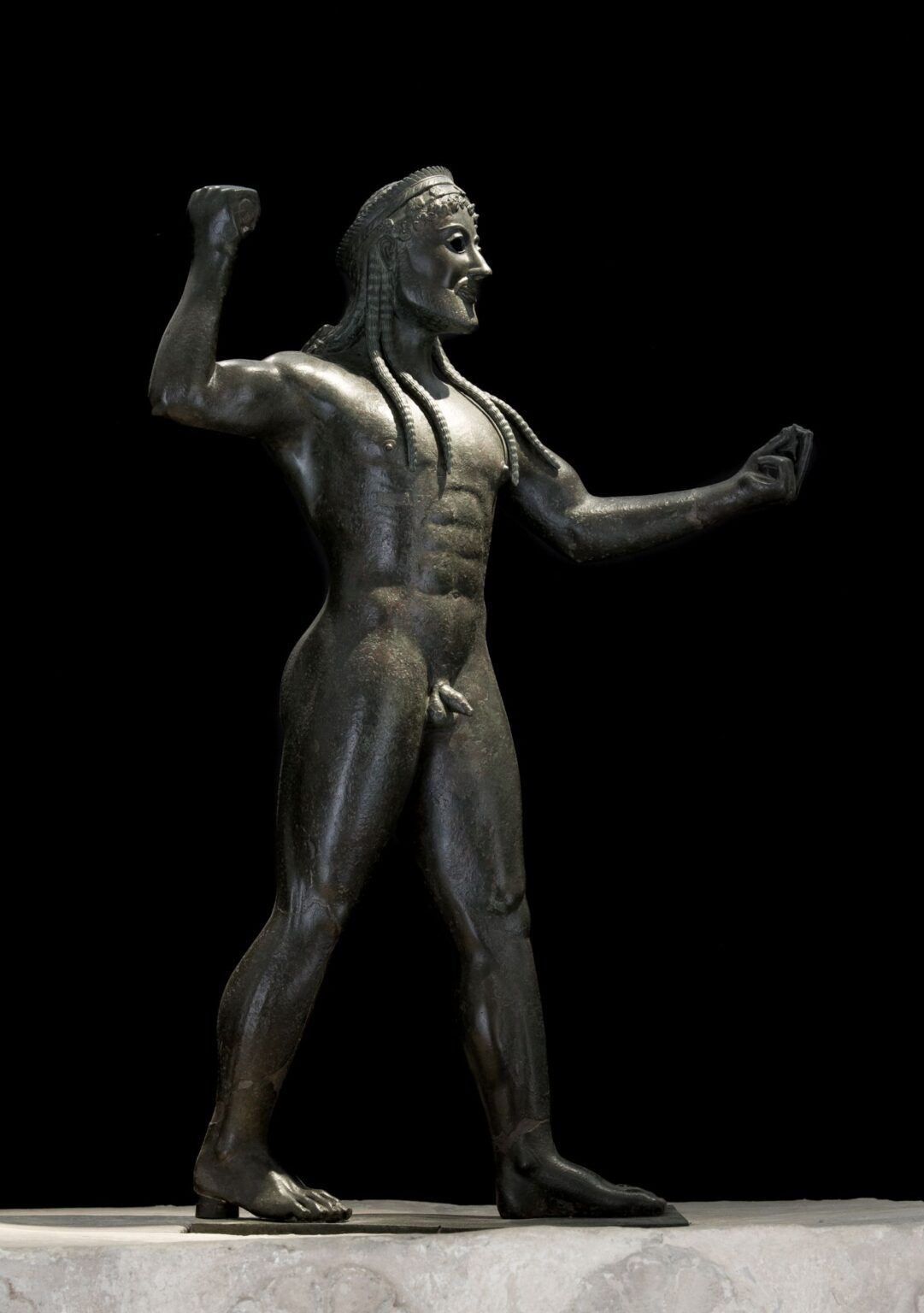
Among the artefacts on display are the Krater of the Amazons (an Attic red-figure ceramic from 515-500 BC, sourced from Arezzo), the marble Stele of Grottaferrata depicting a young man studying a scroll (410-390 BC), the striking bronze Zeus of Ugento (530 BC), and the marble Apollo of Cirò Marina (440-430 BC).
Admission to the exhibition is entirely free to the public, though visitors are required to issue their (free) admission ticket from the Acropolis museum ticket counters.
Information for each exhibit is provided in three languages, Greek, Italian, and English.
Visitors can also scan exhibit QR codes to access further details about individual artefacts. The exhibition catalogue, also in Greek, Italian, and English, is available for purchase at the Acropolis Museum Shop.