
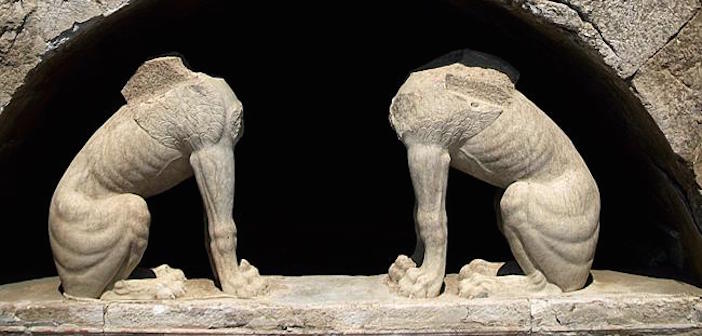
The excavation of the enormous Amphipolis tomb complex in northern Greece that captivated the nation and world and opened a window to our ancient past is now being threatened by austerity budget cuts and bad weather.
The burial mound dating back to 325BC — the era of Alexander the Great — has been flooded by heavy rains, shifting mud and creating large stagnant ponds — all of which threaten to make the already fragile site even more unstable and could very well bury it again. Visitors have already been barred from the site due to the risk of damage and harm.
Human bones found inside a boxlike grave in an inner chamber raised speculation that the tomb may have belonged to one of Alexander’s generals, or perhaps even his mother.
But analysis of the bones has since identified they belong to five different individuals.
A recent emergency conference between archaeologists and the Greek culture ministry discussed the need for a comprehensive site study to assess what drainage work needs to be done to protect the stability site.
Archaeologists have expressed fears that the water may have undermined much of the stonework, presenting a danger to its preservation even after the site dries out.
Local media reports the proposed study has already been rejected due to a lack of government funds.
Drainage and preservation work is therefore unable to proceed.