
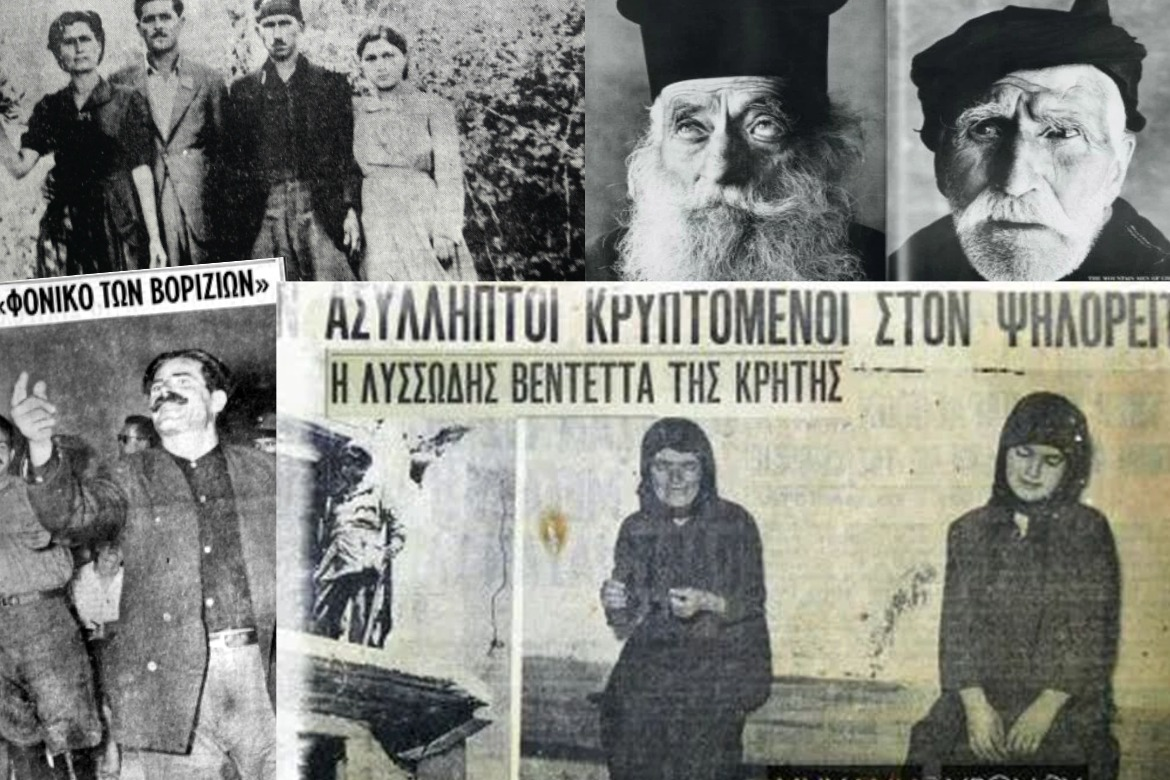
With a vendetta killing between two warring families that left two dead and made international headlines recently in the Cretan village of Voriza, the world was reminded of a chilling truth: in parts of Crete, the past is never entirely past.
Beneath the island’s postcard beauty and quiet village life lies an old and deeply rooted code— one where honor and blood are bound together, and where an insult can echo through generations. While the modern Greek state condemns such violence and has even enacted laws to curb gun violence, the moral universe that sustains it remains woven into the island’s collective memory and cultural DNA.
In his study Collective Memory and Blood Feud: The Case of Mountainous Crete, anthropologist Aris Tsantiropoulos examines the very psychology and social structures that explain how such cycles endure. Based on years of fieldwork in villages around Mount Ida— the same rugged landscape where the recent feud reignited— Tsantiropoulos traces how vengeance transcends generations, with men avenging relatives killed long before they themselves were born. These are not crimes of passion but rituals of remembrance that have been woven into family responsibility, driven by what he calls a “cultural trauma” carried within families like a scar.
The article situates the Cretan vendetta within a wider Mediterranean tradition where honor, shame, and kinship define moral boundaries. But Tsantiropoulos moves beyond anthropology into psychoanalytic territory, exploring how grief and pride intertwine until mourning itself becomes action. In such societies, revenge can function as both memory and therapy— a way to reclaim dignity through violence, however destructive its logic.
His case studies read like modern Greek tragedies: a young shepherd in Heraklion avenging an uncle killed before his birth; another man traveling across the Aegean to kill the murderer of an uncle he never met. Each act reveals how history repeats not through chance but through inheritance— through what Tsantiropoulos terms the “vengeance habitus,” a learned social reflex embedded in Cretan identity.
What makes his work essential today is the empathy behind it. Tsantiropoulos doesn’t romanticize the feud, nor does he dismiss it as barbaric. He dissects it as a system of meaning — one born in isolation, bound by equality and pride, and sustained by silence. In doing so, he helps us understand why the vendetta of Voriza is not just a story of two families, but of an entire moral order struggling to reconcile memory with modernity.
Collective Memory and Blood Feud: The Case of Mountainous Crete was first published in Crimes and Misdemeanours: Deviance and the Law in Historical Perspective (Vol. 2, Issue 1, 2008) and remains a definitive work on the anthropology of revenge and remembrance in Crete.
By Aris Tsantiropoulos, Lecturer of Social Anthropology, Department of Philosophy and Social Studies, University of Crete