
According to a report by the German newspaper Stuttgarter Zeitung, scientists were alarmed to discover that the deepest point of the Mediterranean Sea has been turned into a massive garbage dump.
Located approximately 60 kilometres southwest of Pylos, the Calypso Deep is a steeply sloping canyon that plunges to a depth of 5,109 metres.
It was there that a duo of deep-sea researchers explored the abyss using the specialized submersible DSV Limiting Factor whose hull can withstand pressures exceeding 500 times the Earth’s atmospheric pressure.
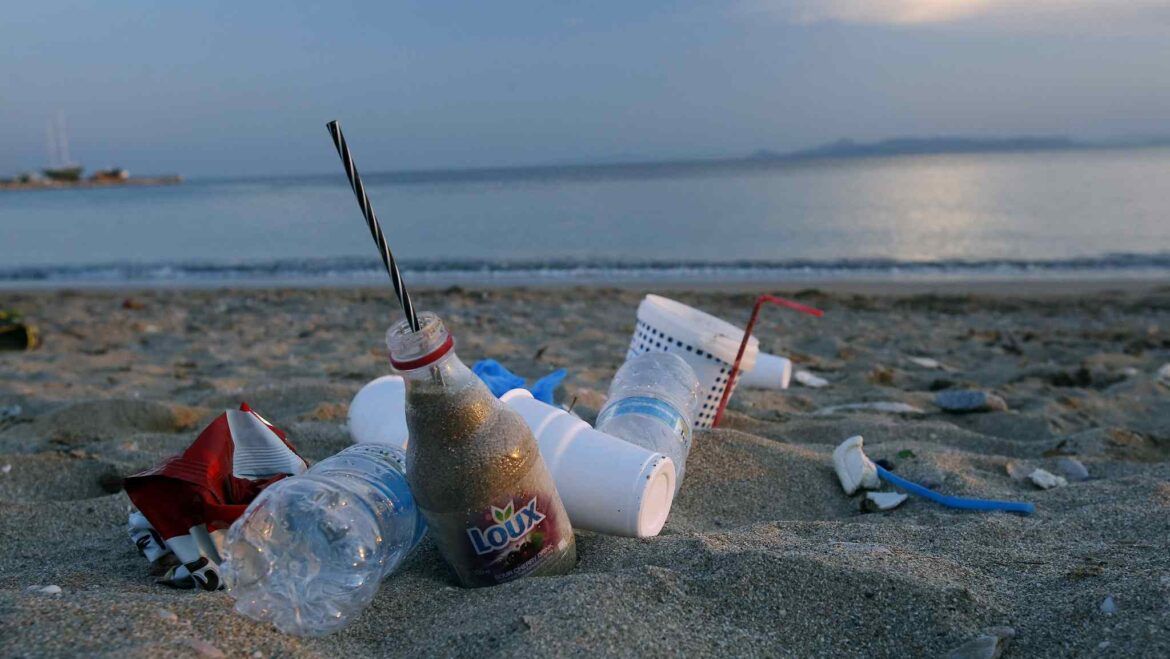
But rather than encountering pristine deep-water ecosystems, the crew was greeted by litter that included plastic bags, bottles, cups, straws, paper waste and aluminium cans.
According to the researchers’ findings, published in the journal Marine Pollution Bulletin and highlighted in the Stuttgarter Zeitung article, the pollution density is staggering.
Researchers recorded 26,715 items of debris per square kilometre, making the area one of the highest concentrations of deep-sea waste ever measured globally.
Spanish oceanographer Professor Miquel Canals, who participated in the study, explained that the Calypso Deep’s steep geomorphology acts as a natural “trap,” capturing lightweight waste, such as plastics, that travels from the coast via wind and currents and ultimately sinks to the trench.
Apart from beach litter, researchers also found evidence of illegal trash dumping directly from ships, which releases even more harmful chemicals into the ocean.
Ninety percent of the accumulated refuse is made of plastic, while researchers expect the amount of trash to only increase in the future. The long-term consequences of this accumulation are dire, creating what researchers describe as an invisible but continuous cycle of pollution. Initially carried by wind and ocean currents, the plastic waste becomes heavier and sinks as algae and other marine organisms attach to it. These plastics then float just above the seabed until they are either completely buried or slowly break down into smaller fragments known as microplastics. Once reduced to this size, the microplastics are easily ingested by marine animals, entering the food chain and ultimately ending up back on our plates and inside the human body.
“As far as the Mediterranean is concerned, unfortunately, it can be said that not a single centimeter of it is clean,” says Miquel Canals.
Image Credit: VCG Photo