
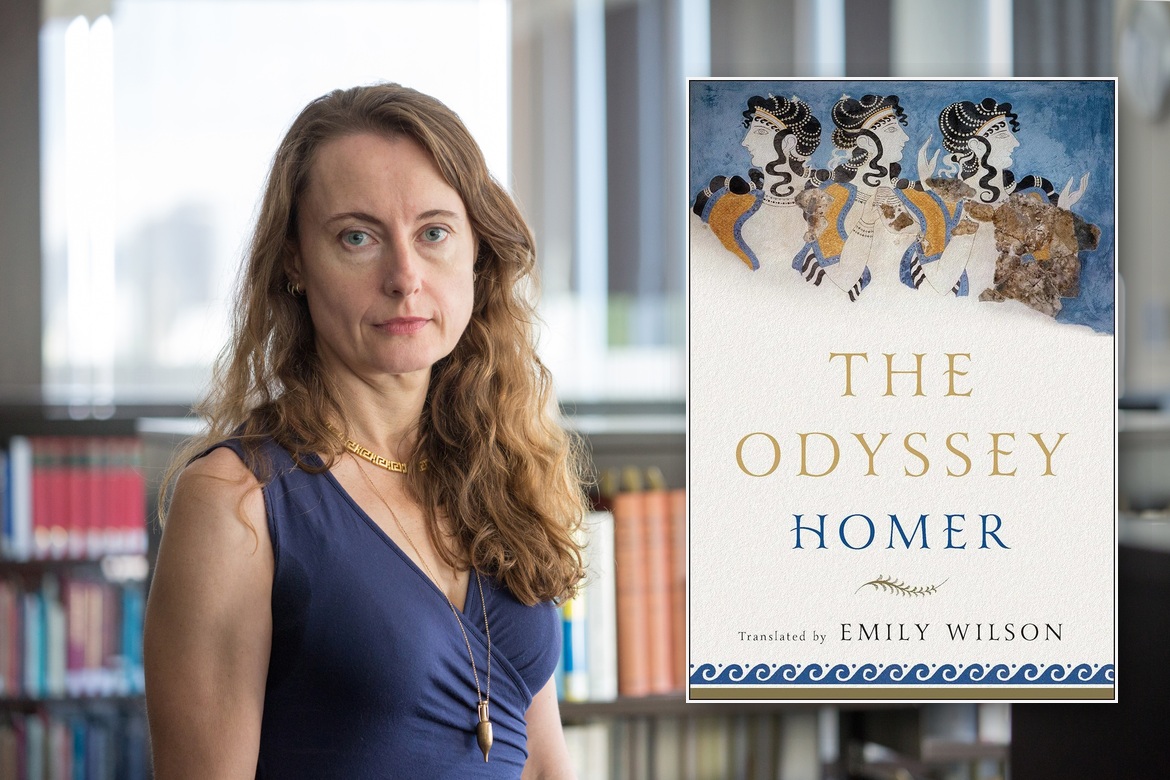
The acclaimed translator’s modern rendering of Homer has sold more than one million copies and is finding a vast new audience following the release of Christopher Nolan’s blockbuster film.
“Tell me about a complicated man.”
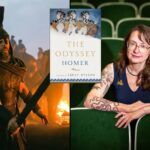
With those six words, classicist Emily Wilson opened her landmark translation of Homer’s Odyssey and offered English-language readers a strikingly modern introduction to one of literature’s oldest and most elusive heroes.
Nearly a decade after it was first published, Wilson’s translation of The Odyssey has become one of the biggest literary beneficiaries of the cultural wave surrounding Christopher Nolan’s epic film adaptation.
Wilson’s publisher, W.W. Norton & Company, said paperback sales have increased by nearly 40 percent compared with last year. Domestic sales across all editions have now surpassed one million copies. On July 21, the book was ranked No. 3 on Amazon and No. 11 on Barnes & Noble’s bestseller list, according to figures.
Nolan has cited Wilson’s translation—and particularly its famous opening line—as an inspiration for his interpretation of Odysseus. Wilson was not a consultant on the movie, but the influence of her accessible, contemporary language can be felt in Nolan’s effort to remove the stiff formality often associated with Hollywood depictions of the ancient world.
Published in 2017, Wilson’s book was the first complete English translation of The Odyssey by a woman. Written in iambic pentameter and a vivid contemporary idiom, it moves with unusual speed and clarity while retaining the rhythm of a poem originally meant to be heard aloud.
Her choice to translate the Greek word polytropos as “complicated” rather than the more traditional “wily,” “resourceful” or “man of many turns” helped define the entire project. Wilson’s Odysseus is intelligent and adaptable, but he is also deceptive, violent, traumatized and morally difficult. He is not reduced to a marble hero standing safely above judgment.
That complexity lies at the heart of a timely conversation Wilson recently held with playwright Sarah Ruhl at The 92nd Street Y in New York City.
Recorded on July 16, one day before Nolan’s film opened in theaters, the discussion brings together two writers whose work has been deeply shaped by ancient Greek literature. Ruhl, a two-time Pulitzer Prize finalist and MacArthur Fellow, reimagined the myth of Orpheus and Eurydice in her acclaimed play Eurydice.
Their conversation is less a conventional movie discussion than an invitation to return to the poem itself.
Wilson and Ruhl examine why a story composed nearly 3,000 years ago continues to speak so directly to the modern world. They explore The Odyssey as a story not simply of monsters, gods and shipwrecks, but of travelers and refugees, the aftermath of war, masculinity and violence, marriage and family, hospitality and exclusion, and the constantly changing meaning of home.
They also consider the long journey the poem has taken through Western culture—from ancient oral performance to written verse, centuries of translation and reinterpretation, and finally to the largest possible Hollywood canvas.
Wilson’s own response to Nolan’s film has been appreciative but far from uncritical. Speaking with The Associated Press, she celebrated the millions of people being introduced—or reintroduced—to Homer, while arguing that the movie omitted themes she considers essential, including the powerful presence of the gods and the depth of the marriage between Odysseus and Penelope.
She nevertheless encouraged audiences to experience Nolan’s spectacle in a theater, saying that anyone able to see it on a large screen “should absolutely go.”
That tension between the ancient poem and its modern adaptation is precisely what makes this an ideal moment to read—or reread—The Odyssey. A film can recreate the storms, battles, monsters and impossible landscapes of Odysseus’ journey. Wilson’s translation allows readers to encounter the stranger and more complicated questions beneath them.
Who is permitted to return home? What does war do to the people who survive it? Can a person come back after 20 years and still belong to the family and country left behind? And what kind of man is Odysseus: hero, survivor, storyteller, liar—or all of them at once?
For readers arriving at Homer through Christopher Nolan’s film, Emily Wilson’s translation remains one of the most accessible and compelling places to begin.
Purchase Emily Wilson’s translation of The Odyssey.
Watch Emily Wilson and Sarah Ruhl discuss The Odyssey at New York City’s 92nd Street Y.