
For approximately 2,500 years, villagers in a small town on the Greek island of Evia have communicated through a rare whistling language known as “Sfyria.”
Every whistle corresponds to one letter of the Greek alphabet and each composition leads to the creation of whistling words.
But now with only a handful of elderly “speakers” left alive, this ancient language used in the tiny village of Antia faces the grave possibility of extinction.
“It’s essential we preserve this language,” says resident Kyriaki Giannakari, who speaks via an interpreter to PBS NewsHour. “We have to keep it. This is the way we’ve grown up.”
According to the PBS report, one theory holds that the “Sfyria” language was created in 480 BCE by Persians who suffered defeat in the Battle of Salamis and washed up on the shores of Evia. The surviving Persians used the language to communicate while avoiding detection from vengeful Greeks.
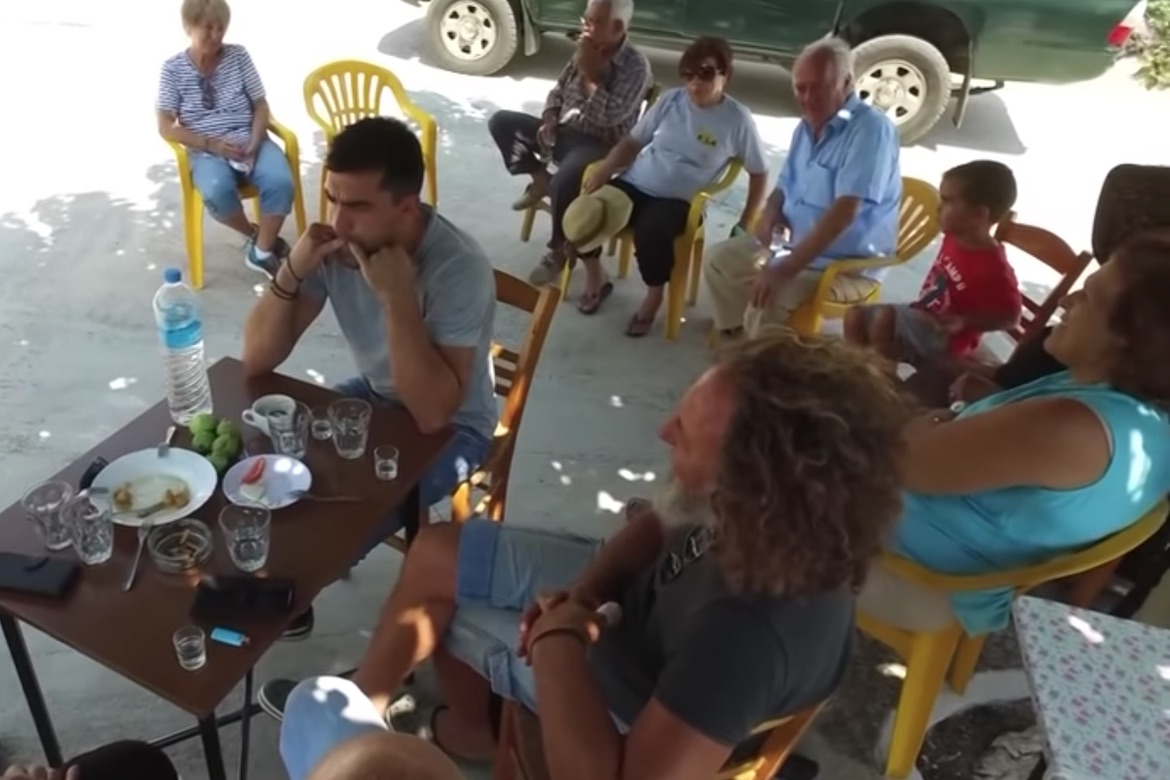
“Whistling was used widely [in Antia], used until the telephone arrived,” says Panagiotis Tsanavaris, who serves as president of the Cultural Association of Antia. “That was in 1965, around the same time most young people left the village to study or find work. That meant there was no one around to pass the language on to the next generation.”

(Screenshot from PBS NewsHour video)
In the video below, correspondent Malcolm Brabant reports on how the Greek island villagers hope to save their language from extinction and what it has in common with Twitter.
“The villagers acknowledge that the language is fading as fast as an Evia sunset,” Brabant says. “And they’re trying to find a benefactor to fund lessons for young Greeks interested in perpetuating this unique sound of the mountains.”
Watch the video