
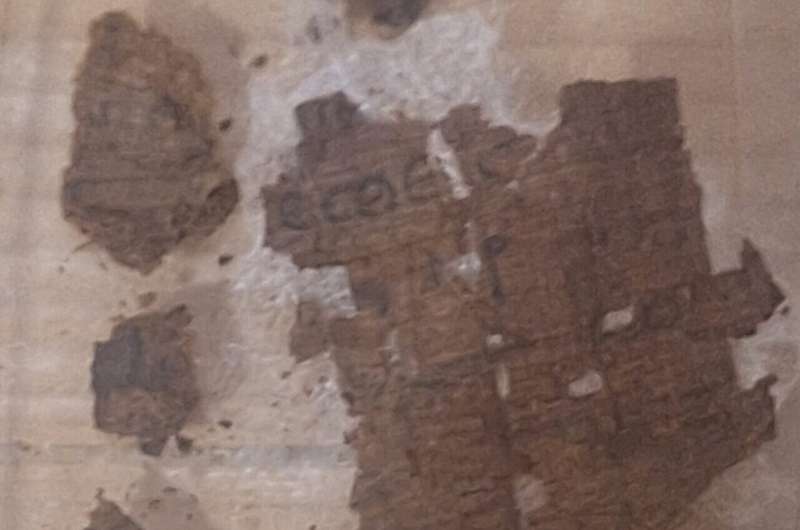
A team of researchers from the University of Barcelona have made a fascinating archaeological discovery—a fragment of Homer’s Iliad placed in the abdomen of a Roman-era Egyptian mummy during its embalming. The find was made in a 1,600-year-old tomb at the ancient site of Oxyrhynchus, located in the modern-day town of El-Bahnasa, about 118 miles south of Cairo.
Discovered by Dr. Nùria Castellano and her team late last year, the papyrus fragment was subsequently analyzed by Ignasi-Xavier Adiego, professor at the Department of Classical, Romance and Semitic Languages, a classical philologist and director of the Oxyrhynchus project.
With the help of conservator Margalida Munar and papyrologist Leah Mascia, Professor Adiego identified the fragment as being part of the “Catalogue of Ships” from Homer’s epic poem, the Iliad. The passage inventories the sizeable Achaean military fleet that sailed for Troy.
Talking about the find, Professor Adiego explained, “This is not the first time we have found Greek papyri, bundled, sealed, and incorporated into the mummification process, but until now, their content was mainly magical. Furthermore, it is worth noting that, since the late 19th century, a huge number of papyri have been discovered at Oxyrhynchus, including Greek literary texts of great importance, but the real novelty is finding a literary papyrus in a funerary context.”
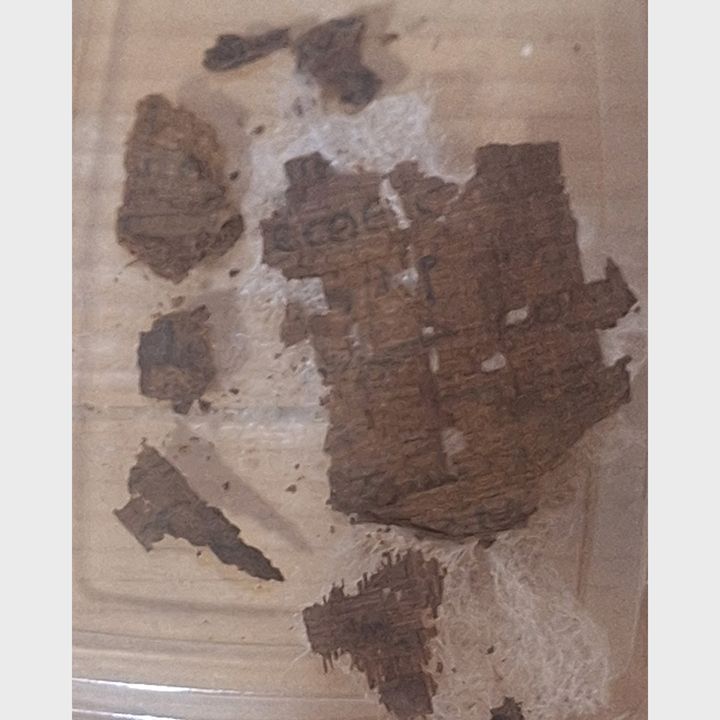
Iliad Papyrus Fragment / Image Credit: University of Barcelona
It seems that some of Oxyrhynchus’ elite revered Greek literary traditions, attributing to the Homeric epic immense symbolic and spiritual meaning. At the same time, though, these individuals remained committed to upholding the ancient Egyptian burial customs. The find highlights the intermingling of Greek and Egyptian culture during Roman Egypt (30 B.C.E – 395 C.E.), the time period that succeeded Hellenistic, Ptolemaic Egypt (332 B.C.E – 30 B.C.E).
A 2024 archaeological excavation by the Oxyrhynchus Archaeological Mission found 52 Roman-era mummies, 13 of which possessed “golden tongues”. This ancient practice was designed as a symbol of preparation to ensure the dead could speak in the afterlife. Also among those findings was a terracotta of the god Harpocrates, the Hellenistic Greek interpretation of the Egyptian child god Horus—known as the god of silence, secrets, and confidentiality.