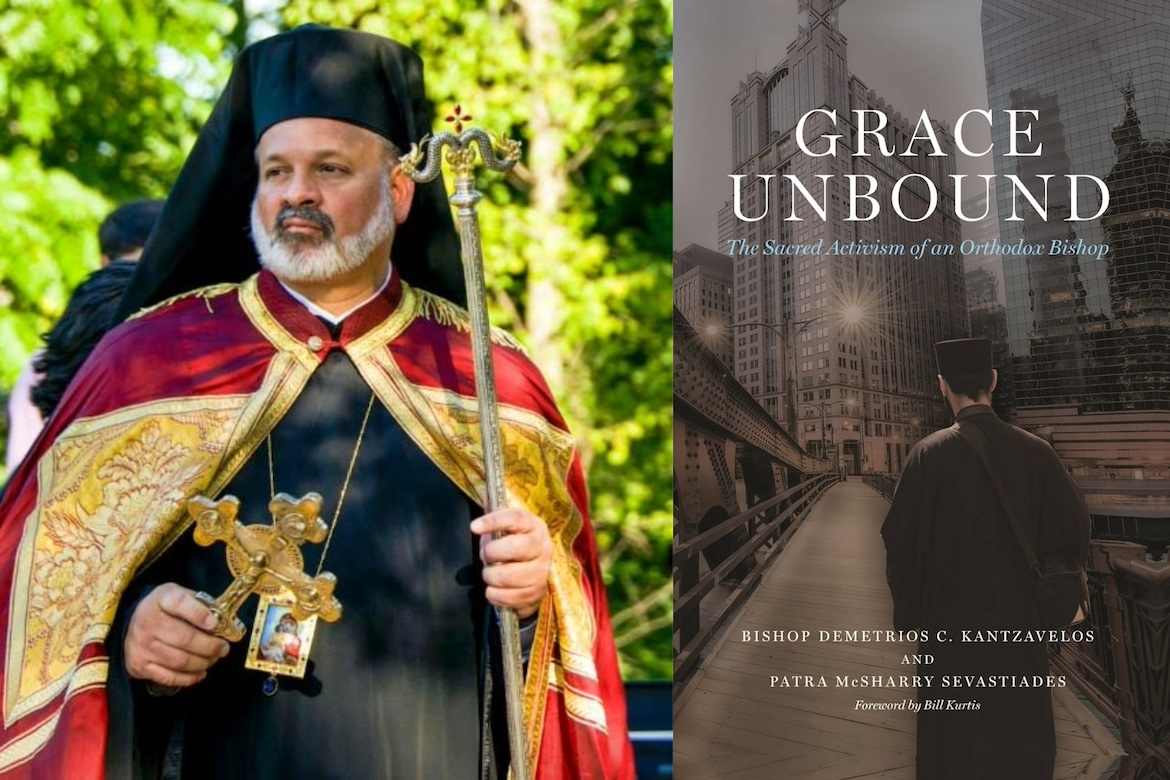

A breath of fresh air. That’s what this new book feels like. The story of how a Greek Orthodox bishop stepped outside his comfort zone—outside the safety of titles and expectations—and chose to stand with the people everyone else forgot.
Grace Unbound: The Sacred Activism of an Orthodox Bishop isn’t about rituals or dogma. It’s about courage, conscience, and compassion in action. Its subject, Bishop Demetrios of Mokissos, also happens to be a dear friend of mine for more than thirty years.
This book is a beacon of hope and a challenge to all people of conscience: to live with integrity, to match values with actions, and to stand courageously for justice and compassion in a world that often rewards complacency.
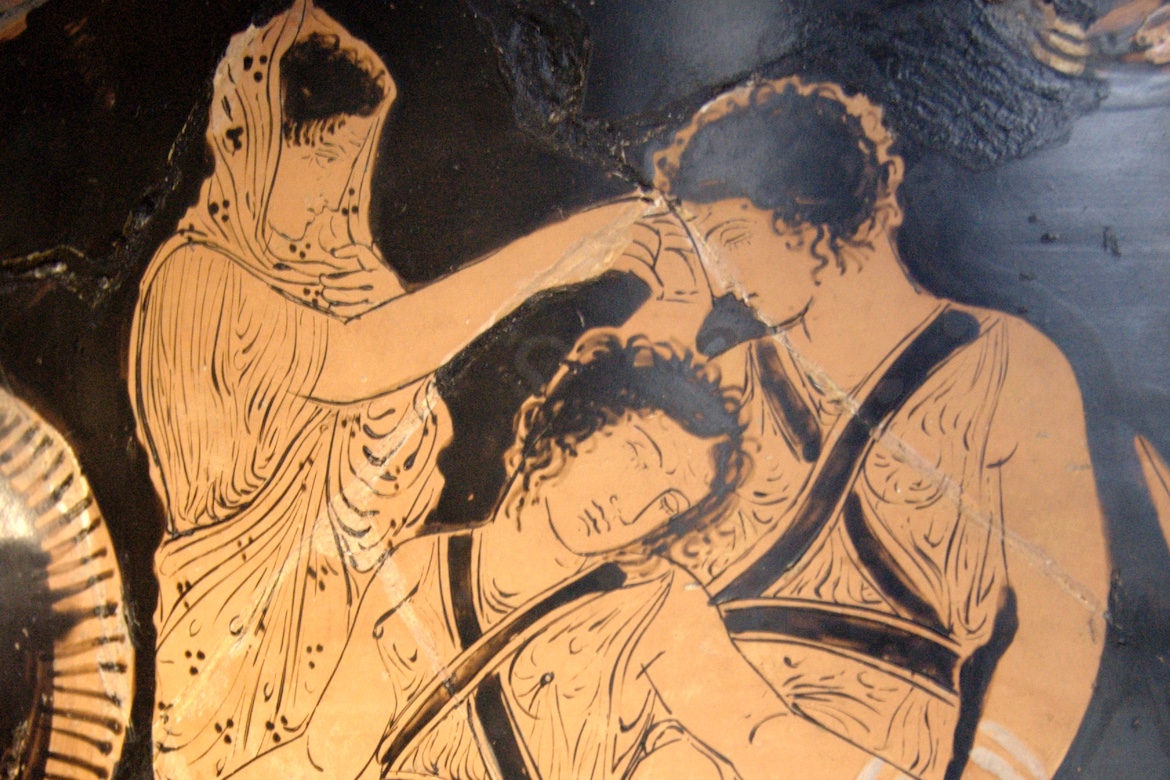
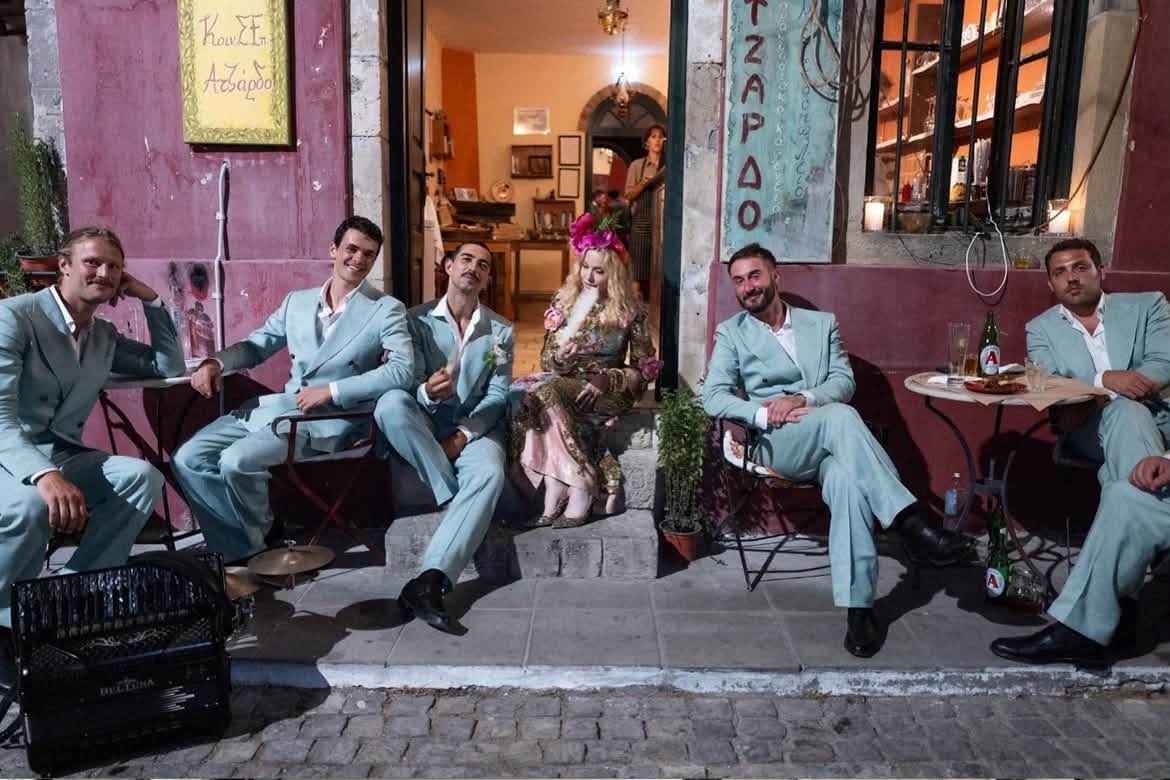
My friendship with Bishop Demetrios began more than 30 years ago with a book—though not this one. He called me in protest after I featured Dinner with Persephone in Greek America Magazine, arguing that it maligned Greece and our culture.
That fiery phone call turned into a friendship, and over the decades I have had the privilege of walking a few steps behind him, watching as his convictions lead him into some of the hardest, loneliest battles a clergyman can fight.
The pages of Grace Unbound recount two of those battles in detail.
His ministry to people living with HIV/AIDS began when most priests turned them away. This wasn’t the exception during the epidemic—it was the rule. Fear and stigma had a grip on society, and the Church was not immune. Parish priests refused to visit the sick. Families kept quiet. Communities turned their backs. Bishop Demetrios did the opposite.
He launched the Bishop’s Task Force on AIDS, creating workshops, guidebooks, and pastoral resources so clergy could minister to the afflicted with dignity and compassion. At a time when those living with AIDS were seen as untouchable, he reminded Orthodox Christians of Christ’s words:
“I was sick and you looked after me.” (Matthew 25:36)
His fight to abolish the death penalty in Illinois was just as relentless. It began with visits to a Greek American prisoner on death row—a convicted murderer that no other clergy from the Greek Orthodox Archdiocese would see.
“I was in prison and you came to visit me.” (Matthew 25:36)
Those prison visits became the spark for an eleven-year-long campaign that helped end capital punishment in the state. For Bishop Demetrios, it was a matter of integrity: if Orthodox Christians claim to be pro-life, he argued, then that must mean all life—from cradle to grave. No government, no court, no jury has the right to take what only God can give. He carried that conviction into hearings, public debates, and private meetings with lawmakers until the law was repealed.
“You shall not kill.” (Matthew 19:18).
Again and again, he asked the only question that mattered: What would Jesus do? And then he lived the answer.
But what makes this book so compelling is that Bishop Demetrios’ greatest resistance did not always come from courts or legislatures—it often came from within his own Church and community.
Behind his back many of his own “brothers in Christ” criticized him for advocating and providing comfort to “the worst of the worst.” During his research for the book, he was even denied access to archives and critical documents (of his own work) that he left at the Greek Orthodox Metropolis of Chicago when he was reassigned to a new position.
Too many spiritual leaders, then and now, prefer the comfort of titles, appearances, or political favor and photo ops. Bishop Demetrios chose a different path, one that risked criticism, isolation, and misunderstanding.
Yet through it all, he never stopped standing with the marginalized, comforting the suffering, and speaking truth to power.
Over the years I’ve seen how his ministry focused on those others forgot. They became his flock. In his presence, people were not just tolerated but affirmed.
He made it clear, not just in words but in action, that they were people of infinite value, deserving of respect, belonging, and love without condition. Yes, the prisoners and the sick, the “worst of the worst,” as one of his fellow clergymen called them.
That is what Grace Unbound captures so powerfully. It isn’t simply the story of the remarkable work of a clergyman. It is a beacon of hope and a rebuke to complacency, a reminder that true greatness lies in selfless service to others.