
Suzanne Collins added another book to her literary pantheon, a prequel to “The Hunger Games” called “Sunrise on the Reaping.”
Nearly two decades after the original trilogy was published, “Sunrise on the Reaping” proves how critical and timely the series remains, but also how much Greek mythology resonates today.
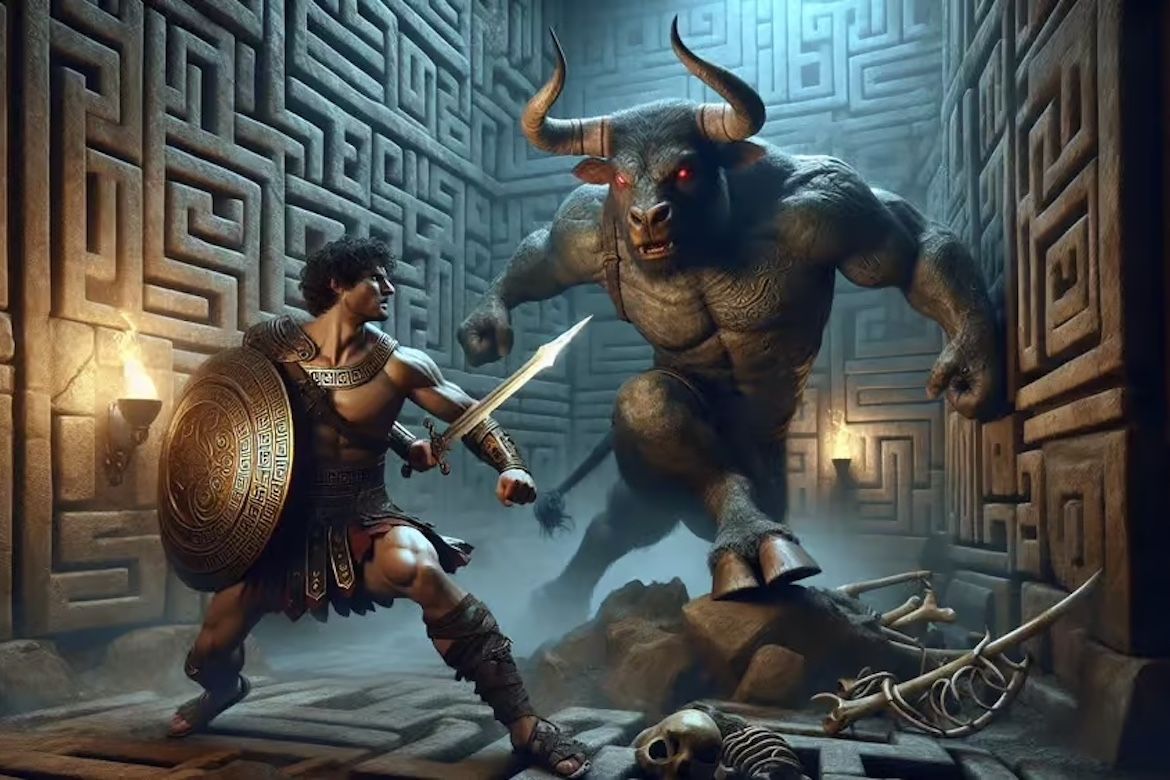
As a child, Suzanne Colins was obsessed with Greek mythology and one of her favorite Greek myths was Theseus and the Minotaur. She was struck by the cruel punishment that Crete had imposed on Athens for being on the wrong side of a war.
Every year the Athenians had to send seven young men and seven maidens to be thrown into the labyrinth and devoured by the Minotaur, a half-human half-bull beast.
“And even when I was a child, I was blown away by how evil that was it was like Crete was sending this very clear message which was if you mess with us, we’ll do something worse than kill you we will kill your children,” Collins said in an NPR interview.
In Colins’ story, which became the basis for her Hunger Games books— and eventually film series— 24 young men and women from 12 districts in what was North America are sent to the hunger games every year as punishment for a war that happened 75 years ago.