
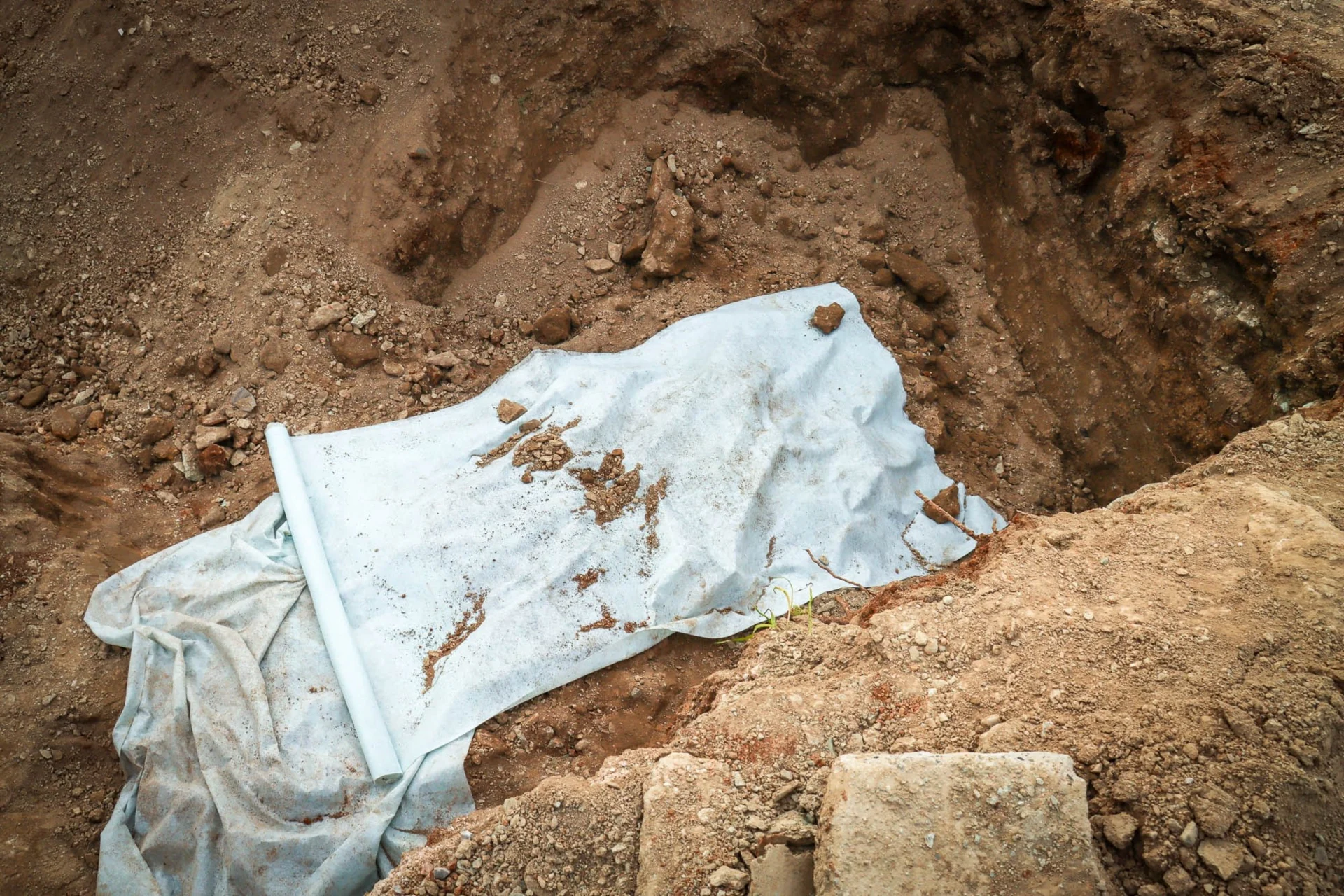
Thirty-three skeletons believed to be victims of Civil War executions were discovered during renovation works near the Monument of National Resistance in Sykeon, a municipality of Thessaloniki. The six mass graves were uncovered across from the historic Genti Koule prison complex.
Genti Koule, also known as Eptapyrgio, served from the 14th century as a military and later penitentiary compound, becoming particularly notorious during and after the Greek Civil War (1946–1949).
The compound was used for the incarceration, torture, and execution of leftist political prisoners during the Metaxas Regime, the Axis Occupation of Greece, and the post-war period through to the Greek Junta.
Forensic analysis revealed that many of the victims, found in makeshift shallow burial pits, were in their early twenties, with at least one woman being among the executed.
Investigations began in late 2024, when the first bones were unearthed. Although the Ephorate of Antiquities initially deemed the remains non-archaeological, the municipality and Simos Daniilidis, Mayor of Neapoli–Sykies, paused the renovation work at the Monument of National Resistance and ordered a broader investigation.
Following the announcement, Neapoli–Sykies town hall and the local offices of the Communist Party of Greece received numerous inquiries from families seeking information about missing relatives. Authorities are compiling a list of individuals interested in undergoing DNA testing to assist with identifications.
Dimitris Papatolidis, historian and member of the Greek Communist Party’s Central Committee, believes that “at least 400 executed individuals are buried” in the area. He added, “What is urgent, and a duty in response to the brutality the dead endured, is that, even now, the skeletons be identified and returned to their families.”
Locals have laid carnations at the site, while the Greek Communist Party and Mayor Daniilidis have pledged to establish a permanent memorial honoring the victims.
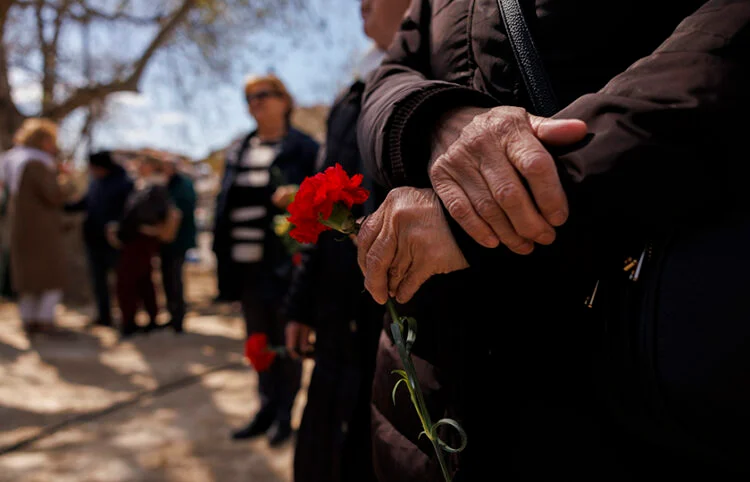
Photo Credit: Athens News Agency/Achilleas Hiras