
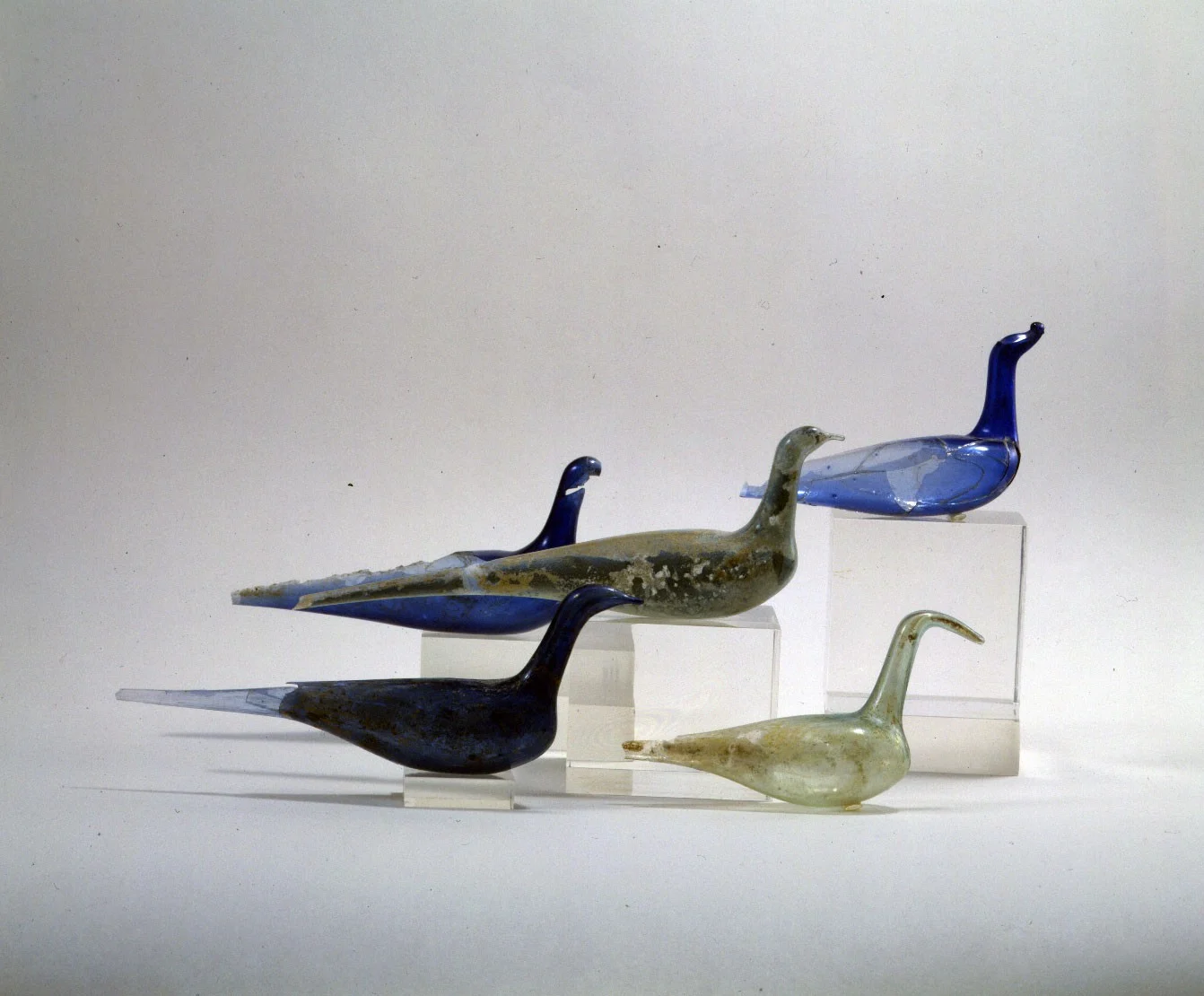
Glass cosmetic vessels dating back to Roman-era Thessaloniki are the focus of the Archaeological Museum of Thessaloniki’s “Exhibit of the Month” for May 2025. The vessels, unearthed from female burials in Roman-era cemeteries of Thessaloniki, date from the early 1st century to 125 AD.
Usually shaped like doves, the vessels were symbolically linked to the goddess Aphrodite. They were crafted from clear or bluish semi-transparent glass and held colored cosmetic powders in red, blue, or pink hues.
According to archaeologists, this stylized dove form was a deliberate choice intended to associate the product with beauty and sensuality, enhancing its appeal through symbolic packaging—an early form of product branding.
Initially left open at the tail during production, each vessel was filled with cosmetic powder and then sealed by reheating the tail’s tip.
To access the contents, the user had to break off the bird’s tail. This makes these vessels the earliest known example of single-use cosmetic packaging from the ancient world.
Some of the vessels are believed to be imports from the western Roman Empire, while others have been locally produced.
The vessels’ presence in tombs also suggests their role in funerary rituals, adding a further spiritual dimension to their use.
Cover Photo Credit: Archaeological Museum of Thessaloniki