
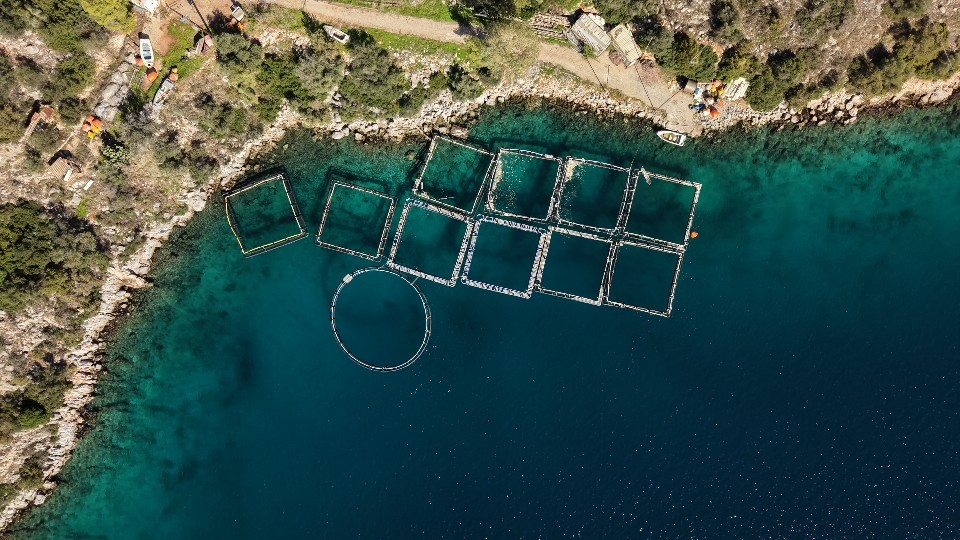
A recent Deutsche Welle report highlights the environmental and regulatory challenges posed by “ghost farms”—abandoned industrial fish farming facilities. While the issue is notable in Greece, the DW report indicates this is a global phenomenon, with similar occurrences in the seas of Chile and Canada.
Often abandoned following bankruptcy or licensing issues, the infrastructure is substantial, extending 40 meters deep and consisting primarily of plastic and netting. As these structures deteriorate over time, they begin to present specific environmental risks.
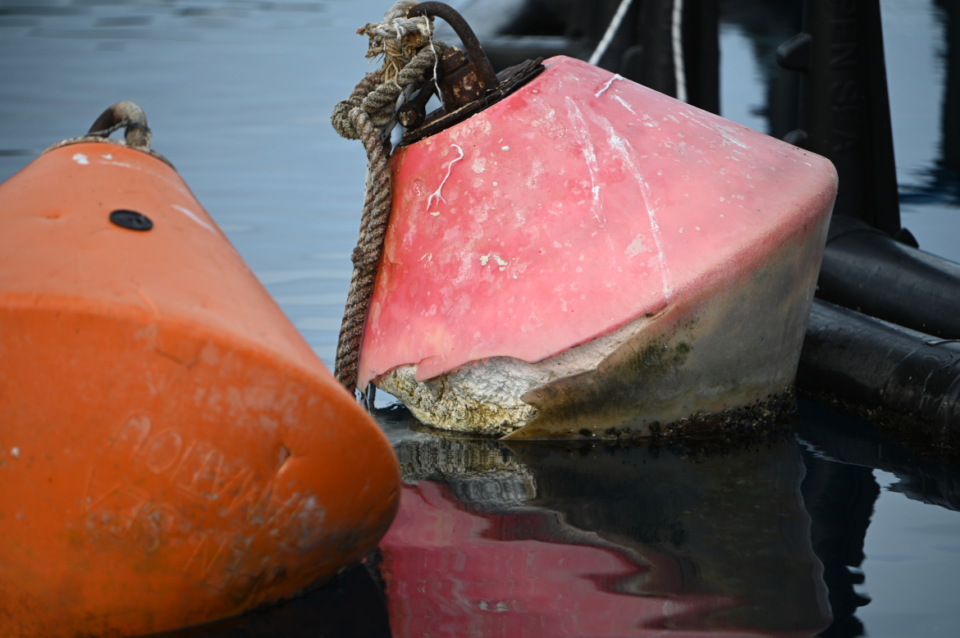
Image Credit: Healthy Seas Foundation
Collapsed nets trap wild fish, creating a decade’s long cycle where trapped animals attract predators that also become entangled. Additionally, the degradation of styrofoam buoys releases fragments their internals as well as microplastics into the water, which marine life mistakes for food.
The Deutsche Welle report, which focuses on Greece, suggests that economic factors drive the long-term abandonment of fish farms. Although Greek law mandates removal, the cost of cleaning up a facility often exceeds the fines or cleanup down payments held by the state. In one instance, a fish farm owner was fined 6,000 euros two years after being ordered to remove their facility, though it remains unclear if the fine was paid.
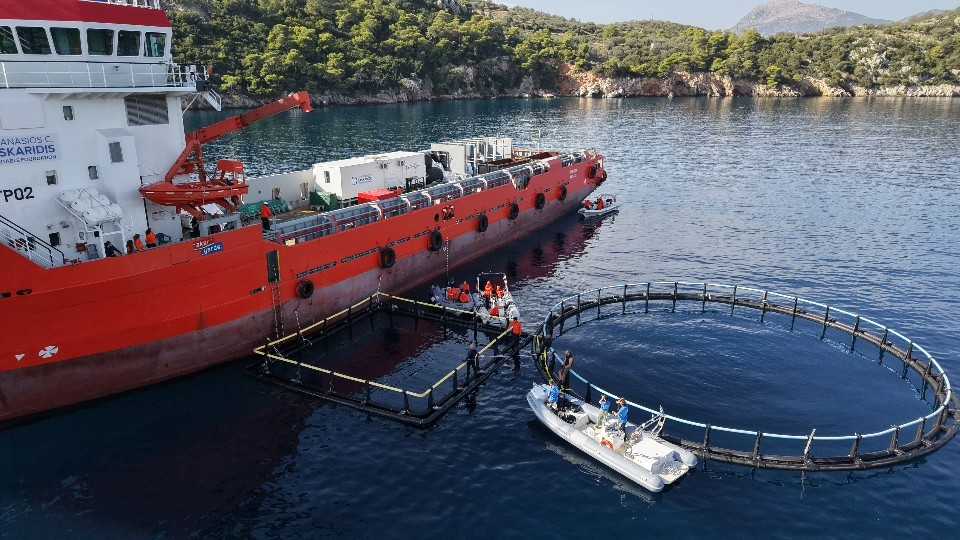
Image Credit: Healthy Seas Foundation
But cleanup efforts are underway, currently led for the fifth time by the international non-profit Healthy Seas and the Greek NGO Ozon, and supported solely by corporate sponsors like Hyundai. [SC1] This year’s cleanup effort in Methana was also supported by the Athanasios C. Laskaridis Charitable Foundation with their vessel Typhoon.
The cleanup process is hazardous due to low visibility and sediment accumulation, but there are also major bureaucratic hurdles to be dealt with. Obtaining government permission can take over a year, and Healthy Seas itself has faced lawsuits from owners claiming that their abandoned infrastructure is being damaged or stolen, even though permission had been given by the local government to proceed.
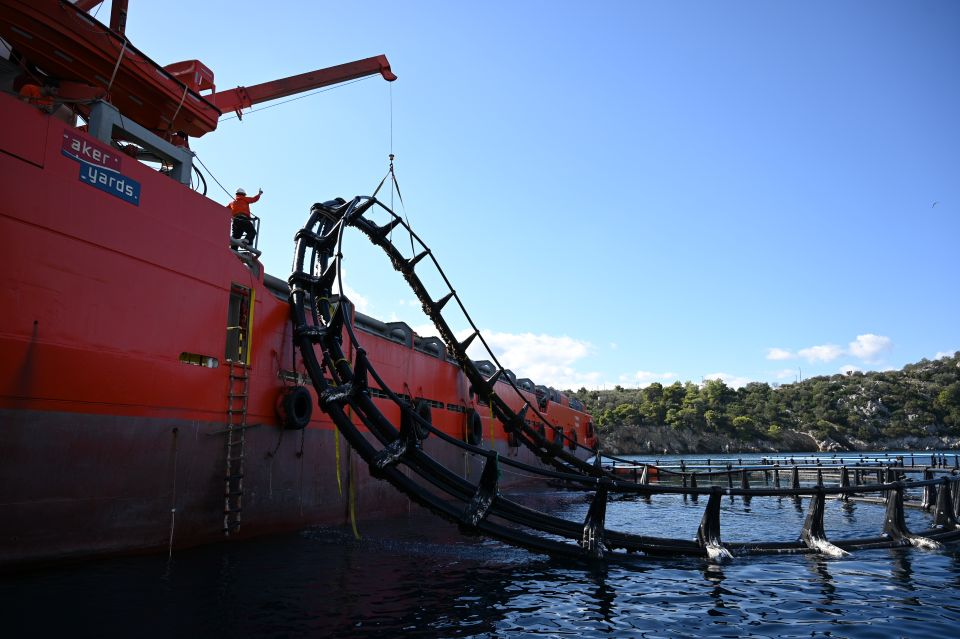
Image Credit: Healthy Seas Foundation
The Deutsche Welle also cites information from the environmental organization Aktaia that Greece plans to significantly expand its aquaculture zones in the future, thus leading to concerns regarding pollution from these future farms.
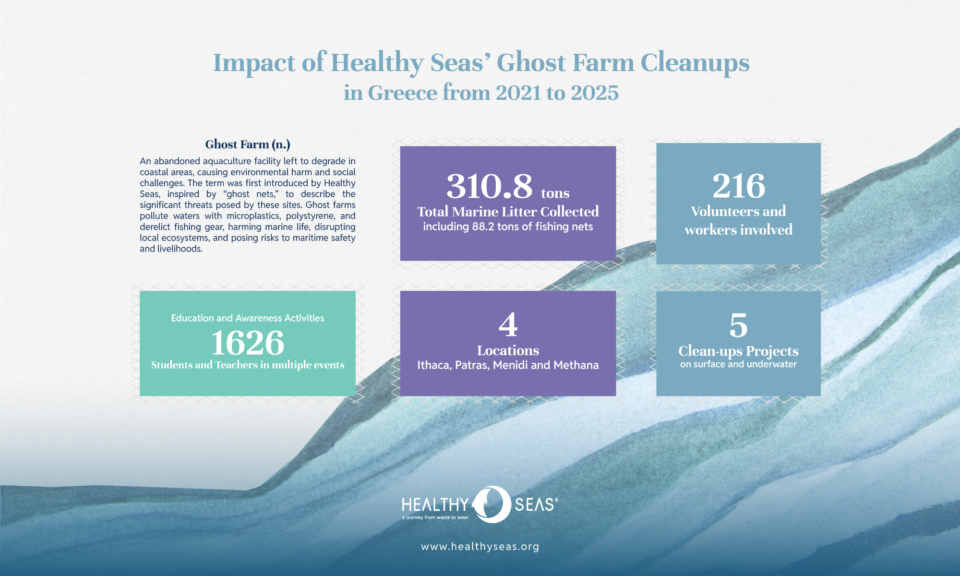
Image Credit: Healthy Seas Foundation
Watch the Deutsche Welle video to see the report in its entirety.