
My grandfather was a cobbler in Hania, Crete, shaping leather shoes by hand with shoe-shaped wooden forms — the kind of craftsmanship that belonged to another era.
Last summer, I found myself staring at a dusty box of those very same wooden forms in a vintage shop. Heavy, foot-shaped blocks of wood just like the ones he once used. I had no idea why, but something pushed me to buy the entire box. About twenty of them in total.
They sat in a closet for months until one afternoon, while visiting my aunt, she pulled out a stack of old family photos. One jumped out immediately: little me, dressed in a traditional Greek foustanella… and those iconic red pom-pommed tsarouchia shoes.
That was the spark.
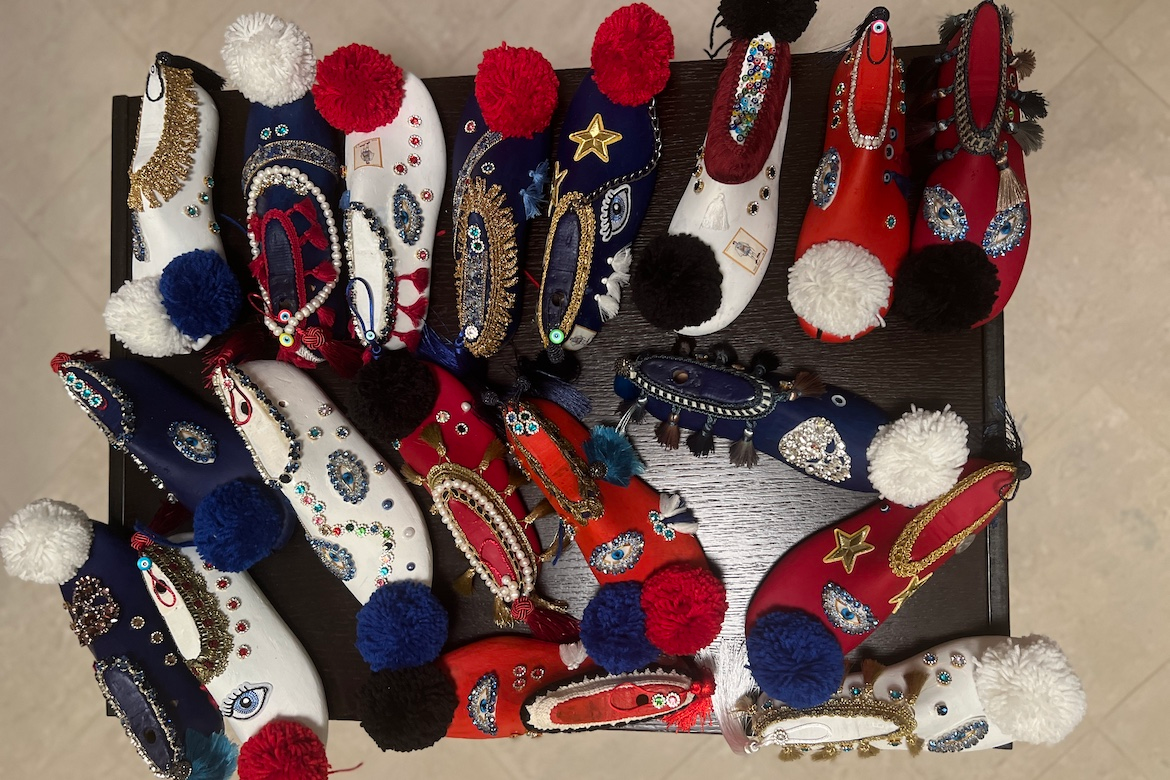
I went straight home, grabbed the forgotten box from the closet, and laid each wooden form across my dining room table. Suddenly my mind was swirling — not with shoes, but with tsarouchia. Modern, playful, reimagined versions of the shoes I wore as a kid.
The next day I went shopping for paints, trims, tassels, pompoms, beads, evil-eye charms, glue… anything that felt like it had personality. And in my own way, just as my grandfather once shaped shoes by hand, I began shaping these wooden blocks into one-of-a-kind art pieces.
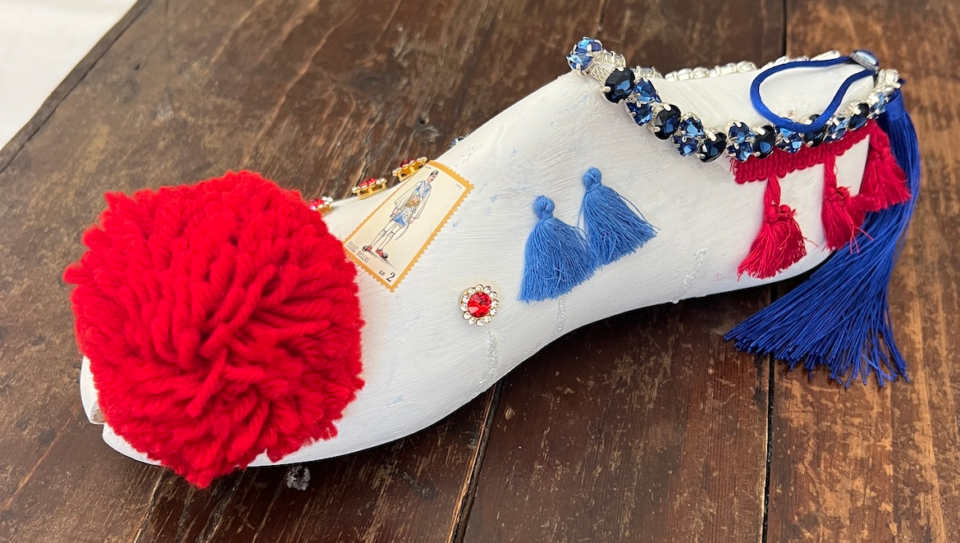
Piece by piece, each form took on its own identity. Vibrant colors. Bold embellishments. Folk touches mixed with a little tongue-in-cheek flair. Every detail — from the hand-painted surface to the stitched trim and glued-on tassels — transformed a humble cobbler’s tool into a modern Greek character.
By the end of the summer of 2025 in Hania, I had turned a box of forgotten wooden forms into a limited collection of contemporary folk-art tsarouchia — each one hand-crafted, hand-adorned, and absolutely unique.
Each piece is one of a kind. A small tribute to my grandfather’s craft… with my own twist.
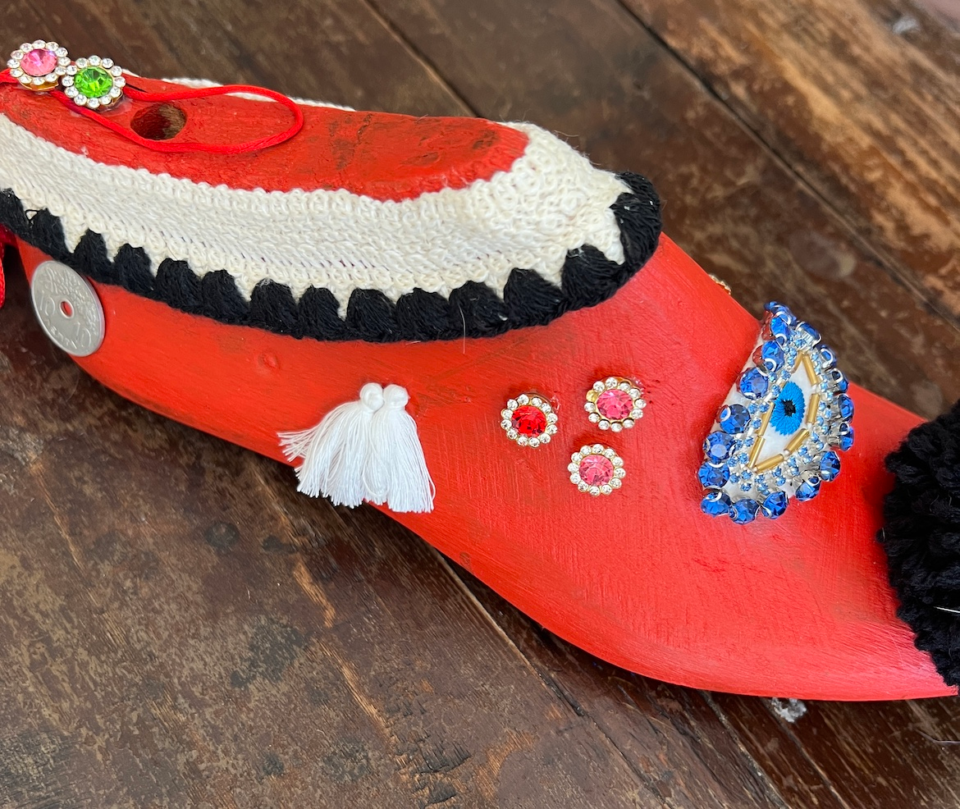
Today, these pieces are no longer hidden in a closet or sitting unfinished on my dining room table. They’ve become a small, meaningful collection now available on Pappas Market — a place where I get to share them with people who appreciate Greek heritage, craftsmanship, and a little creative reinvention.
Each tsarouchi is completely one-of-a-kind.
When you choose one, you’re not just buying an object; you’re giving a second life to a forgotten tool and carrying forward a bit of my grandfather’s legacy — reimagined in living color.