

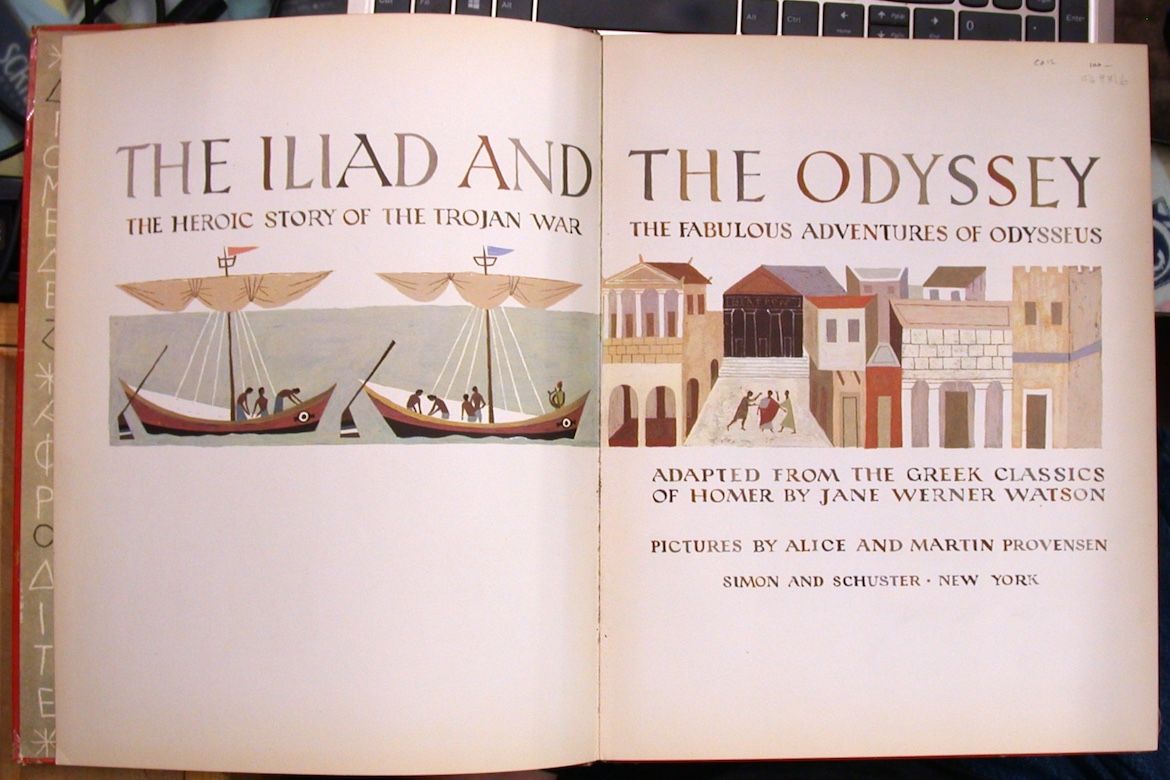
The University of Exeter in England has been ridiculed after school chiefs issued a trigger warning for undergraduates studying the Ancient Greek poems, the Iliad and the Odyssey, advising students to seek support from welfare services if they find studying Greek mythology too distressing.
Students taking the Women In Homer course were advised at the beginning of the class that they might find the material ‘uncomfortable and challenging’, particularly the references to infant mortality, rape and sexual violence.
They were advised that if the subject matter in the course was “causing distress”, they should “feel free to deal with it in ways that help (eg to leave the classroom, contact Wellbeing, and of course talk to the lecturer)”.
The news spread fast and critics lashed out at the school, including for Prime Minister Boris Johnson and officials from other UK universities.
Mr Johnson said: ‘Are they really saying that their students are so wet, so feeble-minded and so generally namby-pamby that they can’t enjoy Homer?’
Lord Andrew Roberts said: ‘University ought to be a time when young people are stress-tested for the real world, which can be a shocking place, not wrapped in cotton wool and essentially warned against ancient but central texts of the Western canon.’
Frank Furedi, emeritus professor of sociology at the University of Kent, said: ‘Poor old Homer. A university that decides to put a trigger warning on Homer’s Iliad and Odyssey has become morally disoriented to the point that it has lost the plot.
‘It is obvious that this university is unaware of the temporal distinction between the present and past and regards these foundational mythologies as if they are contemporary statements about the world.’
Jeremy Black, the author of A Short History Of War, said: ‘Trigger warnings proliferate like knotweed and the latest, on Women In Homer at Exeter, can surely only be a parody.
‘Homer’s work on the Trojan War inherently focuses on violence and is realistic precisely because heroism and cruelty are shown to be related.
‘There is no need for the emotional incontinence of walking out of lectures.’
A spokesman for the University of Exeter said: ‘The university strongly supports both academic freedom and freedom of speech and accepts that this means students may encounter views and content that they may find uncomfortable during their studies.’
The spokesman added content warnings ‘help ensure students who may be affected by specific issues are not subjected to any potential unnecessary distress’.
Johnson’s full statement on the matter:
The Homeric epics are the foundation of Western literature and comprise a spectacular education in the meaning of life and death.
They have been loved and studied by young people for thousands of years – and never once has there been a suggestion that they might be in some way psychologically damaging to the reader.
Exeter University should withdraw its absurd warnings.
Are they really saying that their students are so wet, so feeble-minded and so generally namby-pamby that they can’t enjoy Homer?
Is the faculty of Exeter University really saying that its students are the most quivering and pathetic in the entire 28 centuries of Homeric studies?
If so, shame on these academics because I bet the students think it’s as bonkers as I do.
Details of the advice to students were obtained by The Daily Mail newspaper under Freedom of Information laws.