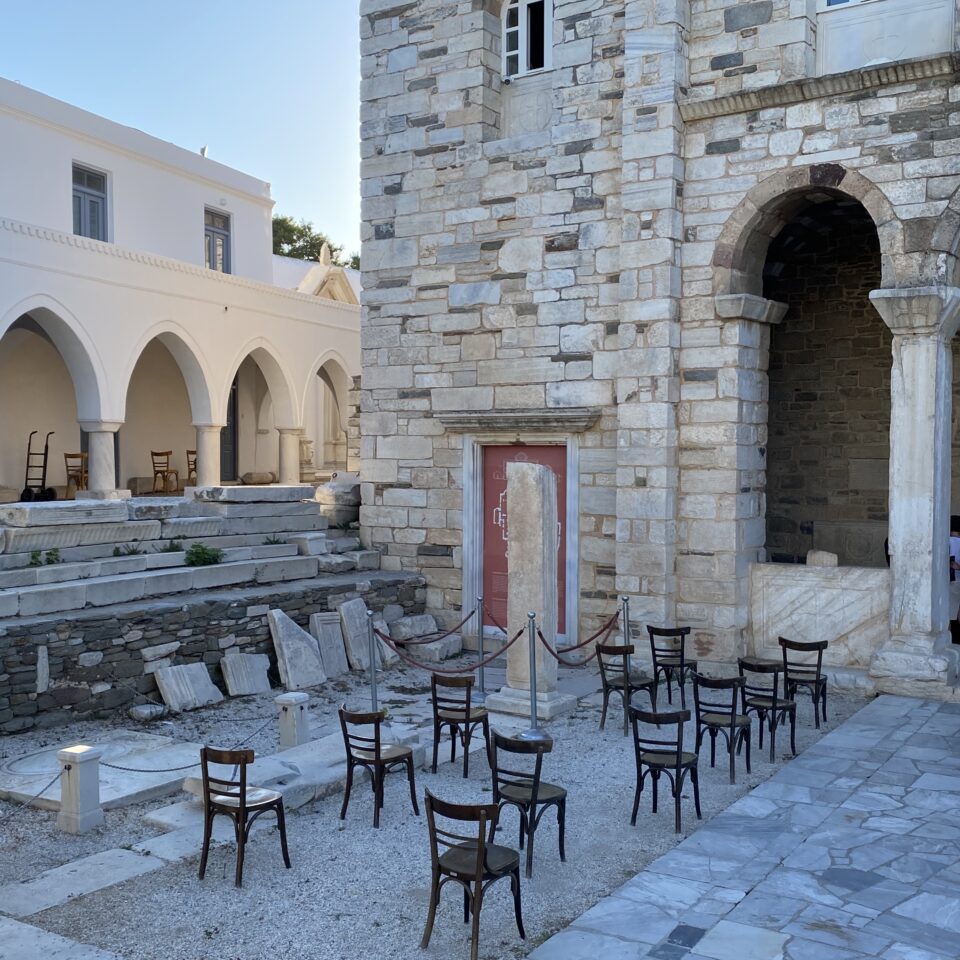

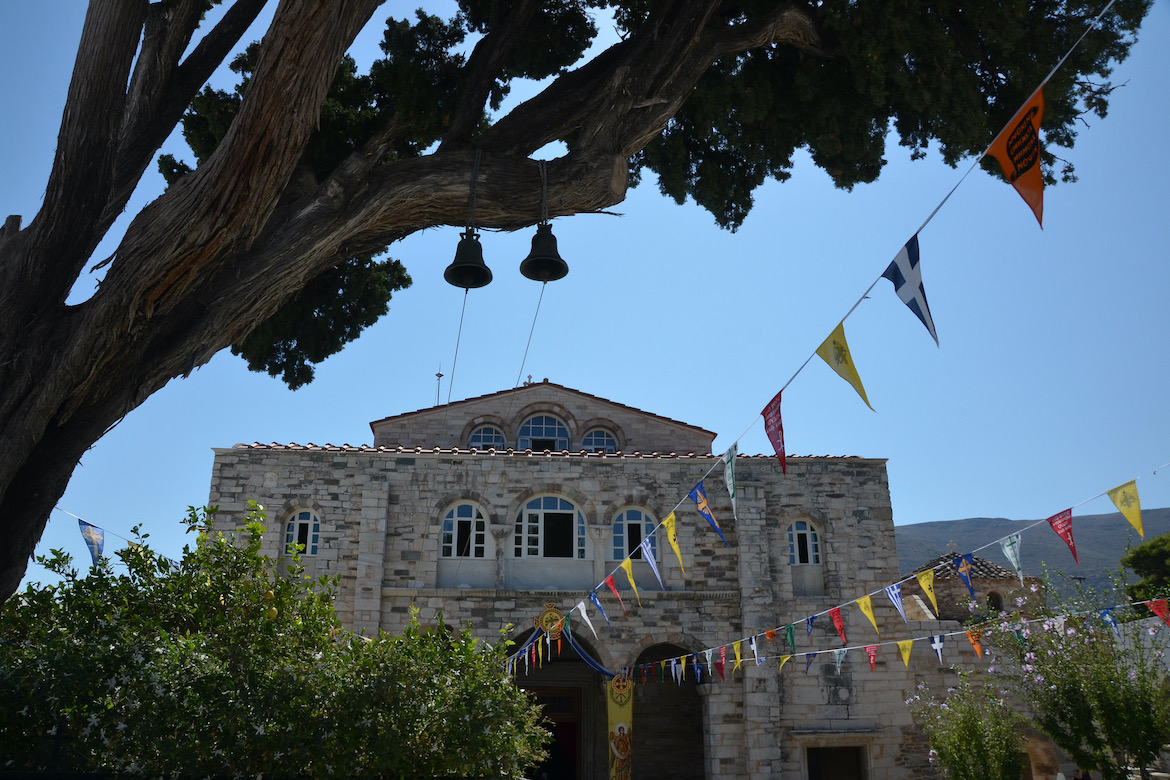
I started counting as soon as I approached the structure— called The Church of Panagia Ekatontapiliani (100 doors). It’s a fascinating structure with a rich history that spans the ages of Greek civilization.
Located in Parikia, the main town of the Cycladic island of Paros, it’s steps from the port and open to the public every day.
It’s named for having one hundred doors, or gates— although it doesn’t, creating a mystery about the origins of the name.
Local folklore says that there are “hidden doors” not visible to the public that will burst open only when Hagia Sophia in Constantinople is turned back into an Orthodox Christian church while others say the name was actually “katopoliani” or the Virgin of the “Kato Poli” or the lower town, given the church’s “downtown” location near the harbor.
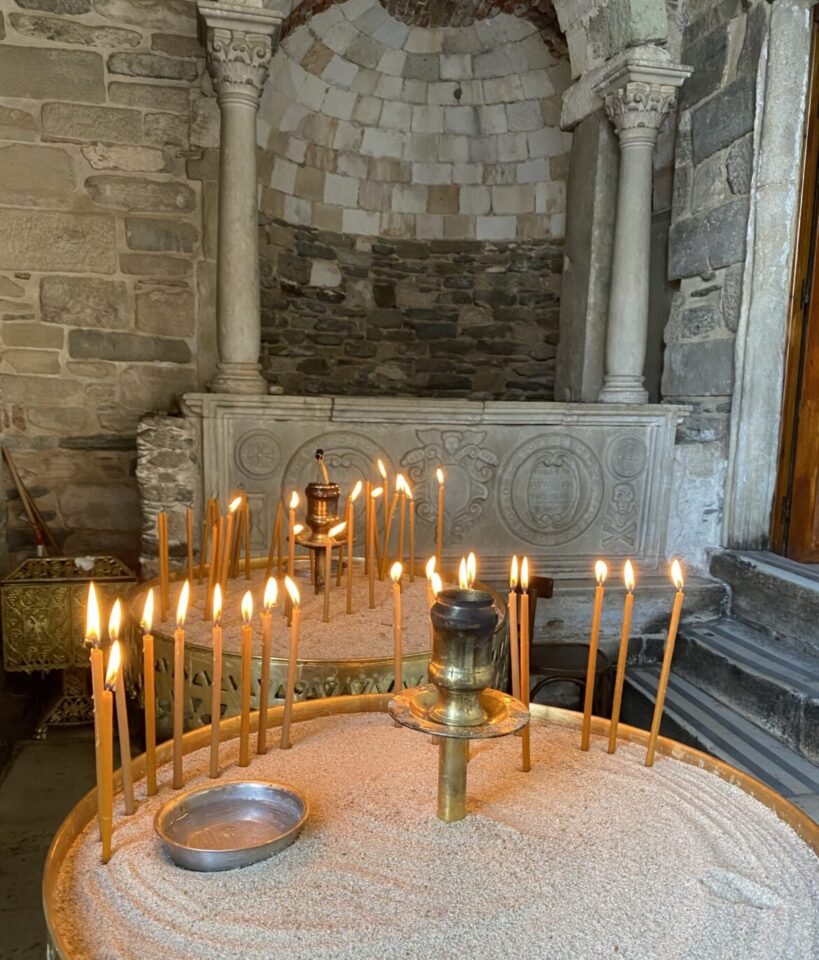
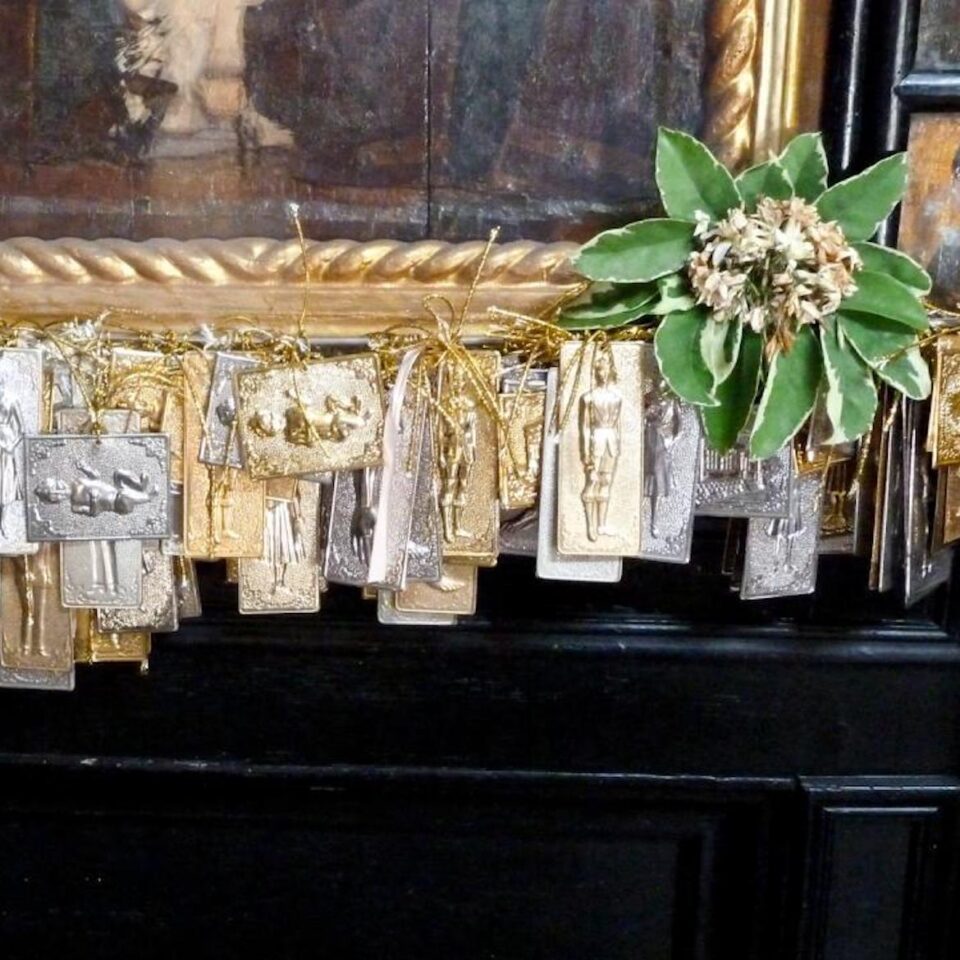
Built in dedication to the Virgin Mary in 326 AD, it’s one of the oldest churches in all of Christendom and a place of pilgrimage for believers from all over the world who come to light candles and offer dedications— or “tamata” to the Virgin Mary for healing of a host of ailments and help with child-bearing.
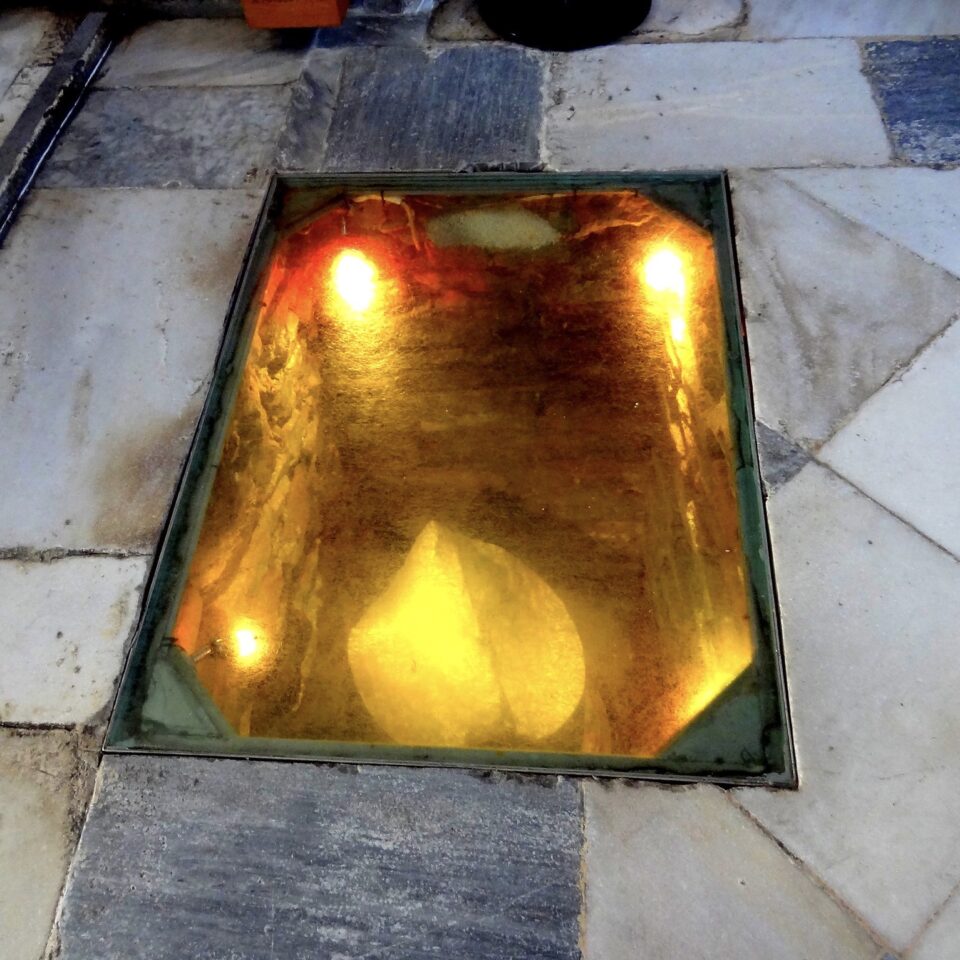
Remnants from the distant past are abundant, including marble pillars from the original structure and remains from a pre-Christian temple to Artemis which occupied the site on top of which the Christian Church was built.
I was pleasantly surprised to see these ancient foundations preserved through glass windows in the floor, showing a unique continuity between the various religious structures of Greek civilization— in this case from the polytheistic Olympian gods to Christianity.
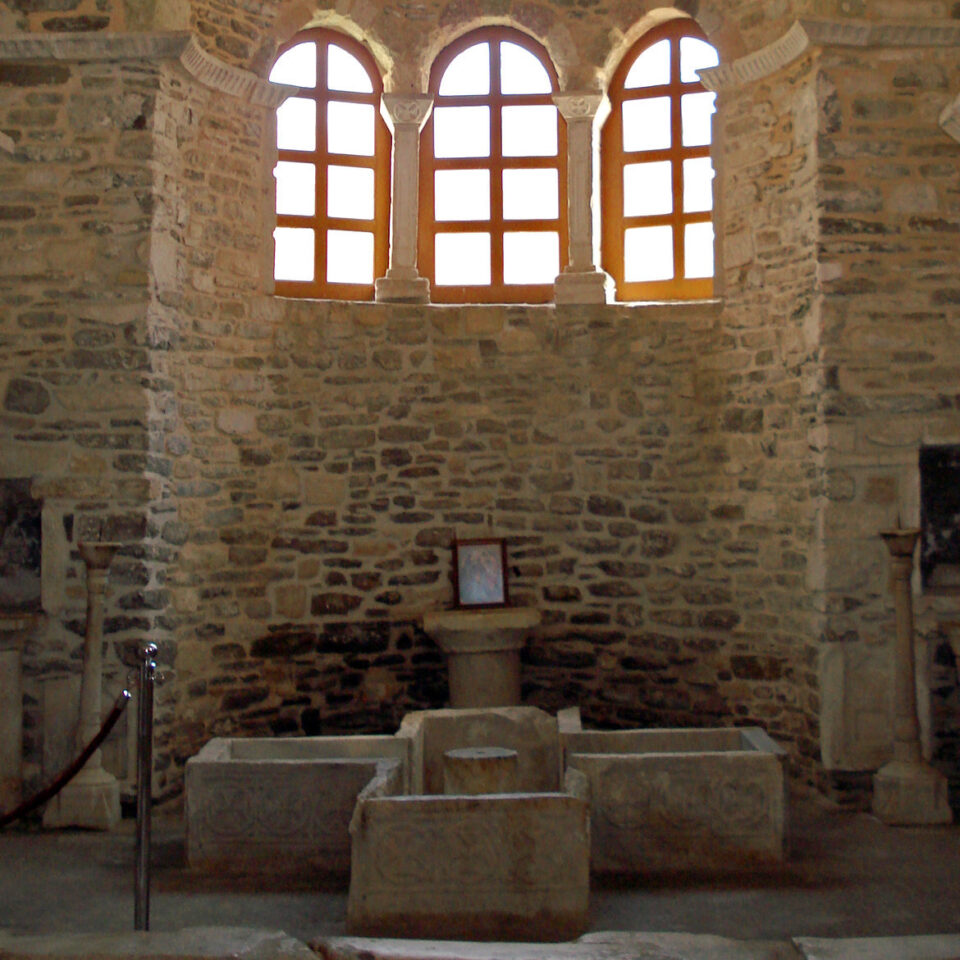
An ancient crucifix-shaped baptismal font inside the church is also unique.
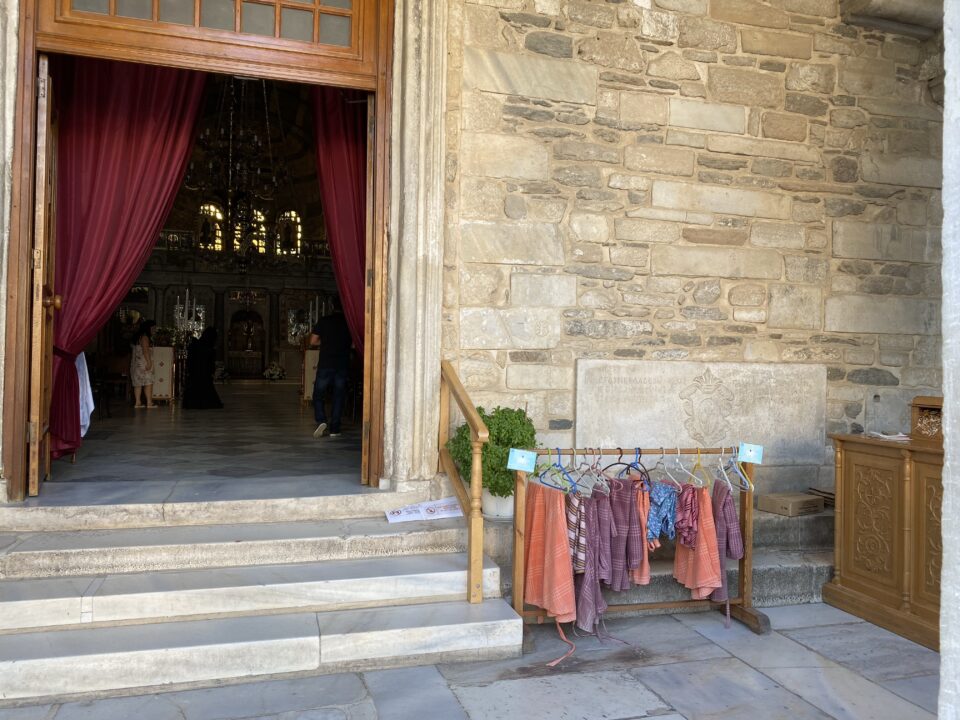
Typical in Greek Orthodox churches and monasteries and out of modesty and reverence to the sanctity of the place, those entering the main church building must cover themselves.
At the main entrance, skirts are offered to visitors to cover exposed parts of their bodies that church officials consider “offensive.”
In the Covid-19 era of mandatory social distancing, only a certain number of worshipers are allowed inside during services, while chairs are spread apart from each other just outside the church.