

When I created the Greek America Foundation’s volunteer program back in 2017, I had two goals that ran concurrently in my mind.
First, I wanted a program that served vulnerable populations in Greece— a nation to which we owe so much for helping to shape our identity. How can we call ourselves Greek-Americans without doing something to connect us to the nation that defines half of our hyphenated identity?
Simultaneously, I wanted to offer North American young people an opportunity to live and experience philanthropy and philotimo, daily, first hand. These are two ideals that we in the diaspora love to use— almost obsessively— to define us and to differentiate us from others.
We launched Greek America Corps in 2017 and since then, dozens of young North Americans have participated.
In a nutshell, we partner with local, Greek organizations doing work in various humanitarian relief spaces.
We’ve worked alongside numerous partners on the ground in Greece that provide services and care to various vulnerable populations, including homeless people, single mothers and abandoned and at-risk children and refugee youth.
In addition to service, our program also has an academic component, offering the participants the chance to obtain transferable college credit to their home institution from our partners at Hellenic American University, a U.S.-accredited institution of higher learning based in Athens.
So far this summer, our program has included supporting Kivotos Tou Kosmou, a wonderful charity on a Greek island that takes in abandoned children, as well as working alongside Emfasis, a charity that distributes food and hygiene products to homeless people in some of the roughest neighborhoods of Athens.
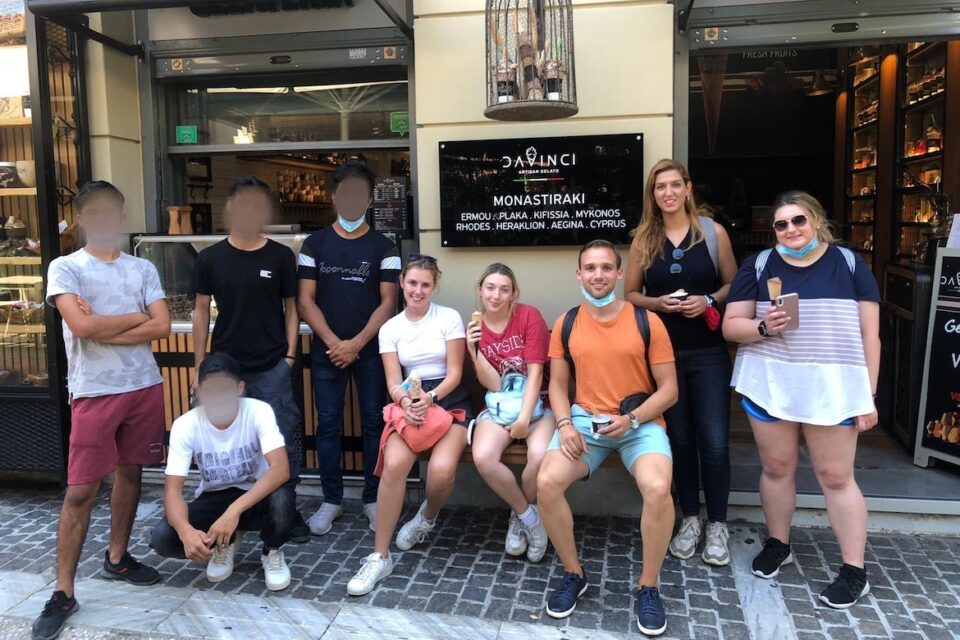
The 2020 volunteers also shared their time and talents with children at shelters operated by METAdrasi and the Greek Council for Refugees. These children are known as “unaccompanied refugee minors” and are kids who have arrived in Greece alone, without their families. Each of them has a different story of why they are here but in most cases, they’ve come from war-torn regions and have suffered immense trauma.
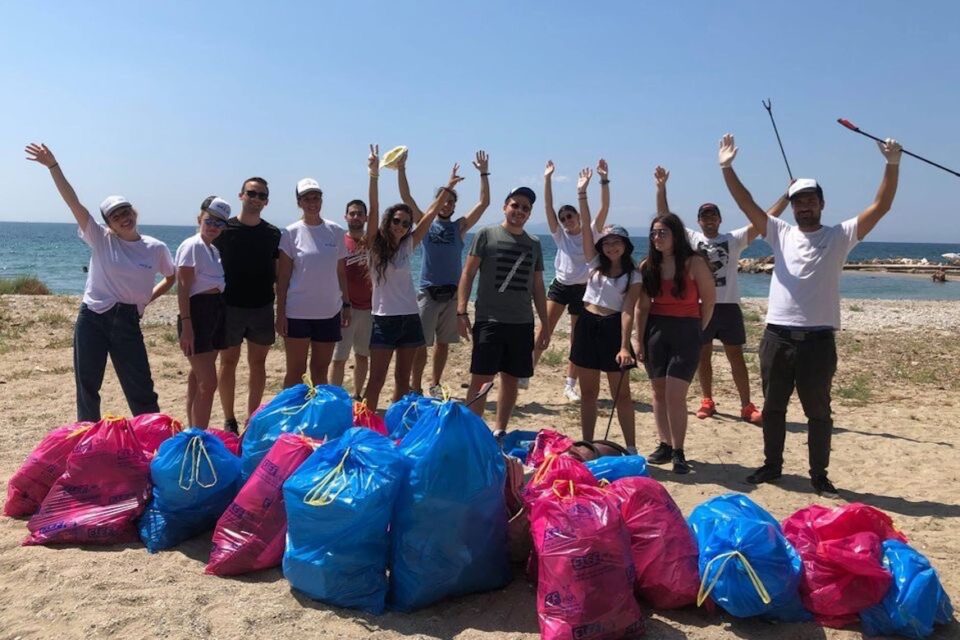
They also took a “day off” and headed to the beach– but not for a party. They partnered with a local volunteer group called We4All to clean garbage from Agios Kosmas beach, south of Athens.
Throughout this program— from its creation to its annual implementation— I’ve seen numerous comments from iPhone activists who are quick to ask if our volunteers are helping “Greeks in Greece.” Whether it’s an anonymous email that I receive criticizing our decision to support refugee youth, or a public comment on our social media posts— my response to them— and my response always— is that our volunteers are helping people in need. Period.
I often wanted to ask these people— Would you ask a homeless person what nationality he or she is before offering food or support? Would you look a child in the eyes who’s lost his parents and has arrived in a foreign country after experiencing the worst trauma and say “Sorry, I can’t help you because you’re not Greek?”
These voices come often— and shockingly from people who are active in various Church-related organizations in my own community.
It actually pushes me even harder to make this program succeed and make Greek America Corps a critical part of my community. After all— what good is waving the flag of philanthropy and philotimo if we’re not actually living it?
During a private conversation I had with Archbishop Elpidophoros of America when I explained the volunteer program to him, I’ll never forget his words.
He said that our kids were “walking in the footsteps of Christ without even knowing it.” He then began to cite various verses from the Bible about feeding the hungry and tending to the sick.
He applauded the program and said that “conditional or selective philanthropy isn’t philanthropy at all.”
I didn’t start this program out of religious motivations but I was thrilled to hear that it resonated with such an important person in the Church.
When visiting Kivotos Tou Kosmou facility on Chios last summer, I had a conversation with that charity’s founder, Fr. Antonios Papanikolaou. After a tour, I innocently asked him whether all of the children in his organization’s care were Greek.
He paused and looked at me almost disappointed with the question, and said… “Most of them are, yes… But this is irrelevant to us. They’re human. And they need our help. We don’t ask where they come from. We don’t care where they come from.”
I knew this. This has been my credo and my core belief throughout my life— but with all of the noise surrounding me— especially in the current political climate in “us versus them” America, the affirmation from Fr. Antonios couldn’t have come at a better time.
I find myself today sharing posts and stories on the Greek America Foundation’s social media channels about the current team of volunteers who come from Colorado and North Carolina, from Connecticut and Los Angeles— from all walks of life and backgrounds.
And it makes me proud to watch them serve— unconditionally.