
It would be unfair to immediately dive into criticism of Jada Pinker Smith’s upcoming documentary about Cleopatra, one of the most famous– if not THE most famous women in history– before mentioning how accomplished of an actor, producer, businesswoman, even best-selling author she is.
Her acting credits in the 1990s and 2000s are in films that are box office hits and household names, including Scream 2, The Nutty Professor, The Matrix Reloaded, The Matrix Revolutions and many more.
She published a children’s book which landed at number two on The New York Times Best Seller list and earned a nomination for the Tony Award for Best Musical as a producer for the Broadway musical Fela!.
Along with her husband Will Smith, she has a production company and has producing credits in films, documentaries, and television series.
Pinkett-Smith is one of the most accomplished women in the entertainment industry and has proven time and time again that she is not only Will Smith’s wife, but a woman of her own reputation and achievement.
But Jada Pinkett Smith isn’t a good historian or even researcher. And that’s important when you’re producing documentaries that aim to educate millions of people on important topics.
It’s not only important– it’s critical that when assuming this responsibility to bring historical content to the world, TRUTH and historical accuracy lies at the very core of what you plan to project to the world.
Pinkett Smith has developed a series of documentaries examining the extraordinary lives of African queens. The series is streaming on Netflix with the next installment, featuring Cleopatra, premiering on May 11.
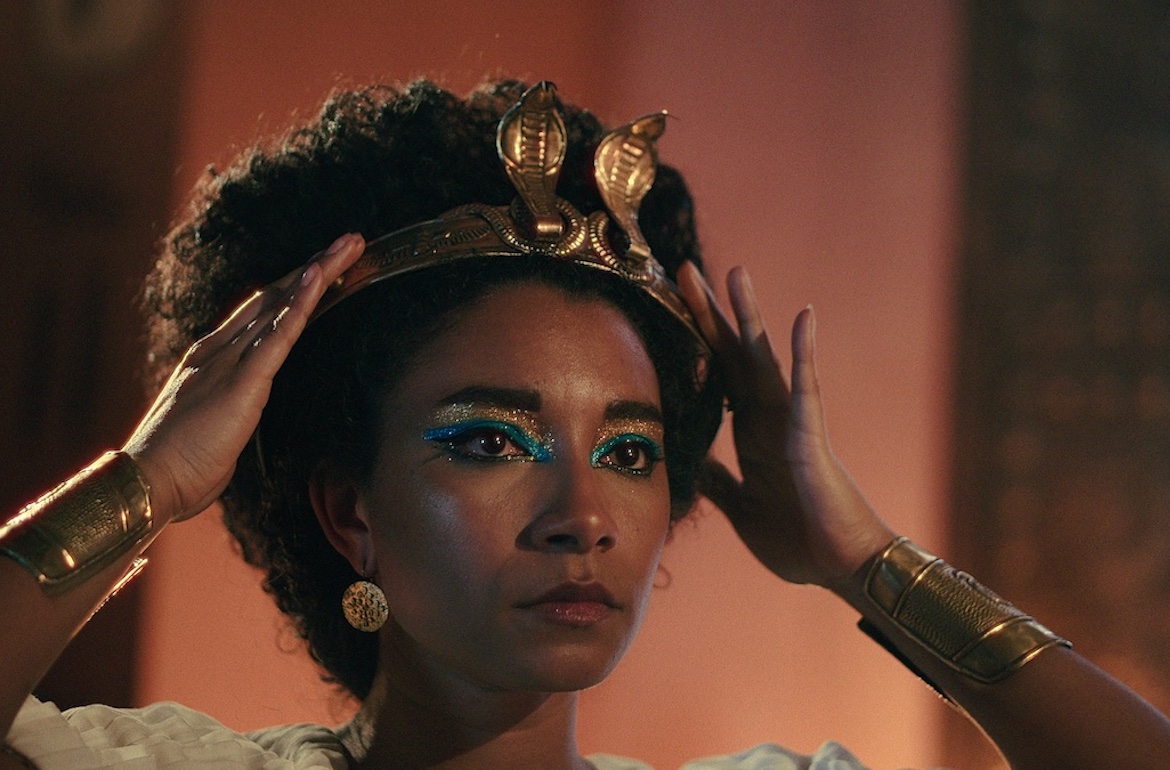
In publicity images and interviews, Pinkett Smith aims to muddy the waters about Cleopatra’s heritage, calling her a “black queen” and even including a snippet in the official trailer stating “I don’t care what they tell you in school. Cleopatra was Black”.
The trailer of Jada Pinkett Smith’s Cleopatra documentary
Scholars of ancient history may disagree about a lot of things… but if there is one thing that 99.99% of all historians are in agreement with… Cleopatra was not black. She was of Greek origin.
And Jada Pinkett Smith is not only doing a disservice to filmmaking, but a huge disservice to African history which has enough role models and a fascinating history and heritage of its own, without the need to make such false claims in order to build fantastical portrayals to serve political purposes.
The black Cleopatra theory, common amongst activists but not in scholarly circles, has been refuted numerous times by good old-fashioned facts. While countless scholarly articles have been published on the issue, Duane W. Roller, a historian, archaeologist, classical scholar and Professor Emeritus of Greek and Latin at The Ohio State University summed up the issue in an article on Oxford University Press’ blog.
“It has been suggested – although generally not by credible scholarly sources – that Cleopatra was racially black African. To be blunt, there is absolutely no evidence for this, yet it is one of those issues that seems to take on a life of its own despite all indication to the contrary,” Roller writes.
“To sum up,” Roller concludes in his piece, “it is quite possible that Cleopatra was pure Macedonian Greek. But it is probable that she had some Egyptian blood, although the amount is uncertain. Certainly it was no more than half, and probably less. The best evidence is that she was three-quarters Macedonian Greek and one-quarter Egyptian. There is no room for anything else, certainly not for any black African blood.”
It’s a shame that Jada Pinkett Smith is tarnishing her own reputation and credentials.