
New York City’s Metropolitan Museum of Art has returned another ancient Greek drinking vessel to the Italian government, finding the artifact was likely looted from its original site.
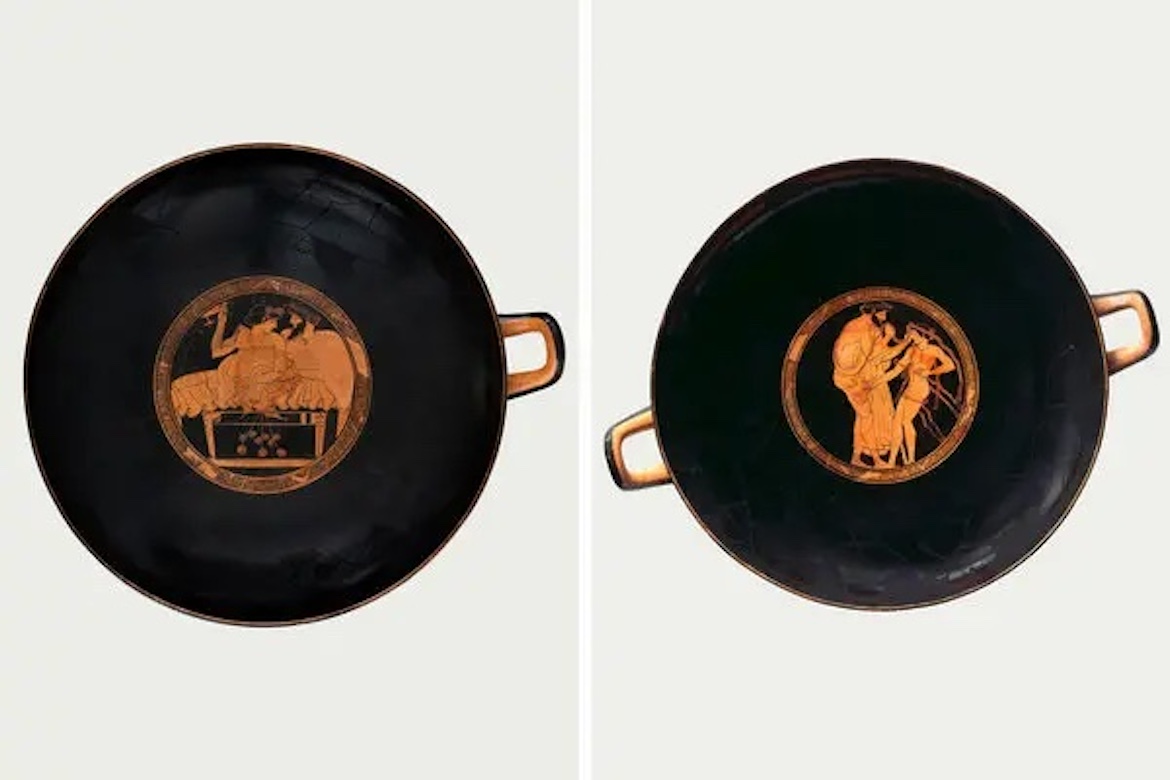
The returned item, a kylix produced by an anonymous workshop dating back to around 490 B.C. took its current form after being reconstructed by conservationists from various fragments over the last 15 years.
The piece is nearly identical in structure and coloring to another cup the Met retuned to Italy in 2022. That piece was repatriated in the aftermath of an antiquities trafficking investigation conducted by New York authorities, who have in the past years worked closely with Italy on repatriation claims.
According to the New York Times, which first reported news of the second cup’s return, fragments of each vessel were temporarily owned by individuals connected to the stolen artifacts. The Times did not disclose specifics of the connection.
The museum had been collecting pieces of the artifact since the late 1970s.
Researchers and investigators believe the kylix was broken into pieces to make it easier to illegally export and resell without being detected during customs processing.
In a December 2021 legal filing, the Manhattan district attorney’s office overseeing a seizure of antiquities from the collection of New York financier and New York University patron, Michael Steinhardt, argued that when an artifact “appears in fragments that are easily fixable, it is often an indication that it has been looted.”
Last year, the museum transferred legal title of the second kylix privately to Italy after researchers found its history was similar to the first vessel returned in 2022, the Times reported.
Italy arranged to keep the first vessel on view in New York at the museum as part of a long-term loan agreement, The move represents a now more common balancing act for the Met—returning antiquities while maintaining their relationships with foreign governments, as cultural heritage laws grow stricter.