
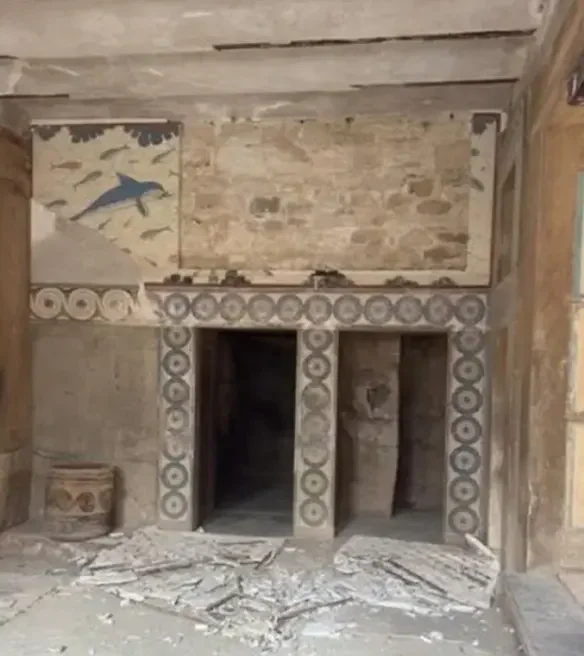
A replica of the famous Dolphin Fresco at the archaeological site of Knossos, in Crete collapsed last week. The incident occurred in the Queen’s Megaron (Queen’s Hall) section of the Minoan palace complex and involved a 1960s plaster reconstruction of the 100-year-old artwork created by archaeologist Arthur Evans. His original reconstruction is safely stored in the Archaeological Museum of Heraklion.
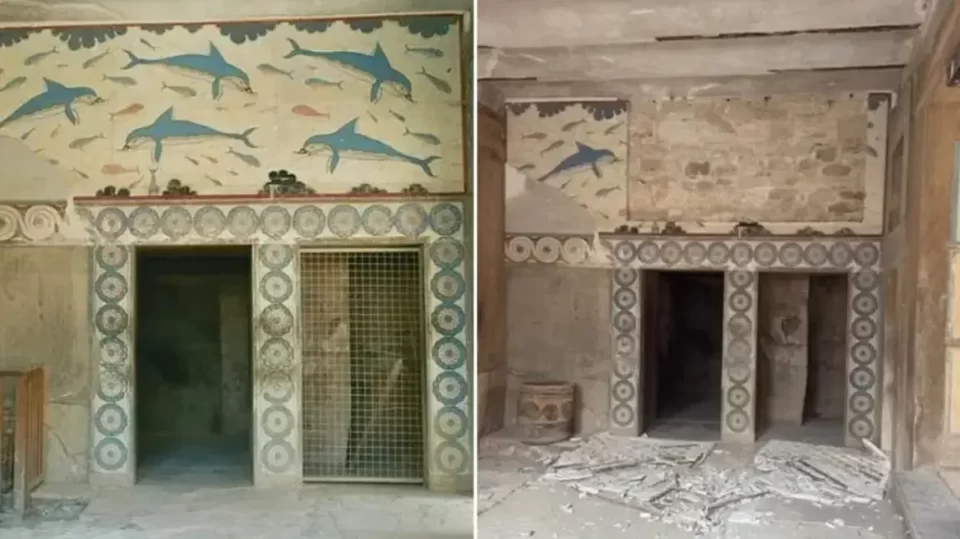
In a statement released soon after, the Hellenic Ministry of Culture reported that the replica detached and collapsed due to severe winds affecting the area. The Ministry also noted that conservation and restoration plans had already been developed, and the project is set to commence.
The fresco represents a vivid seascape featuring dolphins swimming among yellow, pink, and blue fish, set against a light blue background with a darker net-like pattern symbolizing the iridescent surface of the sea.
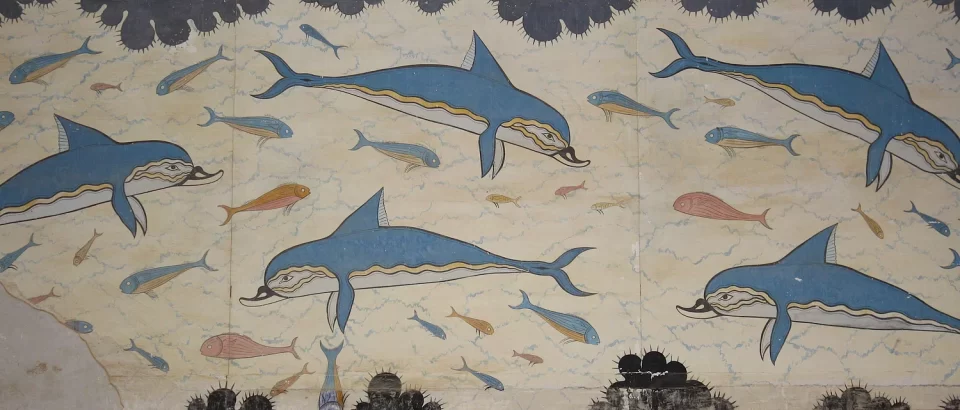
The original fragments of the fresco were found in a lightwell at the east end of the megaron. Evans believed they adorned the wall above the entrance. According to the Heraklion Archaeological Museum, a “different interpretation” of the excavation data suggests that the fresco likely decorated a floor on the upper storey of the megaron rather than a wall.
Though its precise origin and placement remain debated, the fresco reflects a long tradition of Minoan marine imagery, with similar artistic expressions dating back to the start of the Neopalatial period, approximately 1750–1700 B.C.
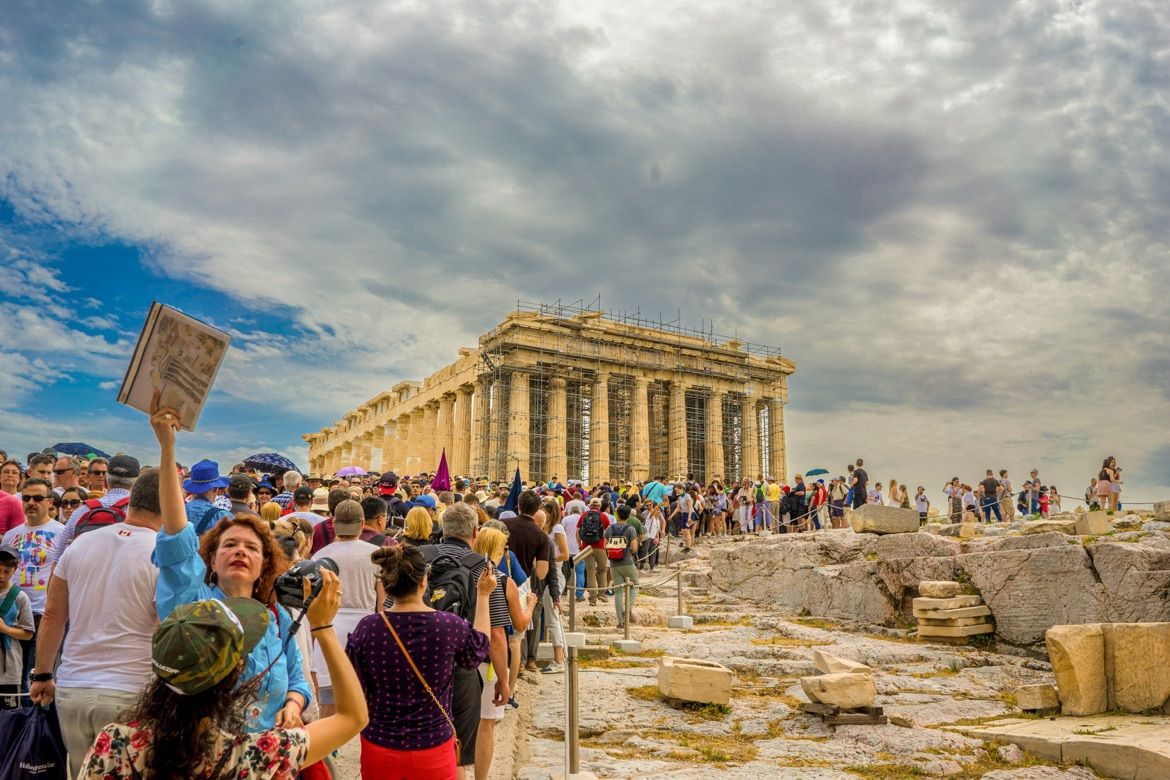
The fresco collapsed shortly after 12 noon, when about 300 visitors were on the palace grounds. According to Greek media reports covering the issue, local archaeologists and tour guides have previously expressed concern over what they described as long-standing issues of maintenance.