

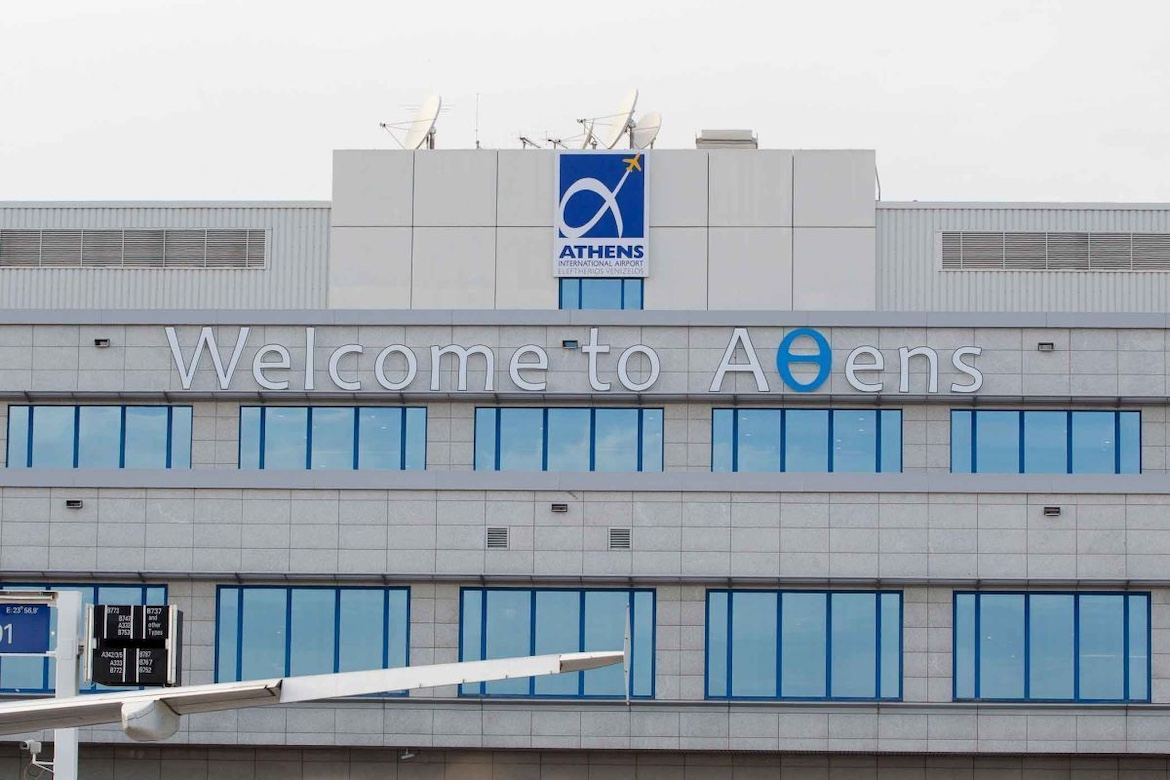
It happens like clockwork, every time a new nonstop route is announced. Once the news is shared by the airline itself—or by news outlets like The Pappas Post—the comments begin rolling in from Greek Americans across the country.
“Why not Phoenix?” “What about Pittsburgh?” “When will Minneapolis get its own nonstop?”
The latest announcement—that American Airlines will add a nonstop flight between Dallas/Ft. Worth and Athens beginning in May 2026—was no exception. The article we posted on Facebook generated hundreds of comments from people across the U.S. who felt their hometown had been overlooked.
Most justified their city’s case by pointing to its large Greek American community. Others simply named their city as though airline planners were scrolling through Facebook for inspiration.
The reality, however, is that route planning is a far more complex and painstaking process and while the population of Greek Americans in a particular region may play into the process, it is only a small factor in the overall decision by the airline planners.
How Airlines Really Decide on New Routes
Behind every new international route are months—often years—of analysis. Airlines weigh multiple factors before committing one of their widebody aircraft to a market:
Demand data – Airlines study how many passengers already travel between two cities, even with connections.
Competition – They look at whether another carrier is already flying the route, and if so, whether there’s room for more.
Hub connectivity – A hub like Dallas/Ft. Worth gives American Airlines access not just to Dallas-area passengers, but to travelers from across the U.S. who can connect to Athens through DFW.
Aircraft economics – The right-size, fuel-efficient aircraft needs to be available to serve the market profitably.
Premium demand – Routes with strong business and first-class traffic are more attractive.
Seasonality – Athens remains heavily summer-focused, so airlines weigh whether there’s enough year-round demand.
Athens’ U.S. Boom
Athens International Airport has seen a dramatic surge in U.S. connectivity. In 2019, Athens had just 46 weekly departures to the U.S. from four cities. By the summer of 2025, that number had grown to 103 weekly departures across nine U.S. cities.
The results speak for themselves. In 2024, 1.8 million passengers flew between the U.S. and Athens, an 8% increase over 2023. That growth has accelerated further in 2025, with traffic up 15% year-on-year in the first half alone. June 2025 was the single strongest month on record, with nearly 300,000 passengers flying between the U.S. and Athens.
Load factors—the percentage of seats filled—are also strong. From January to July 2025, U.S.–Athens flights averaged an 85.5% load factor, despite airlines adding 151,000 more seats compared to the previous year. Some routes performed even better: Charlotte topped the list at 94.3%, Los Angeles at 92.3%, with Atlanta, Chicago, and Boston also above 90%.
Connecting Traffic: Athens as a Gateway
It’s not just point-to-point traffic driving the boom. Athens has also become a gateway hub. In 2024, connecting traffic from the U.S. via Athens increased by 155% compared to pre-pandemic levels, and it continues to climb. Passengers aren’t only heading to Greek islands—though that remains a strong draw—but also to Cyprus, Israel, and Albania.
United Airlines and Emirates are leading carriers for this connecting traffic, proving that Athens is positioning itself as a Southeastern Mediterranean hub for U.S. travelers.
The Los Angeles Example
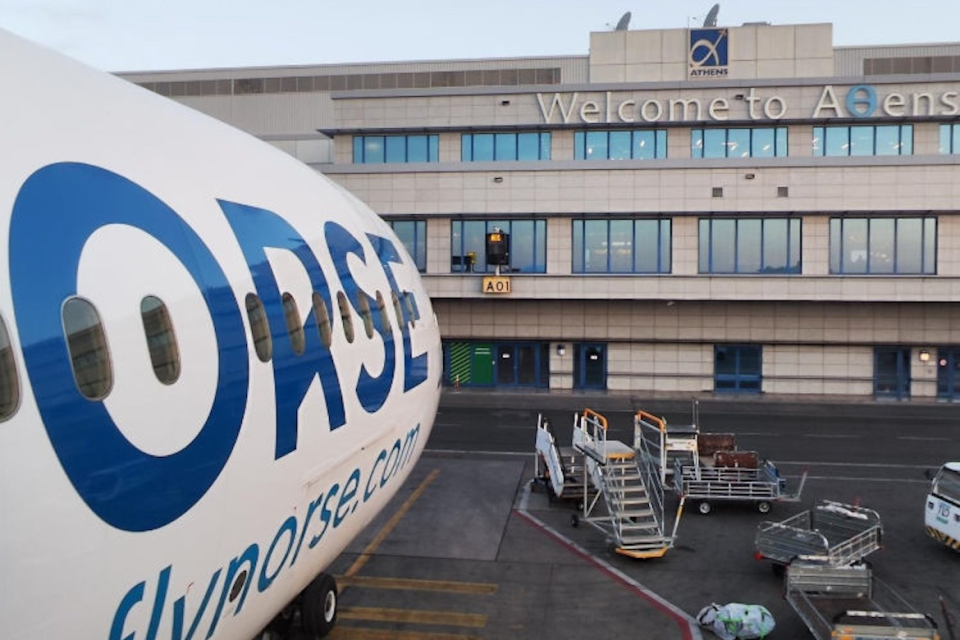
Perhaps the clearest demonstration of untapped demand came with Los Angeles. In 2024, it was Athens’ largest unserved U.S. market, with 106,000 passengers flying indirectly. That changed in June 2025 when Norse Atlantic Airways launched a direct LAX–Athens route.
The response was overwhelming. In just two months (June and July 2025), Norse carried 21,000 round-trip passengers, essentially capturing 20% of the previous year’s entire LAX–Athens market almost overnight. The flights operated at an impressive 92.3% load factor.
What’s more, connecting traffic through other hubs didn’t collapse—it remained strong, showing the depth of the Los Angeles market.
Extending the Season
Athens has historically been viewed as a summer-only market, but that is changing. Winter traffic is rising, with February 2025 seeing 36,900 passengers, up from 30,000 the year before and just 25,000 pre-pandemic. Load factors in January 2025 reached 92%, a record for what was once considered off-season.
Airlines are responding by stretching their schedules. Delta now flies well into January and resumes as early as March. United and American have also extended their operating seasons, while Emirates remains the only carrier with true year-round Athens service.
What Cities Are Next?
Despite all this growth, there’s still enormous untapped potential. In 2024, 65% of U.S.–Athens passengers traveled indirectly, equal to 1.14 million travelers without a nonstop option. Even markets with direct service—like New York, Chicago, and Boston—still see significant indirect traffic, suggesting room for more flights or year-round operations.
According to Athens International Airport statistics, the top unserved U.S. markets are:
San Francisco – over 70,000 passengers flew indirectly in 2024.
Miami – another strong contender, boosted by American Airlines’ hub and Florida’s Greek American community.
Denver – a United Airlines hub that could link the Mountain West to Athens.
Seattle – driven by both tourism and high-yield tech and business travel.
If Los Angeles is any guide, airlines that take the plunge into these markets may be rewarded quickly.
The Bottom Line
The growth of U.S.–Athens connectivity is one of the most remarkable aviation success stories of the past decade. What began with a handful of summer flights has exploded into year-round connectivity across nine cities, with more on the horizon.
For Greek Americans still waiting for a nonstop from their hometown, the reality is this: airlines aren’t guided by Facebook comments or diaspora pride or even population, but by hard data and profitability. And right now, the data says there are still plenty of opportunities for Athens.
San Francisco, Miami, Denver, and Seattle—your turn may be coming.