
Greece has seen an unsettling increase in femicides over the last decade, with 49 women murdered by spouses or close family members between 2023 and 2025, compared to 36 from 2013 to 2015.
The figures were shared by Pan Hellenic Federation of Public Hospital Workers President Michalis Giannakos who also warned that the surge “should seriously concern society and the [Greek] State.”
“As a country, we struggle with prevention rather than crime-solving,” noted Giannakos, “since law enforcement authorities eventually manage to do their job.”
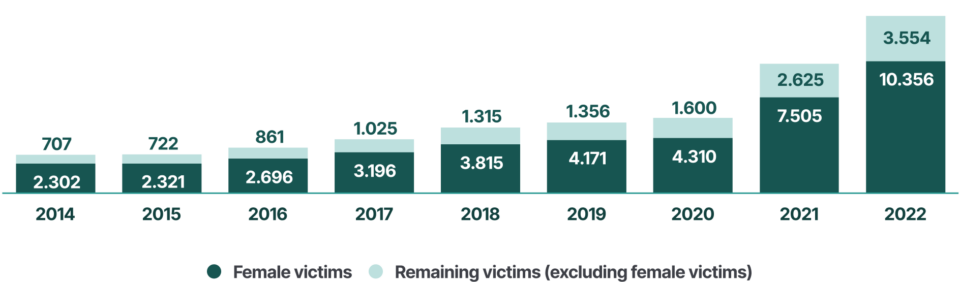
Annual number of female and total victims of domestic violence / Image Credit: European Institute for Gender Equality
According to the European Institute for Gender Equality, females make up most domestic violence victims (74%) in Greece, and are disproportionately affected by intimate partner homicide and domestic homicide.
Although the Institute does attribute this multi-year increase to “several factors,” including improvements in data collection systems and heightened visibility of gender-based violence, the 31% increase in femicides over the course of a decade is indisputable proof of a growing domestic violence problem in Greece affecting women and girls.
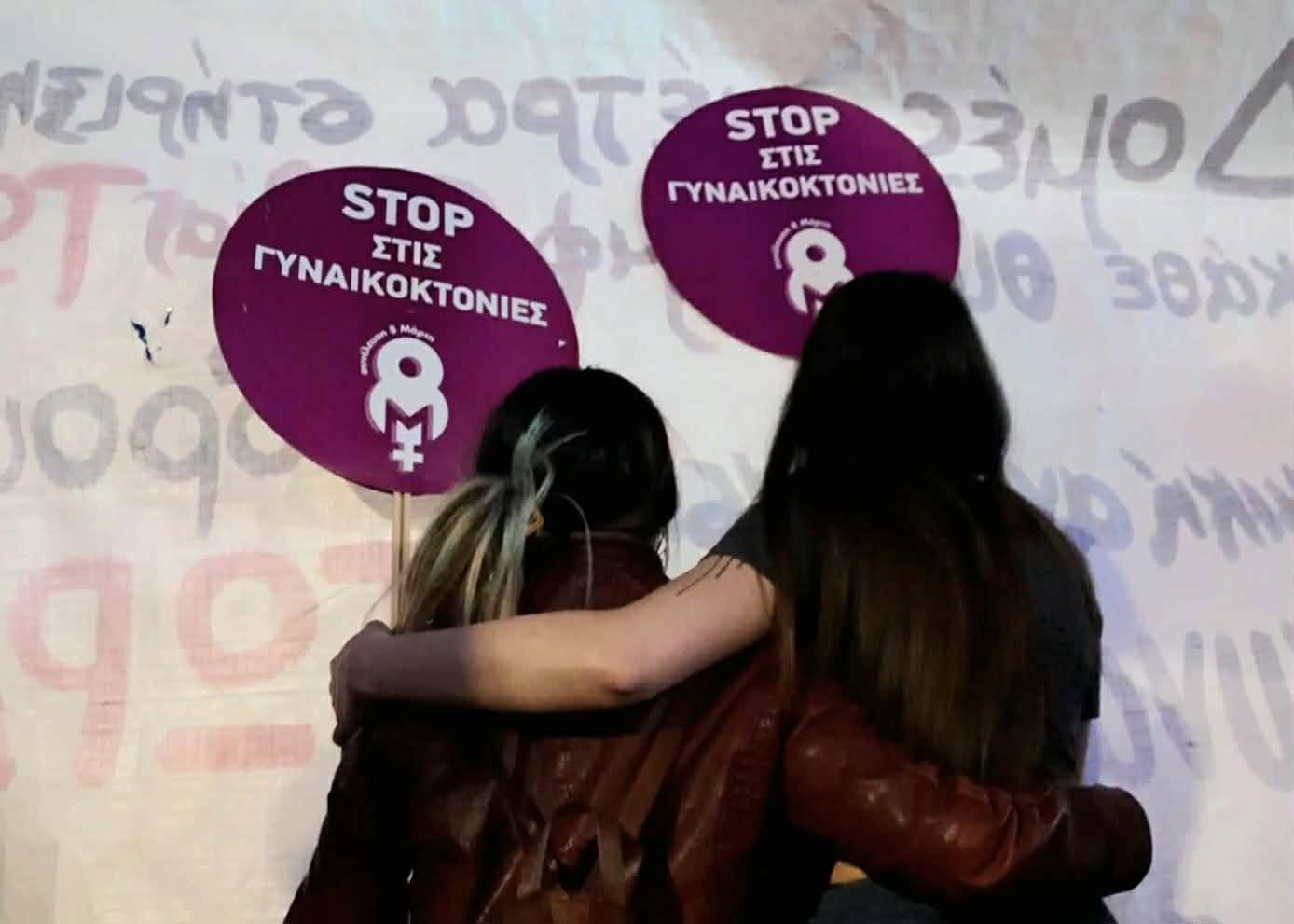
A dynamic voice in the need for systemic change, the Greek feminist collective March 8 Assembly released a statement last week arguing that gender-based violence and femicides are not simply isolated acts or “family tragedies,” but a social, political, and institutional crime being exacerbated because of underfunded protection structures.
“We are constantly told ‘to speak up’, ‘to report’, ‘to trust the authorities’. However, most of the women who were murdered had already reported their abusers. Kyriaki Griva was murdered just a few meters outside the police station, immediately after she was denied the protection she requested. And the most recent femicide in Drama proves that not even being a police officer protects against gender-based violence: the victim was a female police officer, murdered by her husband, also a police officer, whom she had already pointed out as a threat to her life.”
The Assembly’s primary demands include the legal recognition of the term “femicide,” and the repeal of the four-year-old Tsiaras law on compulsory joint custody, which forces Greek women to maintain contact with their abusers. Furthermore, the Assembly advocates for the creation of fully staffed, 24-hour free public support shelters in every Greek municipality.
Additional demands made by the Assembly include the immediate referral of cases to a special prosecutor, substantial economic support for survivors—including housing allowances and job security—and the introduction of dedicated sexuality education in Greek schools which, at the moment, is non-existent.
Cover Photo Credit: 8 March Assembly