
From island kitchens and Cretan tavernas to recipes passed down by generations of yiayiades, these books offer enough inspiration to keep your table full all summer.
Greek summer cooking is at its best when the cook knows when to get out of the way.
A ripe tomato does not need much more than salt, oregano and good olive oil. Fresh fish often needs only fire and lemon. A bowl of thick yogurt can become tzatziki with a little cucumber and garlic, while a plate of watermelon becomes lunch once someone adds feta and mint.
The food may appear simple, but that simplicity rests on generations of knowledge: how to choose what is in season, how to coax flavor from vegetables, when to add herbs and when to leave an ingredient alone.
The following ten cookbooks approach Greek and Mediterranean cooking from different directions. Some preserve regional recipes gathered from island cooks and grandmothers. Others loosen tradition slightly for contemporary kitchens. Together, they offer plenty of reasons to pour another glass of wine, put more plates on the table and allow lunch to stretch well into the afternoon.
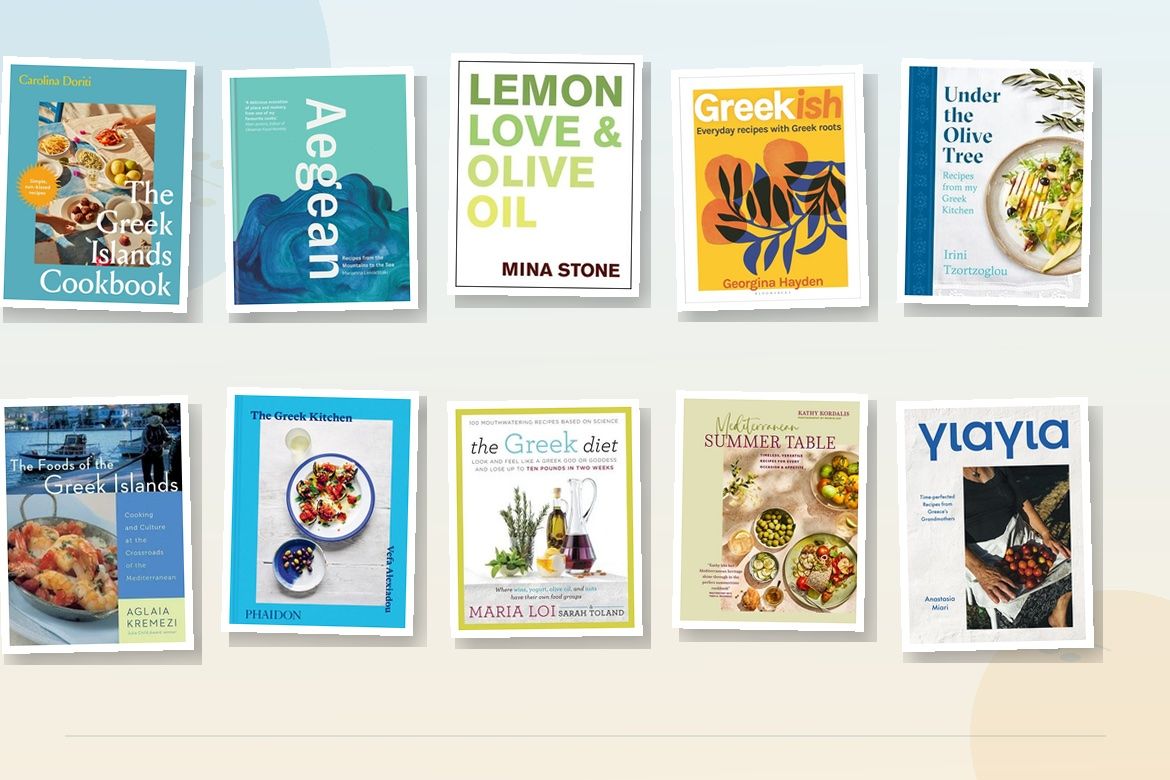
1. The Greek Islands Cookbook by Carolina Doriti
Few places are more closely associated with summer than the Greek islands, and Carolina Doriti builds her book around the ingredients and dishes that define them.
The Greek Islands Cookbook: Simple Sun-Kissed Recipes includes the kinds of food people dream about while planning a Greek escape: tomato fritters, watermelon with feta and mint, baked fish, roast lamb and simple dishes built around yogurt, fruit, vegetables and herbs.
Doriti is an Athens-born chef, food writer and longtime chronicler of the city’s culinary culture. Her recipes are approachable, but the book never reduces Greek island cooking to a collection of holiday clichés. It is a strong place to begin for anyone hoping to recreate a little Greek vacation magic at home.

2. Aegean by Marianna Leivaditaki
Marianna Leivaditaki grew up in Chania, Crete, helping in her family’s seafood restaurant and learning from the fishermen, cooks and grandmothers around her.
In Aegean: Recipes from the Mountains to the Sea, she organizes her food around the sea, the land and the mountains. That structure makes the book feel less like a conventional recipe collection and more like a culinary portrait of Crete.
Seafood naturally plays a major role, but so do vegetables, grains, lamb, herbs, cheese and the seasonal ingredients that form the backbone of Cretan cooking. The recipes are accompanied by memories of Leivaditaki’s childhood and the family taverna, giving the book a sense of place that reaches well beyond the kitchen.
3. Lemon, Love & Olive Oil by Mina Stone
Mina Stone grew up in a Greek American family where her yiayia taught her that good food did not have to be complicated—and that lemon, olive oil and salt could improve almost anything.
Lemon, Love & Olive Oil carries that philosophy through more than 80 Mediterranean-inspired dishes. The food is fresh, modern and uncomplicated, but the book is also deeply personal, weaving family stories and artistic influences into the recipes.
Stone’s cooking reaches beyond Greece into the broader Eastern Mediterranean, yet its foundation will feel immediately familiar to anyone raised around a Greek table: cook seasonally, use excellent ingredients and do not bury them beneath unnecessary technique.
4. Greekish by Georgina Hayden
Georgina Hayden describes her recipes as having Greek roots rather than being bound by strict definitions of authenticity.
That makes Greekish: Everyday Recipes with Greek Roots especially useful for people who love Greek flavors but need recipes that work on an ordinary Tuesday night.
Inspired by Hayden’s Greek-Cypriot family and her travels through Greece, the book takes familiar ingredients and combinations—lemon, oregano, yogurt, feta, olive oil, slow-cooked meat and seasonal vegetables—and adapts them for modern home kitchens. The food still tastes unmistakably Mediterranean, but there is less pressure to recreate every dish exactly as someone’s grandmother made it.
Consider it a book for cooks who respect tradition without being afraid to move the furniture around a little.
5. Under the Olive Tree by Irini Tzortzoglou
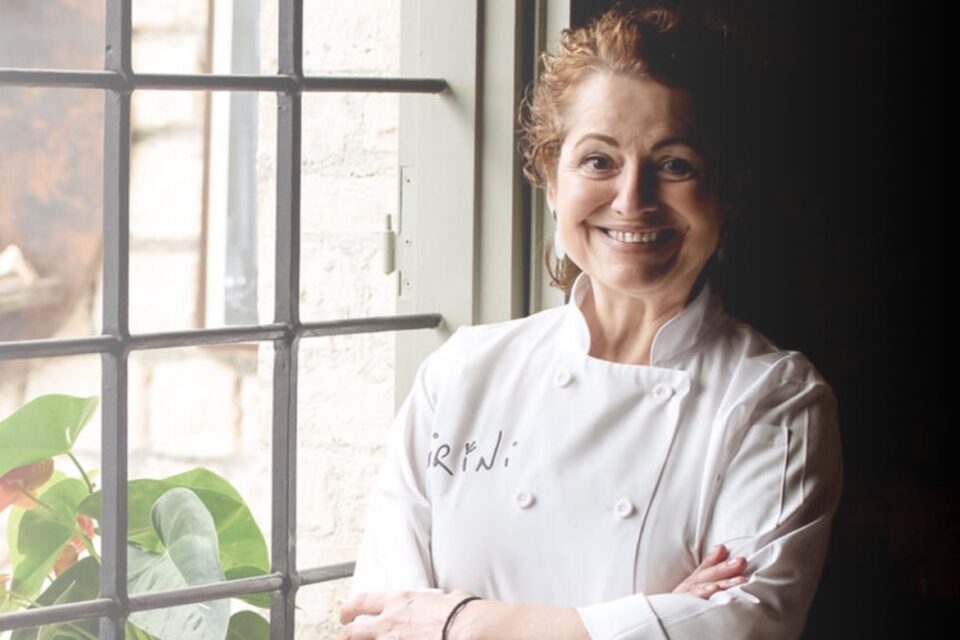
Born in Crete and later crowned the winner of MasterChef UK, Irini Tzortzoglou brings both family memory and professional polish to Under the Olive Tree: Recipes from My Greek Kitchen.
The book moves easily between everyday cooking and more ambitious dishes for entertaining. Its recipes include sunny salads, yogurt dips, seafood, lamb, vegetable dishes and desserts shaped by the flavors of Tzortzoglou’s childhood.
Her approach is personal rather than rigidly traditional. She respects the combinations she grew up with while adding touches of her own. The result is Greek food that feels generous and recognizable but never frozen in time.
6. The Foods of the Greek Islands by Aglaia Kremezi
Aglaia Kremezi collected many of the recipes in The Foods of the Greek Islands directly from island women, fishermen, farmers and bakers.
That fieldwork gives the book unusual depth. The recipes are not simply labeled “Greek”; they reflect the ingredients, habits and histories of different islands and communities.
Many of the dishes are vegetable-forward and built around produce, herbs, legumes, seafood, cheese and olive oil. Kremezi also provides cultural and historical context, making the book valuable for readers who want to understand why island cuisines developed as they did—not merely reproduce a plate they once ate on vacation.
It is part cookbook, part travelogue and part record of food traditions that were often transmitted orally rather than written down.
7. The Greek Kitchen by Vefa Alexiadou
Vefa Alexiadou was one of the most influential authorities on Greek home cooking, and The Greek Kitchen gathers 75 essential recipes into a more compact and accessible volume.
The collection covers the full table: mezedes, soups, salads, vegetables, legumes, fish, shellfish, meat, savory pies, breads and sweets. Recipes include chicken souvlaki, lamb skewers, spinach and cheese pie, cuttlefish with wine, baklava and kataifi.
This is the book for someone who wants a dependable foundation in Greek cooking rather than a narrow summer theme. Use it to master the staples, and then begin making them your own—as Greek home cooks have always done.
8. The Greek Diet by Maria Loi and Sarah Toland
The title reflects the diet-book era in which it was published, but the useful heart of The Greek Diet is chef Maria Loi’s ingredient-centered approach to Greek food.
The book is organized around staples of the traditional Greek table, including olive oil, yogurt, vegetables, legumes, seafood, herbs and honey. Its 100 recipes offer a practical introduction to eating in a way that emphasizes whole ingredients without sacrificing pleasure.
This is not the book to choose for elaborate restaurant-style presentations. It is better suited to readers interested in the everyday habits behind Greek and Mediterranean cooking—and in understanding how a relatively small group of ingredients can produce an enormous range of meals.
9. Mediterranean Summer Table by Kathy Kordalis
Mediterranean Summer Table is not exclusively Greek, but its Greek-Australian author, Kathy Kordalis, builds the book around the style of eating that defines much of the Mediterranean.
The collection includes more than 100 recipes influenced by Greece, Italy, Spain and France, with an emphasis on seasonal vegetables, seafood, homemade breads, sauces, shared plates and relaxed entertaining.
This is a particularly useful book for summer gatherings because it is less concerned with assembling a formal menu than with creating a table where different dishes can sit comfortably together. It also includes ideas for feeding guests with varying dietary needs without turning dinner into an administrative exercise.
10. Yiayia by Anastasia Miari
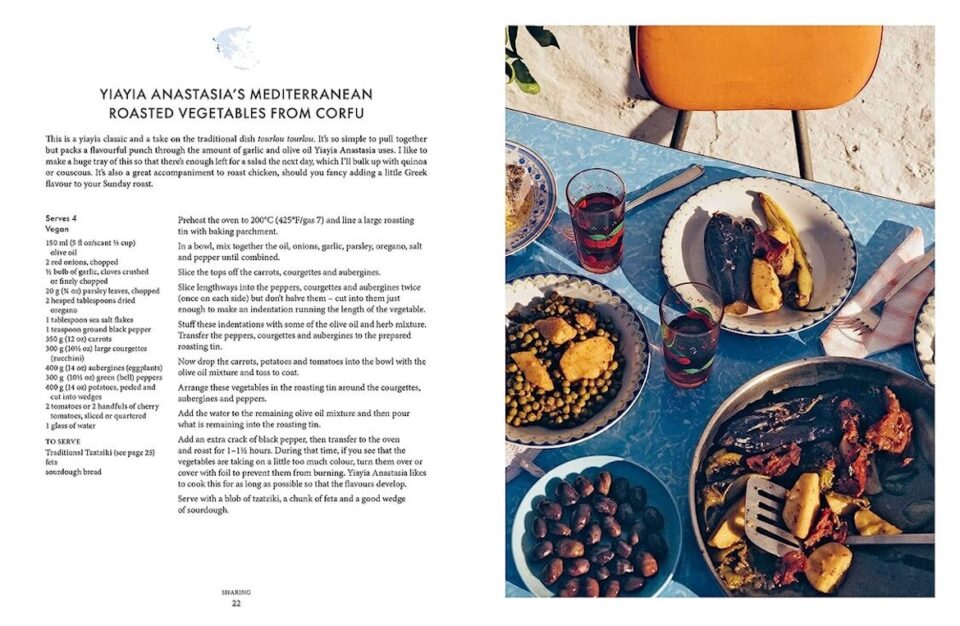
For Yiayia: Time-Perfected Recipes from Greece’s Grandmothers, Anastasia Miari traveled through Greece, entering the kitchens of grandmothers and documenting the regional dishes they had spent lifetimes preparing.
The recipes travel widely: stuffed zucchini from Lesvos, a Cycladic fourtalia, Corfiot bourdeto, Cretan dakos and watermelon cake from Milos. Many are vegetarian, reflecting the reality of traditional Greek home cooking before meat became an everyday ingredient.
Just as important are the women themselves. Miari includes their stories, memories and techniques, preserving the knowledge behind the recipes rather than treating them as anonymous pieces of folklore.
It is a beautiful tribute to the yiayiades who rarely measured anything, wrote little down and nevertheless knew exactly what a dish needed.
Building Your Greek Summer Table
There is no single book here that contains the definitive Greek summer. No such book could.
The cooking of Crete is not the cooking of Corfu. The seafood of the islands tells a different story from the pies and meats of the mountains. Greek American family cooking has evolved differently from the food still prepared in village kitchens.
That variety is precisely the point.
Choose a book that speaks to the way you like to cook. Start with one or two dishes rather than attempting an entire taverna menu. Add bread, olives, tomatoes, feta and a bottle of wine. Invite more people than you initially planned.
The best Greek summer meals are rarely about showing off. They are about giving everyone a reason to remain at the table.