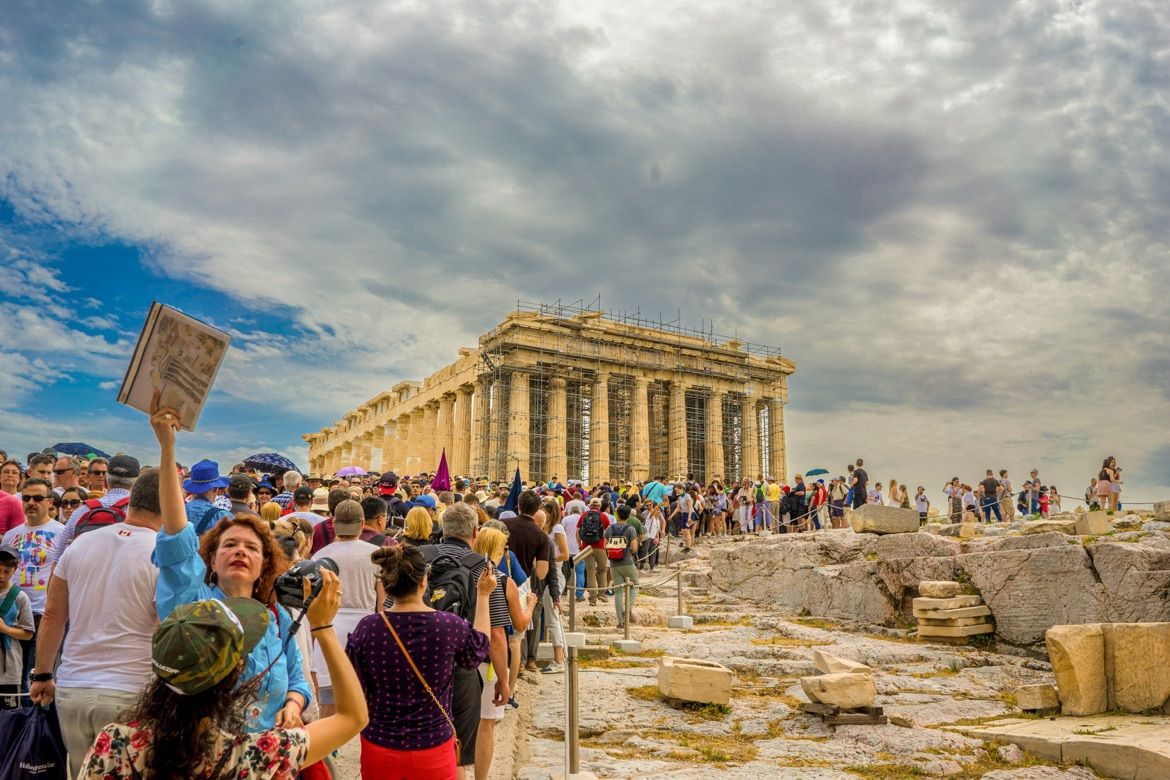

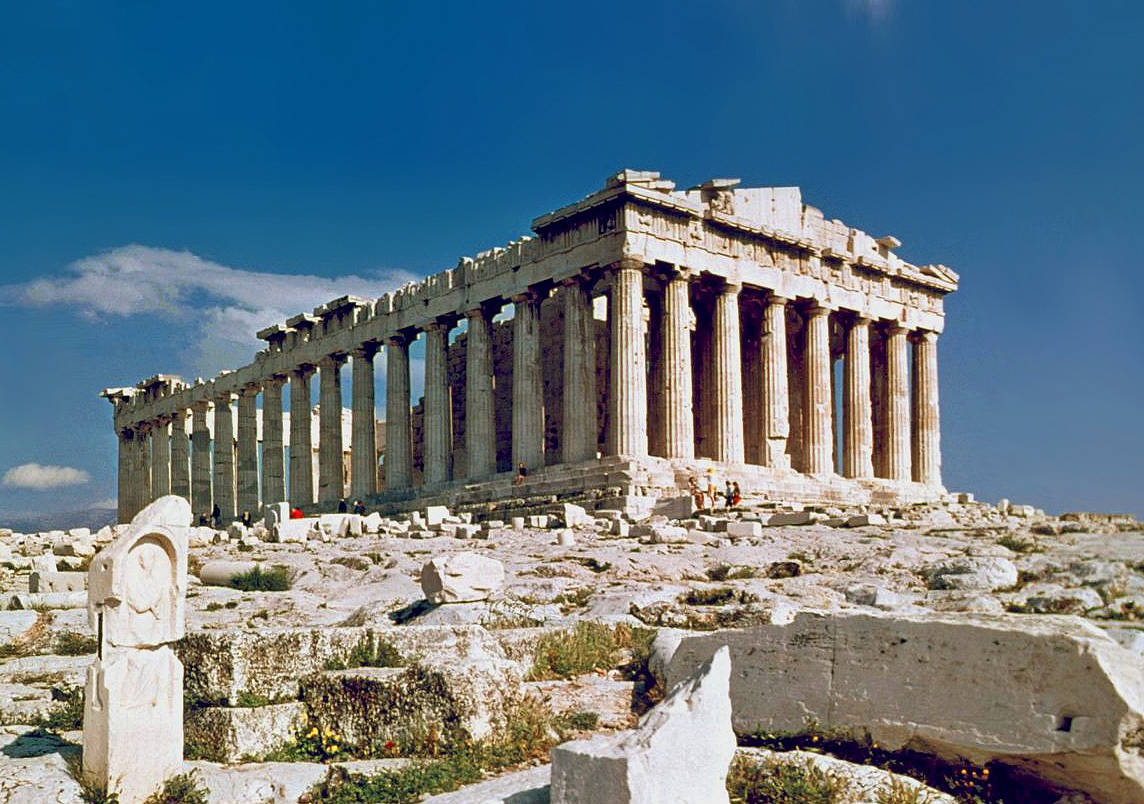
The Parthenon has stood on the Acropolis since 438 BCE, built at the height of Athens’ Golden Age under Pericles. Designed by architects Iktinos and Kallikrates and adorned by the sculptor Phidias, it was dedicated to Athena Parthenos, the city’s protector.
In the 2,500 years since, the temple has lived many lives: first as a pagan shrine, then a Byzantine church, later a mosque under Ottoman rule. Its greatest wound came in 1687 when a Venetian cannonball struck the gunpowder the Ottomans had stored inside, blowing the roof sky-high and scattering marble across the hill.
By the time Greece regained independence in the 19th century, the Parthenon was a ruin—majestic, but fractured. Early “restorations” sometimes caused more harm than good, with iron clamps that rusted and cracked the marble. It wasn’t until the 1980s that Greece launched a comprehensive scientific conservation program, replacing the damaged metal with titanium, correcting past errors, and piecing together thousands of fragments with precision worthy of a surgeon.
Why the Scaffolding Stayed So Long
Each side of the Parthenon has required years of repair. The western façade—the one facing most of modern Athens—was the last to be addressed, undergoing major restoration for nearly 15 years. The project has involved documenting every single block, cleaning centuries of grime, and realigning displaced columns.
The scaffolding became so permanent that it blended into the skyline—until now. For a brief interlude, the temple once again stands clear against the Attic sky, its Doric columns glowing gold in the morning sun and silver at dusk.
More Than Marble
The Parthenon has always been more than stone. It is a visual shorthand for democracy, human achievement, and endurance. Seeing it unobstructed after decades of intervention is not just an aesthetic experience—it’s emotional. It reminds us that restoration isn’t about freezing the past but protecting it so the story can continue.
Of course, the work isn’t finished. The monument still faces challenges: air pollution, climate stress, and the ethical debate surrounding the sculptures removed by Lord Elgin more than two centuries ago. Yet, for now, Athens celebrates a simple joy—its ancient heart, visible again in full.
For a few precious weeks, the Parthenon breathes freely. And anyone lucky enough to stand on the Acropolis during this moment will see it as Athenians did once before: whole, radiant, alive.
Adding to the monument’s layered story is a short film by acclaimed Greek-French director Costa Gavras, commissioned by the Acropolis Museum in 2009 to illustrate the Parthenon’s turbulent history. The film caused controversy for depicting hooded figures—symbolizing early Christian zealots—defacing the temple’s sculptures, a historically documented episode that some viewed as provocative.
After public debate and pressure from the Orthodox Church, the museum briefly removed the scene before ultimately reinstating the film in full. Today, the unedited version remains a haunting visual narrative of the Parthenon’s transformation—from sacred temple to ruin, and finally, to rebirth.
Watch the full film on YouTube