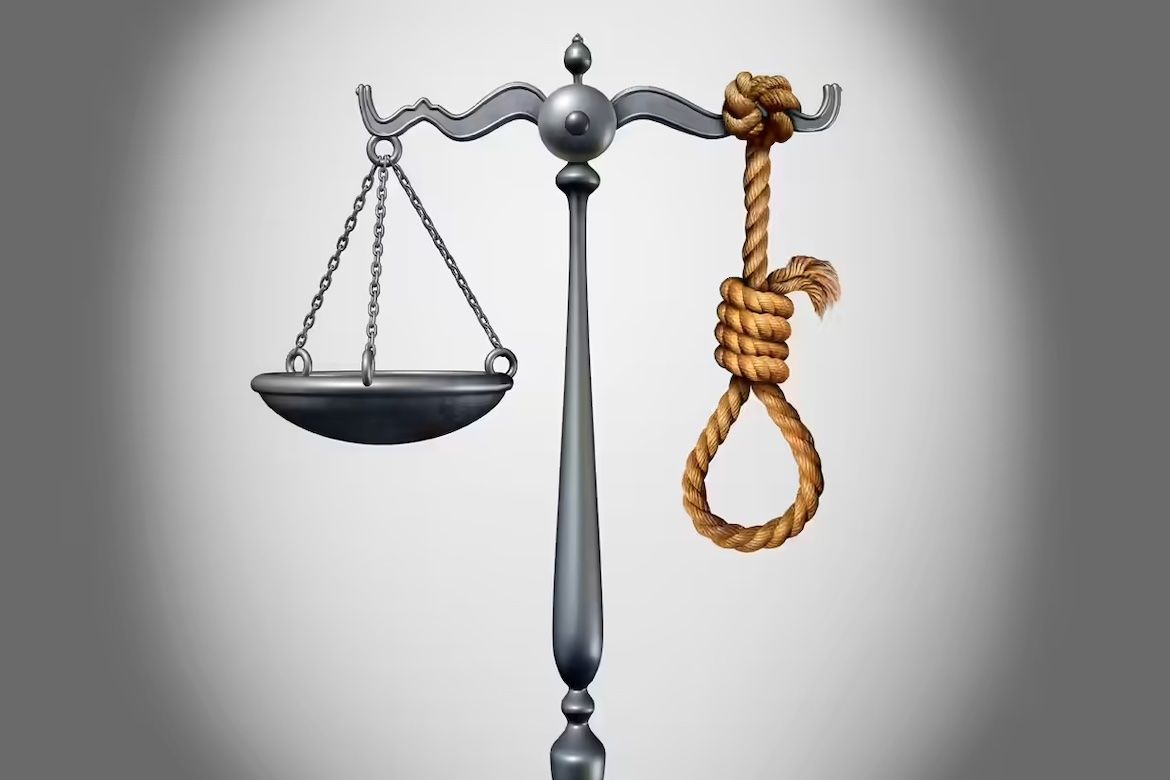
Fifteen years ago, the State of Illinois made a profound moral choice. When Governor Pat Quinn signed legislation abolishing the death penalty on March 9, 2011, it was more than a change in law. It was a declaration about the value of human life, the limits of state power, and the kind of society we aspire to be. I was present for that historic moment, and I remember it not simply as a political event, but as a moment of conscience. Illinois had decided that justice does not require killing.
For many years, people from across Illinois— lawyers, legislators, advocates, faith leaders, and citizens— worked together to confront the failures of the capital punishment system. I was honored to serve as president of the Illinois Coalition to Abolish the Death Penalty, and I remain deeply grateful for the many individuals who helped bring about this change.
As Orthodox Christians, we approach such matters not only as citizens, but as people of faith. We believe that every human being is created in the image and likeness of God. That truth does not disappear when a person falls into sin. It does not vanish when someone commits a terrible crime. The image of God may be obscured, but it is never erased. This is one of the deepest truths of our faith, and it must shape the way we think about punishment, justice, mercy, and repentance.
Over the years I have witnessed this truth again and again. While I was serving as a priest, I ministered to a man on Illinois’ death row— Andrew Kokorailis, later executed by the state in 1999, the last execution carried out in Illinois.
Sitting across from him in that prison visiting room, I was reminded of something our public debates often forget: even in the shadow of execution, a person’s humanity does not disappear. My Orthodox Christian consciousness compelled me to fight and advocate for his life to be spared.
He had come to terms with the fact that he would die. I could not. I also could not accept that the final word about human life should belong to the machinery of death.
A simple and unwavering truth guided me: the Orthodox Church is pro-life from womb to tomb.
This experience is outlined in my book “Grace Unbound: The Sacred Activism of an Orthodox Bishop.”
The death penalty has always presented a grave moral problem for Christians. It asks the state to do something irreversible in the name of justice. It says that one killing can somehow answer another. But the Gospel does not lead us toward vengeance. It leads us toward truth, accountability, repentance, and ultimately mercy. In the eighth chapter of the Gospel of John, when a crowd gathered ready to stone a woman they judged worthy of death, Christ did not bless the violence they were prepared to carry out.
He confronted the conscience of the crowd. He interrupted the rush to destroy. In doing so, He revealed a deeper righteousness, one not rooted in revenge, but in the possibility of transformation. The Assembly of Canonical Orthodox Bishops of the United States has likewise stated that the Church’s understanding of human life diverges from the logic of a state that authorizes execution, and has explicitly warned against vengeance.
This does not mean the Church is naïve about evil. It does not mean we ignore the pain of victims or the suffering of families whose lives have been shattered by violent crime. Their grief is real. Their wounds are deep. Justice matters, and society has a duty to protect the innocent and hold the guilty accountable.
But accountability is not the same as execution. A civilized society can punish wrongdoing, protect the public, and uphold the law without resorting to the deliberate taking of life. Illinois recognized that fifteen years ago, and it remains one of the wisest moral decisions our state has made in modern times.
The arguments against the death penalty are not only theological. They are also painfully human. Our justice system is administered by fallible human beings. It is subject to error, bias, politics, and failure. Once a person is executed, no repentance can be lived out in this world, no correction can be made, no injustice can be repaired. The finality of execution should trouble every serious conscience. A state that claims moral authority must also have the humility to acknowledge its own limitations.
But for us as Orthodox Christians, the question goes even deeper. What do we believe about the human person? Do we believe that a human being is nothing more than the worst thing he or she has done? Or do we believe that even in darkness, even in guilt, even in disgrace, there remains the possibility of repentance before God? The Orthodox faith is built upon repentance. Every service of the Church, every season of fasting, every prayer of confession reminds us that no one is beyond the need for God’s mercy and no one is beyond its reach. How then can we, as Christians, so easily accept a punishment that closes the door forever?
This is why abolition was not weakness. It was moral seriousness. It was not a retreat from justice, but a refusal to confuse justice with revenge. It was a recognition that life is sacred, not because every person is innocent, but because every person belongs ultimately to God. That includes the victim. That includes the grieving family. That also includes the condemned.
For those of us in the Greek Orthodox tradition, this understanding should be especially resonant. Ours is a faith of the Resurrection. We do not worship death, even when death appears justified by law, custom, or public anger. We worship the One who trampled down death by death. We worship the Christ who forgave from the Cross, who called sinners to repentance, and who revealed that the final word belongs not to violence, but to life. If we truly believe this, then our witness in the world must reflect it.
The anniversary we mark this year is therefore not simply about something Illinois did in 2011. It is about what we still believe in 2026. Do we still believe that life is sacred and inviolable? Do we still believe that justice must be guided by humility? Do we still believe that repentance matters? Do we still believe that the state should not wield irreversible power over life and death when other means of punishment and protection exist? The answer to these questions reveals much about our moral condition as a people.
I believe Illinois was right fifteen years ago, and I believe that decision remains worthy of remembrance and defense today. At a time when public discourse is often fueled by anger, fear, and dehumanization, the abolition of the death penalty stands as a reminder that a society is not diminished when it refuses to kill. It is ennobled.
Fifteen years later, may we remember that true justice does not harden the heart. It calls us to protect life, to uphold truth, and to leave room for the mercy of God. For every person, no matter how fallen, still bears His image.
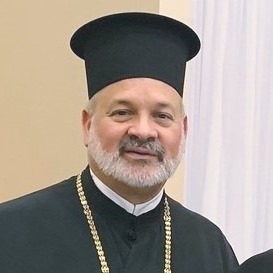
Editor’s Note: Demetri C. Kantzavelos, Bishop of Mokissos, has been an ordained clergyman for over thirty years and a bishop for the last seventeen. He retired from active ministry in early 2023 after a long career with the Greek Orthodox Metropolis of Chicago. Between 1992 and 2017, he was a dynamic leader in social activism, earning numerous awards for his groundbreaking AIDS ministry and his successful advocacy to abolish the death penalty in Illinois. His extensive interfaith, ecumenical, and Greek Orthodox networks, growing media presence, and broad social connections in Chicago have made him a recognized figure. He has been featured over a dozen times in outlets like the Wall Street Journal, the Chicago Tribune, the Philadelphia Inquirer, radio, and YouTube. His social and professional networks include many Greek Orthodox believers and extend well beyond the sphere of Greek Orthodoxy. Bishop Demetrios resides in Chicago, Illinois, and in a rural village in the Peloponnese region of Greece. He is the author of Grace Unbound: The Sacred Activism of an Orthodox Bishop.