
A new ministerial decision issued by Greece’s Interior Minister Theodoros Livanios establishes a long-awaited legal framework enabling Greek-born adoptees, particularly those sent abroad during the postwar adoption wave, to claim their Greek citizenship. The decision applies to individuals who were adopted abroad through 1976.
This development follows years of advocacy by The Eftychia Project, a U.S.-based nonprofit dedicated to Greek-born adoptee rights. Together with Tsoromokos & Papadopoulos, PLLC, a Greek legal services team, they helped establish the procedural and legal groundwork that underpins the Greek ministerial decision.
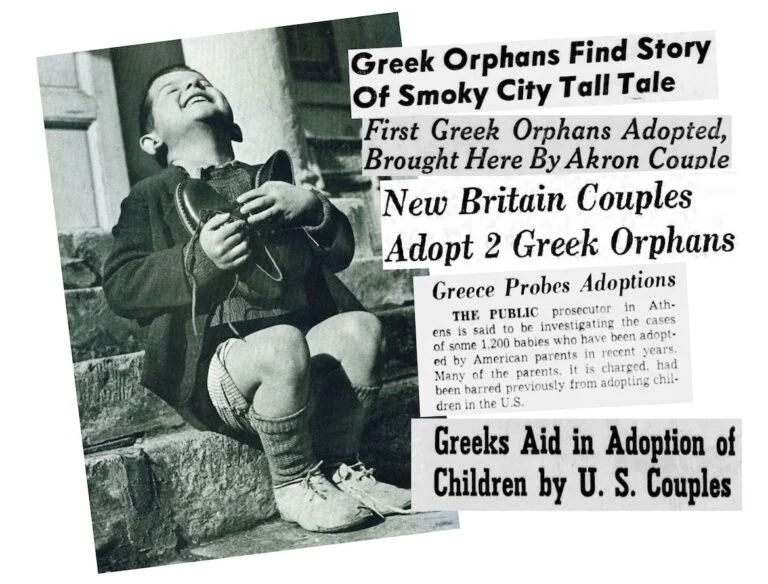
Thousands of children were removed from Greece between the 1950s and 1970s, often under irregular or undocumented circumstances, and sent abroad for adoption primarily to the United States. It has been argued that these adoptions were the result of a broader geo-political and ideological climate which influenced child welfare decisions by Greek institutions caring for children during that time.
This topic was covered in an extensive piece by historian Alexander Kitroeff in The Pappas Post.
The shame of unwed motherhood and widespread economic hardship had led to children being given up, either voluntarily or forcibly, to institutions—and without the explicit understanding that they could be sent for adoption to a foreign land. Since then, many adoptees sought not just to connect with their biological families, but also to be recognized by the Greek state through restoration of their citizenship.
Despite holding original birth certificates or court documents, Greek-born adoptees have faced bureaucratic obstacles for decades. Scholars Mary Cardaras and Gonda Van Steen have argued that citizenship should have been a fundamental right for these individuals, as it acknowledges the first thing they learn about themselves—that they are born Greek, have a right to claim their heritage and connect with it.
The documentary record of these separations, and the often-traumatic aftermath, is preserved in works like Cardaras’ Voices of the Lost Children of Greece and Van Steen’s Adoption, Memory, and Cold War Greece: Kid Pro Quo?