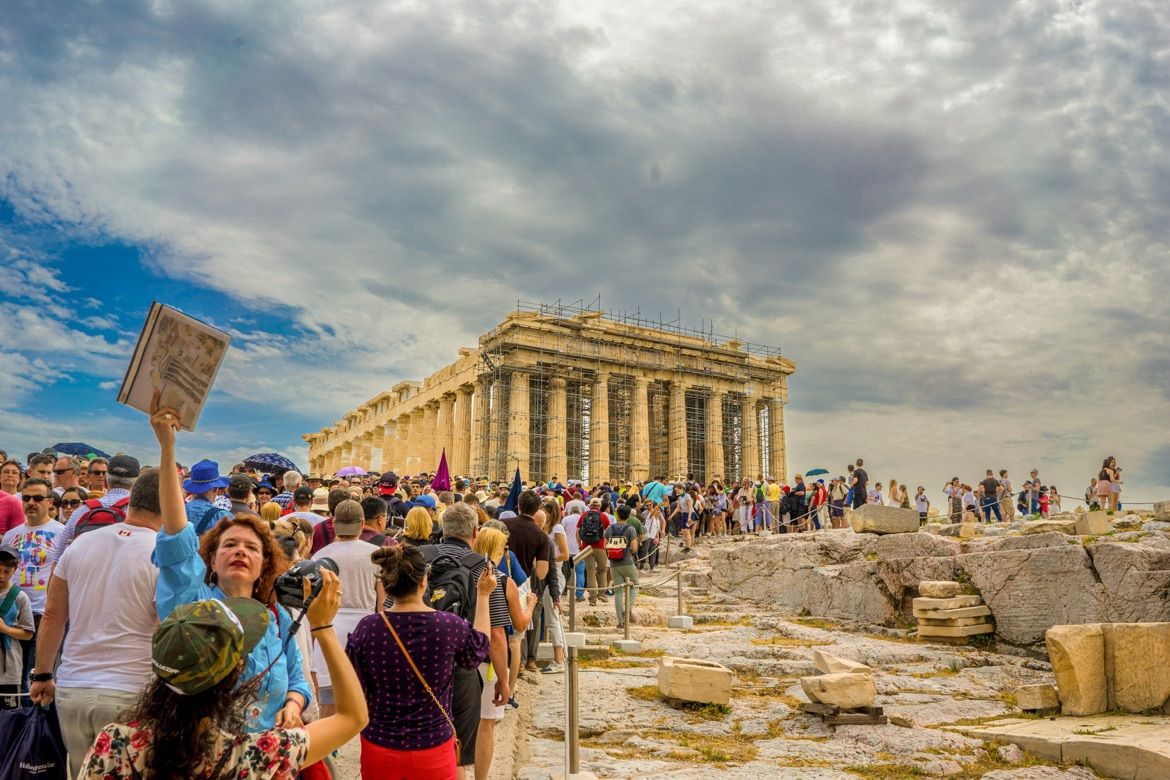

The Elgin Marbles. They are inanimate and stone cold, yet hold such meaning and symbolism for Greece. There has been a passionate hue and cry for years to bring the Parthenon Marbles home. And we agree. They should be returned at once. But wait. The Marbles are one thing, but there is another of far greater importance.
What about the return of Greece’s flesh-and-blood children? What about the repatriation of Greece’s former citizens? They were born Greek, of Greek parentage, and were taken from their country of origin as babies and youngsters. They, too, need a pathway home, if they so wish. They, too, should be an urgent priority for Greece.
We are talking about the so-called “lost children of Greece.” The country allowed for and, in many cases, facilitated the exportation of some 4,000 of its children to adoption overseas. Between 1950 and 1970, the vast majority of these Greek-born children went to couples in the USA (to some Greek-American couples, but also to many more white American couples of any background and religion). Some 600 Greek infants and toddlers were sent to the Netherlands for adoption.
Some forty to fifty to Sweden. These three countries were the largest recipients of Greek “orphans,” who are more appropriately called “adoptees,” because, in many cases, one or both parents were still alive but did not have the means or family support to keep their child. The history of the Greek postwar adoption movement is largely unknown, but it has recently been documented in compelling detail.
These international adoptions did not always turn out well, but Greece had no system of follow-up in place and has, to this day, not devoted any resources to investigating its post-war adoption history. In fact, Greece did not even keep a register of who was sent out. Greece at that time did not prioritize the wellbeing and the rights of the babies, young mothers, and young families, according to the international standards that are recognized today. Scant records and also a few scandals have long plagued this adoption movement. But those are not the point here.
The point is that these Greek-born children, now aging adults, know that they are Greek, they have some records to prove it, and in many cases have DNA test results to confirm it.
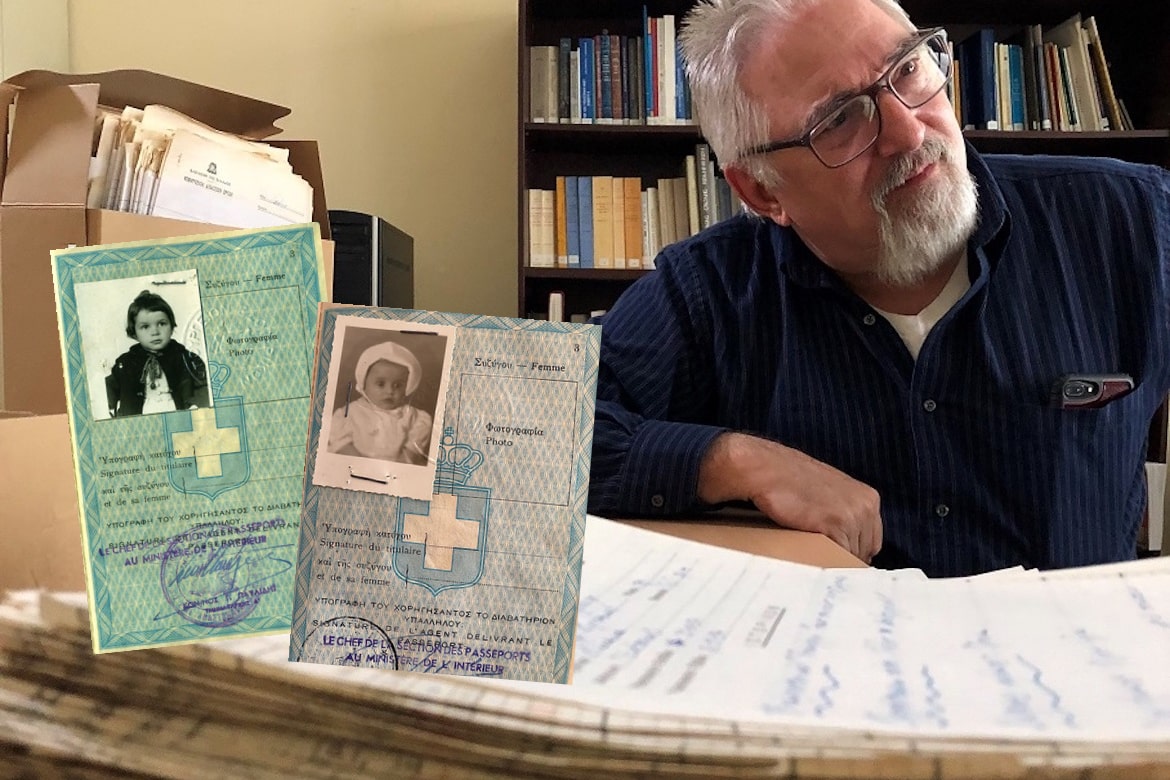
A few are in touch with their birth families, which provides additional proof. And yet, these Greek-born adoptees are repeatedly told (at Greek consular offices across the USA) that their records are not good enough to re-establish their Greek citizenship, based on current citizenship procedures. Since many of them were born out of wedlock, they at best have a Greek birth certificate, but rarely a place on the οικογενειακή κατάσταση (Greek “family records”).
That lack of official belonging on paper has been haunting them for the better part of their lives. Further, much of the Greek overseas adoption history has been obscured by mystification and lies. So it is time to set the record straight. It is also time to restore to these people what has been taken from them and to make them whole.
Why do these Greek-born adoptees care about their Greek citizenship? Because it acknowledges the first thing they learn about themselves, before learning about biological parents or other kin. They are born Greek and want to claim their heritage and connect with it.
Most of them want to acquire Greek citizenship as a second or dual citizenship, in addition to their American citizenship. Greek citizenship acknowledges the truth of their roots and their history, and also of their adoptions. Aπό πού είστε? (Where are you from?) is the single most common question that the foreigner visiting Greece is asked. The foreigners can proudly proclaim where they are from. Greek-born adoptees need to be able to do the same, to be able to proclaim, “I was born here, I was from here, this is also my country.” They love Greece and want to visit the country of their birth.
How can it be that Greece hands out celebrity citizenships to those who have no organic connection to the country? How can it be that people who have fathers, mothers, or grandparents born in Greece can find their way to citizenship? Why do Greek-born adoptees face an arduous journey of roadblocks, obstacles, denials, and unending demands for paperwork that may no longer exist, due to no fault of their own?
Greek-born adoptees deserve their Greek citizenship, not necessarily because it restores the birth family (which it hardly ever can), but because it restores truth and connection—cultural belonging. In fact, it will correct a historic wrong (to use the designation used by the prominent lawyer Vasilis Sotiropoulos, who has lent his prompt support to this cause).
A few real-life scenarios may illustrate these points:
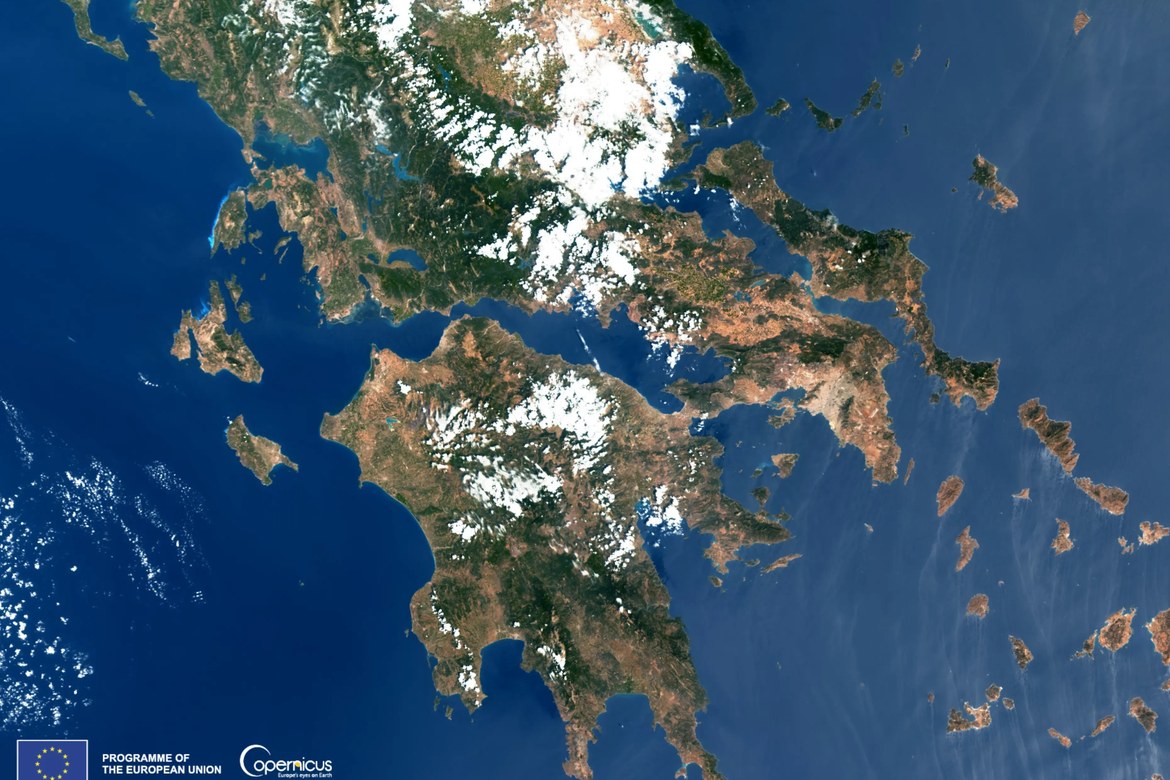
Lexi (not her real name) is in possession of a certified copy of her original Greek birth certificate and of an attestation from the Office of Vital Statistics of Pyrgos, Ileias, that no further documentation on her birth mother can be found, because the records were destroyed in a fire in 1944. Lexi also has the full οικογενειακή κατάσταση of her birth mother’s family, listing her maternal grandparents and her many maternal aunts and uncles. And yet, the Greek system has not yet granted her citizenship, even though Lexi’s entire maternal ancestry comes from a line of registered Greek citizens from the Peloponnese.
To make matters worse, Lexi has spent a lot of money on legal assistance in Greece, which has not unblocked the process, not even over the course of five full years of effort, expense, and anticipation. Lexi was 3.5 years old when she was sent from Greece to the USA. Why should she not have Greek citizenship (as a second citizenship) when the decision to forego it by way of adoption was most decisively not hers?
Anna-Jo has a certified copy of her original Greek birth certificate, listing her Greek father and Greek mother, but her name was never added to the οικογενειακή κατάσταση. Her birth father passed away shortly before she was born, leaving her mother a poor widow who consented to the adoption in despair. Anna-Jo has been working with the Greek consulate nearest to her place of residence in the United States, but thus far to no avail: the matter is hardly moving forward, and she is again being asked for all sorts of documentation in translation.
Again, the expenses are piling up. And yet Anna-Jo was still an infant when she was adopted out. All her Greek records point to an adoption that passed through the Court of First Instance in Athens. And still, her Greek citizenship as a second citizenship hangs in the balance, for no valid reason. She, too, did not choose to give up her Greek citizenship. In fact, she never opted for the adoption, either, which turned out to be far removed from the child’s “best interest.”
Clearly, the Greek state and the many money-making intermediaries bear responsibility for the haphazard adoptions to the USA that were carried out in the 1950s and 1960s. These overseas adoptions affected hundreds of young Greek children, who were left to their fate.
No Greek organization or institution went back to check on their living arrangements, health, or general well-being. Their names were forgotten, let alone their needs. Greece has a moral as well as a legal obligation to correct this historic wrong, by granting Greek citizenship. Greece ought to immediately correct this historic wrong while it still can. Time is running out!
The true marker of a mature democratic society is its ability to recognize and correct past wrongs, as the country evolves and sets higher standards for human dignity, societal relations, and quality of life. The good news is that redressing this past wrong is still possible, if only on a symbolic level, of acceptance and recognition. Granting these adoptees their Greek citizenships will be a proper measure of redress, even though it only partially relieves the harm done in many individual situations.
But the demand is not for granting Greek citizenship: it is a matter of restoring Greek citizenship to people who were Greek by blood lineage and birth-right, whose Greek citizenship was never questioned until they were tagged for overseas adoption, whose Greek citizenship was invalidated by these very adoptions in which they themselves had no say whatsoever.
The burden of proving Greek lineage should not rest on the adoptee. Individual adoptees should not have to educate Greek officials in various offices or struggle for years to fit into current citizenship procedures that were created without recognizing this entire phase of the Greek adoption history. These postwar adoptions were a coordinated effort by the Greek government and official institutions of that time, so the gesture of restoring Greek citizenship should be initiated by the Greek state itself.
The Greek state should not hand out this Greek citizenship in a piecemeal fashion but as a collective action, as an act of restorative justice. Given the unique challenges of obtaining documents in these cases, the Greek state must establish a separate procedural track for verifying existing documents, acknowledging documents lost by Greek agencies or institutions involved, and restoring citizenship to those victims of the child exports with incomplete records.
This act of restoring of Greek citizenship ought to be done on a bona fide basis, since Greece bears the historic responsibility of letting these adoptions happen. In fact, back in the late 1950s, Greece insisted that the US-bound adoptions of Greek children should be handled in Greek courts only, because the children were Greek subjects. Fast-forward sixty years, and these Greek adoptees are not Greek enough for the very system that exerted its authority over foreign agencies, and vociferously so!
Most of the Greek adoptees who were sent to the USA have some documents. An expert can verify rather quickly whether these documents are proper Greek adoption records or not. This expertise exists, as does the willingness to deliver the assessment pro bono. Any verification process could be completed in as short a time span as two weeks. What then is the reason for a hold-up of now more than half a century? Lack of political will.
In recent days, we have seen the controversial announcement of a Greek government-sponsored conference on fertility 1ο Πανελλήνιο Συνέδριο Γονιμότητας και Αναπαραγωγικής Αυτονομίας: Όρια και Επιλογές come and go, as soon as it became clear just how conservative the conference agenda was (to say nothing of the offensive advertisement spot that accompanied the formal announcement): the government and the President did not want to be seen promoting restrictive and degrading gender roles for women, in the service of the normative family and the patriarchal nation.
The large majority of the 4,000 Greek adoptees of the 1950s and 1960s are the very victims of an intolerance of childbirth that did not fit into the (idealized) nuclear, married family life of a heterosexual couple. At that time, the Greek state disavowed maternity of the “wrong” type, and it sent scores of “illegitimate” children on its way into the vast unknown. There is no need for any further moral regulation of Greek families. There is nothing “legitimate” or “illegitimate” about being born; legitimacy is not bestowed or withheld by birth. Legitimacy is earned, rather, when any party takes the first step to reconcile the wrongs of the past.
Today Greece is making great strides forward towards equity and inclusion throughout the country and as a part of the European Union community. It is modernizing at a rapid pace. It scores high in global rankings of many kinds of achievements. It is welcoming foreign investment. Socially, Greece is becoming more tolerant, multicultural and diverse. It’s looking for new ways to stay connected with Greek diaspora communities around the globe. Great changes are afoot.
Here is another opportunity then for Greece and the USA to work together and offer a meaningful service to people who have connections to both countries. What a grand social and political gesture it would be for Greece to verify these “children” as Greeks, to invite them to the country en masse, and to swear them in as citizens of the country in which they were born. What a magnanimous gesture it would be, which would generate tremendous goodwill for Greece and for the leaders who make it happen.
A nation comes out stronger when it acknowledges its historic mistakes, does what it can to correct them, and embraces any members of its society, including the most innocent of its former citizens: εξώγαμα, έκθετα, ανεπιθύμητα (“illegitimate” children, foundlings, undesirables).
Some 4,000 Greek adoptees have been waiting since 1950 for the kind of response we are asking for. Don’t make them wait as long as the Parthenon Marbles!
With thanks to Lambros Baltsiotis, Vasilis Sotiropoulos, Aphrodite Bouikidis, and the hundreds of Greek adoptees who have been speaking up for the past decades.
Mary Cardaras, adopted out from Greece to the USA in the 1950s, Ph.D., Associate Professor and Chair, Department of Communication, Political Communication, Journalism and Documentary Film, California State University, East Bay. As an adoptee, scholar, and journalist Mary Cardaras is currently compiling an anthology of Greek adoptee stories. This is a pioneering initiative, given that no previous Greek collection exists in English. Mary has thirteen essayists on board, for the collection with the working title Voices of the Lost Children of Greece. Their stories, including her own, will strike home the experience of international adoption, whose impact is lifelong, but is not properly measured, let alone acknowledged.
Gonda Van Steen is the Koraes Chair of Modern Greek and Byzantine History, Language and Literature at King’s College London. Her 2019 book, Adoption, Memory, and Cold War Greece: Kid pro quo? (U Michigan Press), delivers the first critical historical study of the mass adoptions from Greece to the USA and to the Netherlands in the 1950-60s, affecting some 4,000 Greek-born children. Her book has opened up a conversation about the Cold War adoptions from Greece and paths of recognition and redress, in which many adopted adults from Greece have joined her. Potamos Publishers will be releasing the Greek translation of her book by September 2021.