
The writing is on the wall. The facts speak for themselves, as do the almost daily occurrences and warnings from scientists, local officials on Greek islands, as well as news reports.
And unfortunately, the problem goes way beyond not being allowed to flush toilet paper down the toilet.
As much as we would like to believe it, summer in Greece is changing. And the millions of hyphenated Greeks from all corners of the globe who have spent our childhoods splashing in the Aegean waters and visiting grandparents in sleepy villages might have to reconsider how we experience Greece, or more specifically, WHEN we travel to our beloved ancestral homeland.
But, can we make a difference? Or is too late? Let’s take a look at that writing on the wall.
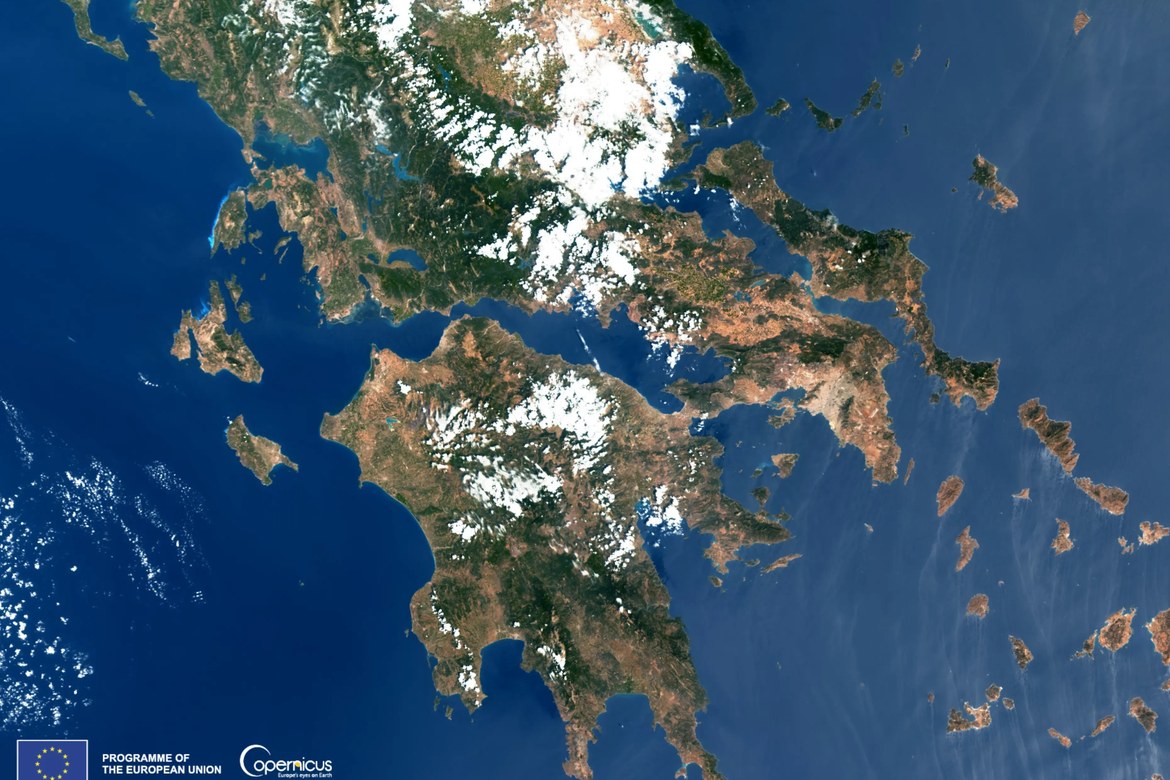
Greece recorded in 2024 its hottest June since 1960. The average temperature in Greece has increased by 2.5 degrees Celsius during the decades from 1960 to 2024, according to one of the country’s top scientists, Kostas Lagouvardos, research director at the National Observatory of Athens.
“The month of June 2024 was characterized by long periods of elevated temperatures over several days, largely surpassing normal seasonal temperatures throughout the country,” he added.
June of 2024 also saw a doubling of the number of forest fires in the country, threatening not only the country’s fragile ecosystems, but also populated areas and popular tourist destinations.
According to Greek government statistics, there were 1,281 fires this June compared with 533 last June.
Putting natural phenomena aside for a moment, we should also take into account the manmade factors that could be leading the country to unsustainability.
Many of Greece’s most popular islands are running out of water, while on others, the power grid and other infrastructure that was built to handle a few thousand residents decades ago, is buckling, with human waste exploding from overflowing septic tanks and entire islands left in darkness for hours at a time.
A Reuters video report from Naxos outlines just how drastic the problem is there, threatening not only the island’s tourism, but also its famed potato crops.
The infrastructure problem on the most popular islands got to a point where Greece’s Prime minister, Kyriakos Mitsotakis, decided to take some drastic measures, targeting the thousands of cruise ships that bring tens of thousands of people to ports throughout the Aegean.
Mitsotakis said that the time had come to place restrictions on cruise ships visiting Greece’s most popular islands. Set to begin next year, this is the government’s first move to cope with the effects of “over-tourism.”
He said the new rules could limit the total number of island berths to a sustainable number, or introduce a bidding process introduced for cruise ship slots.
The new rules, according to his remarks in a Bloomberg interview, would target the top two cruise destinations, both of which were feeling the strain on locals, as well as big-spending tourists who were dropping more than $1000 a night on fancy hotels who were feeling the strain on crowds of cruise day-trippers.
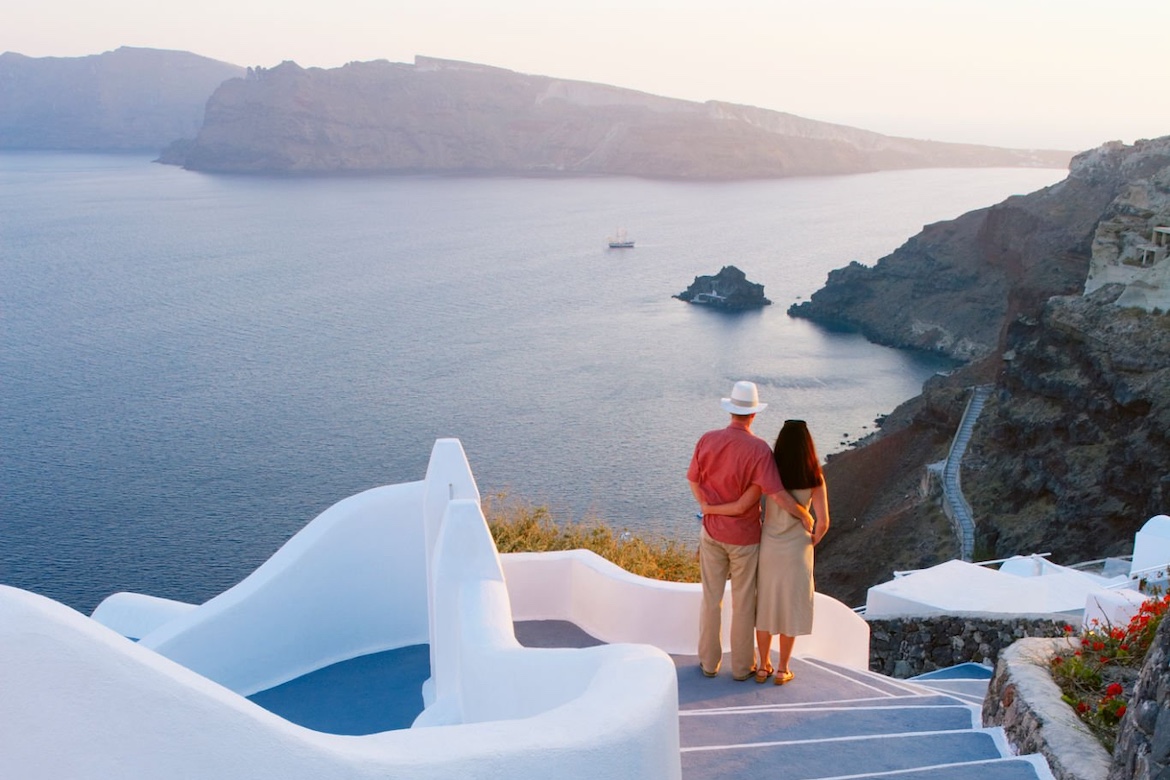
“Santorini in itself is a problem,” the premier said June 12 at his Athens office, noting that there could be a disconnect between the sheer number of vessels docking at the island and how much they contribute to the tourist economy. And other visitors to Santorini could be turned off by the cruise ship traffic, he said.
“There are people spending a lot of money to be on Santorini and they don’t want the island to be swamped,” Mitsotakis said. “Plus the island can’t afford it, even in terms of security.”
Santorini was last year Greece’s most popular island destination for cruise ships, with 800 vessels calling, delivering almost 1.3 million visitors, according to the Hellenic Ports Association. That’s nearly a 17% jump from 2022. The island is home to around 15,000 permanent residents.
Other Greek islands are feeling the strain, including Mykonos, which welcomed 749 cruise ship visits in 2023, second only to Santorini, an increase of over 23% from 2022.
“Santorini is the most sensitive, Mykonos will be the second,” Mitsotakis said. Though many Greek islands are straining under the weight of their popularity, these are the ones “that are clearly suffering.”
Numerous (countless, actually) articles can be written, each on a different environmental “alarm-bell” that is ringing loudly in all corners of the country.
Residents of historic city-centers are being pushed out and can no longer afford to live in their neighborhoods because of the influx of short-term rentals that have taken over entire city blocks.
Landfills throughout the country are overflowing, with some catching fire and spewing toxic gasses into the air, while others have overflowed into the crystal-blue Aegean waters with garbage washing up on pristine beaches where tourists have spent small fortunes for umbrellas and lounge chairs.
And speaking of garbage, and especially the plastic kind…
We are ALL guilty of using single-use plastic water bottles and then unknowingly contributing to the problem by tossing our empty bottle into the garbage. Since Greece has practically no recycling infrastructure in place, much of that plastic that we toss into the trash ultimately ends up in our stomachs, especially if we consume locally-caught seafood like fish and sea urchins.
Research conducted by the Archipelagos Institute of Marine Conservation revealed alarming traces of microplastics in all commercial species of fish and seafood that they studied. The institute produced a short film highlighting their efforts to track microplastics in the Aegean.
So what can we do? After all, we are just a drop in the ocean of the 30+ million people visiting Greece every summer. Obviously, adjusting our personal habits and educating those around us– our children, family members and social circles– can help.
We can be more conscious of the plastics we use, how we dispose of our trash and even make conscious decisions about when we visit Greece, avoiding the strain of the peak July and August summer months and opting instead for early and late in the season.
We can also be more visible about the challenges Greece faces on our social media and while posting that selfie at the perfect Greek beach or that stunning island sunset, remember to mention some kind of message about preserving the environment or protecting the very beauty of this country.
I have to admit. I don’t have the answers. We won’t solve droughts or stop the Aegean from being overcome with plastics. Institutional changes need to be made at government levels. Corporations need to become responsible stewards of the community and find solutions, too.