
Christopher Nolan has spent much of his career exploring men caught inside forces larger than themselves: time, memory, war, obsession, duty, grief, consequence.
So perhaps it was only a matter of time before he arrived at Homer.
The Academy Award-winning director appeared on The Late Show with Stephen Colbert and spoke about his upcoming film The Odyssey, his adaptation of the ancient Greek epic that has shaped storytelling for nearly three thousand years and continues to fascinate contemporary humankind across languages and countries.
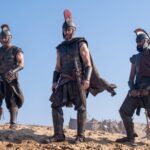
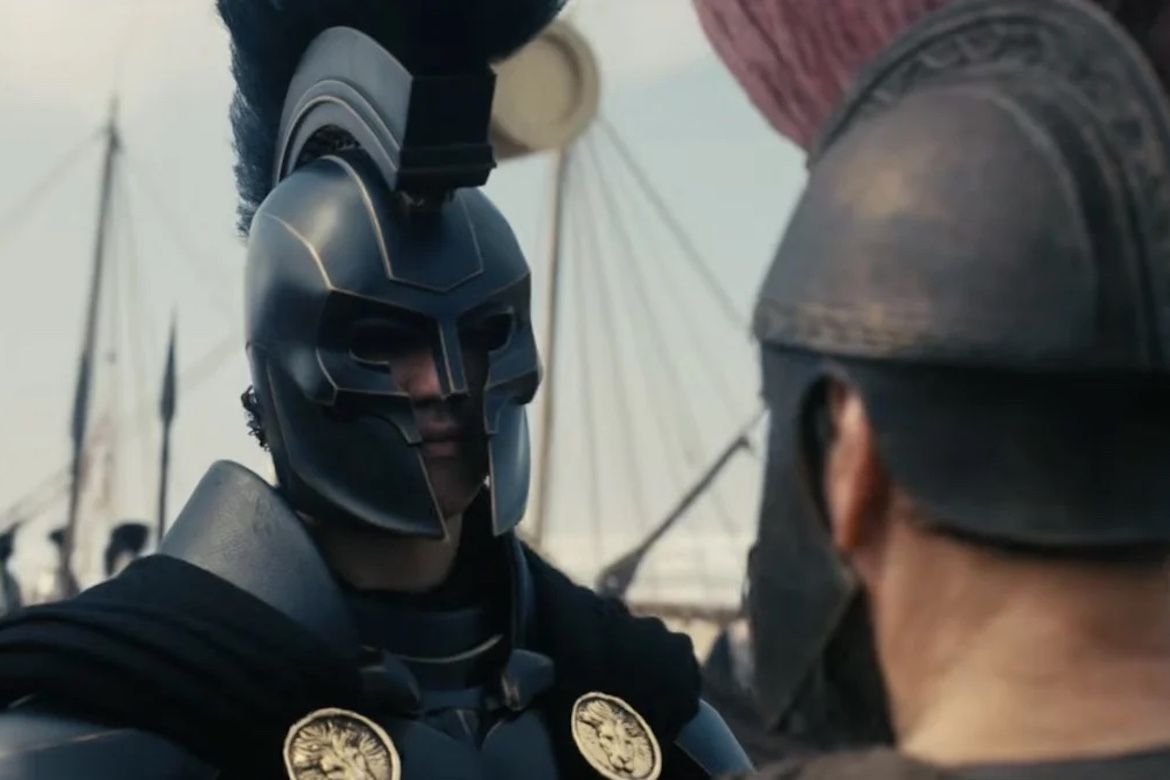
The film, scheduled for release on July 17, 2026, stars Matt Damon as Odysseus and features a sweeping ensemble cast that includes Anne Hathaway, Tom Holland, Zendaya, Robert Pattinson, Charlize Theron, Lupita Nyong’o and others.
But in his conversation with Colbert, Nolan did not speak about The Odyssey as merely a blockbuster filled with ships, monsters, battles and gods. He spoke about something much older and much more human.
“We have a horse. That much I can tell you,” Nolan joked when asked whether the Greek gods would appear in the film.
Then he began to reveal just enough.
“We have Odysseus, we have Telemachus, we have Penelope, we have this whole idea of what’s going on in Ithaca, and this hero trying to get back to his family,” he said. “Really, it’s a story about a family.”
That may be the most important thing Nolan said.
Because for all the thunder and shipwrecks, for all the divine interventions and mythic creatures, The Odyssey is, at its heart, the story of a man trying to get home.
Odysseus is not simply moving from one adventure to another. He is trying to return to Ithaca. To Penelope. To Telemachus. To the life that war interrupted and fate delayed. The ancient Greeks had a word for this: nostos. Homecoming. Return.
It is the force that drives the poem. It is also the idea that has kept The Odyssey alive across centuries, cultures and languages. Everyone, in some way, understands the longing for Ithaca. Not only as a place, but as a promise. A home. A memory. A self that may or may not still be waiting when the journey ends.
Nolan also offered a glimpse into how he is approaching the world of the ancient Greeks, especially the presence of the gods.
“This is a world where people saw gods in everything, everywhere,” he told Colbert. “So the thunder, the tides coming in, the wind blowing — that’s all evidence of divinity that they’re surrounded by.”
It was a smart answer, and probably a revealing one.
In Homer’s world, the gods are not decorative characters floating above the story. They are part of the weather. Part of the sea. Part of fear, luck, punishment, protection and desire. A storm is never just a storm. A stranger may not be just a stranger. A victory may not belong entirely to the victor.
That is the ancient Greek imagination at work: the human world and the divine world constantly brushing against each other.
Nolan seemed especially interested in that mindset — not simply showing audiences the gods, but placing them inside a world where the divine could be felt everywhere.
He also made a comparison that will land with anyone who has watched the modern superhero universe take over popular culture.
“The thing about Homer,” Nolan said, “it is the Marvel of its day.”
It is a bold comparison, but not an empty one.
Long before modern audiences filled theaters to watch superheroes wrestle with power, weakness, loyalty, rage and destiny, Homer was giving the world gods and mortals who behaved with all the grandeur and all the messiness of human beings.
Athena guides. Poseidon rages. Hermes moves between worlds. Circe enchants. Odysseus schemes, suffers, survives and keeps going.
The Greeks gave the world heroes who were never simple. Their greatness came with flaws. Their victories came with cost. Their journeys were never just physical. They were moral, spiritual and deeply human.
That may be why The Odyssey still feels alive. This may be why Homer’s stories remain relevant, thousands of years after they were first told.
It is not only an ancient Greek poem. It is one of the original templates for the stories we keep telling: the long road home, the family left behind, the son searching for the father, the wife holding a kingdom together, the man who must survive not only monsters, but himself.
And now Nolan, one of the most ambitious filmmakers of his generation, is taking on Homer not as a museum piece, but as living material.
The question is not only whether the gods will appear.
The real question is whether Nolan can make modern audiences feel what the ancient Greeks understood so instinctively: that the world is full of forces we cannot control, that home is never guaranteed, and that every journey changes the person who undertakes it.
For Greeks, and for anyone who has grown up with Homer somewhere in the background of their imagination, The Odyssey is not just another epic. It is part of the cultural bloodstream.
It gave us Ithaca. It gave us nostos. It gave us the wandering hero who reminds us that survival is not the same thing as arrival.
And if Nolan is right, it may have also given us the first superheroes. Not in capes, but in bronze and blood, guided by gods, battered by seas, haunted by memory, and always trying to find the way home.
Watch Nolan’s interview with Colbert: