

Today, the 12th of October, marks the anniversary of Athens’ liberation from Nazi German occupation during World War II.
After being defeated by Allied forces, Nazi soldiers took down their flag from the Acropolis and left the Greek capital to head north, in a hurried retreat.
But the liberation of Greece from the Axis powers did not bring immediate peace to the already war-ravaged country; instead, Greek resistance forces quickly began entering the city. Within weeks, their arrival would eventually culminate in violent clashes known as “Ta Dekemvriana,” meaning “December events,” which would leave 28 people dead and hundreds injured.
These events all preluded the 1946 outbreak of a three-year conflict between the Western-backed Greek government army and communist-backed Democratic Army of Greece, the military branch of the KKE communist party.
Greece’s civil war, “O Emfilios Polemos,” remains to this day one of the most divisive topics in modern Greek history and politics. The conflict also further destroyed an already devastated country reeling from Nazi occupation and accompanying war crimes.
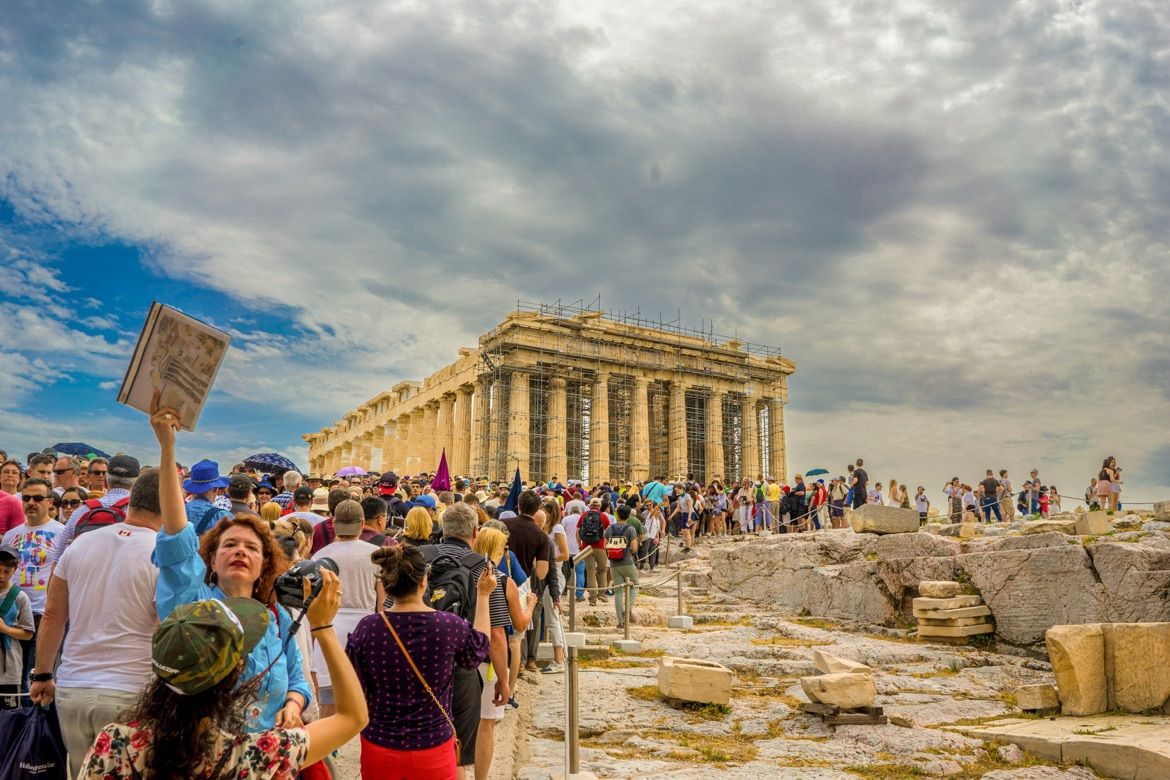
Each year, the City of Athens remembers Liberation Day with a special flag raising ceremony at the Acropolis in front of the Presidential Guards. A wreath laying ceremony also takes place at the Tomb of the Unknown Soldier in front of Greek Parliament.
Featured image: Athenians celebrating the liberation on Stadiou Street. Photo by Voula Papaioannou / Benaki Museum Photographic Archives