
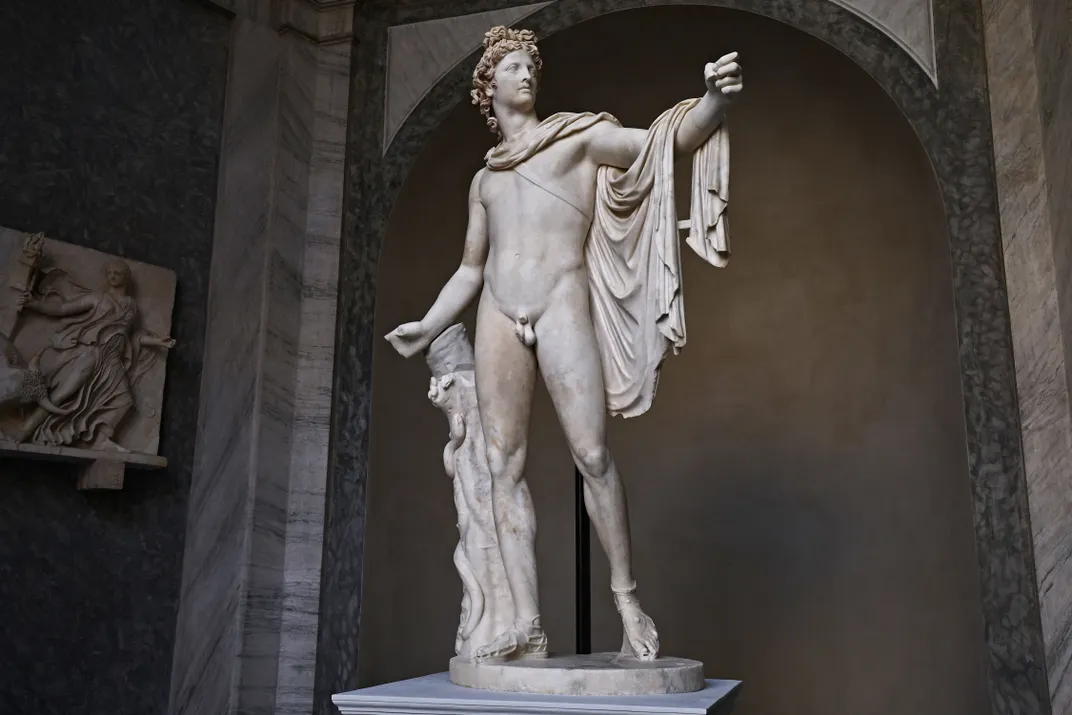
The Vatican’s iconic marble statue Apollo Belvedere, considered one of the finest representations of the Greek god Apollo, has returned to public display after a five-year restoration.
Originally discovered in 1489 amid the ruins of an ancient Roman home, the seven-foot statue of Apollo entered the Vatican’s collection in the early 1500s under Pope Julius II’s patronage. Experts believe it is a second-century A.D. Roman replica of a lost Greek bronze statue, likely created by the sculptor Leochares around 330 B.C. The sculpture depicts Apollo just after releasing an arrow, with his left hand originally holding a bow.
Restoration work began in 2019 after Vatican staff noticed fractures in the statue’s legs, but efforts were delayed due to the COVID-19 pandemic and lockdowns. With the restoration process underway, specialists used laser technology to clean the marble and installed a discreet carbon-fiber support pole along the statue’s back for added stability.
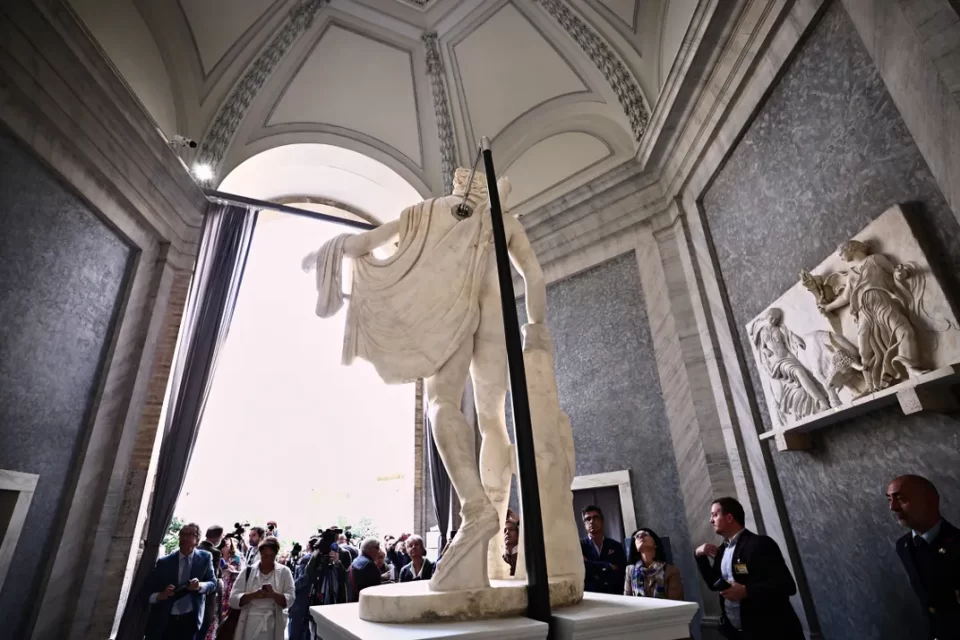
This restoration is not the first for Apollo Belvedere. In 1532, Giovanni Angelo Montorsoli, a student of Michelangelo, replaced both arms and added a section of a tree trunk behind Apollo. This addition provided one of the new hands with a resting position and enhanced the statue’s structural stability.
On October 15, the Vatican Museums unveiled the restored Apollo Belvedere to the public, reinstating it as a centerpiece of their renowned collection.