
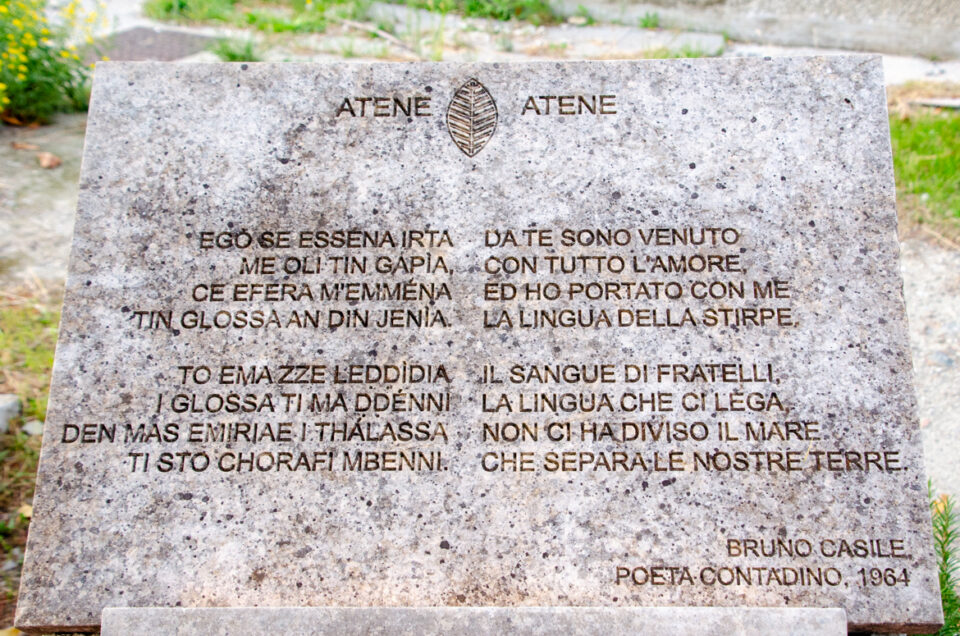
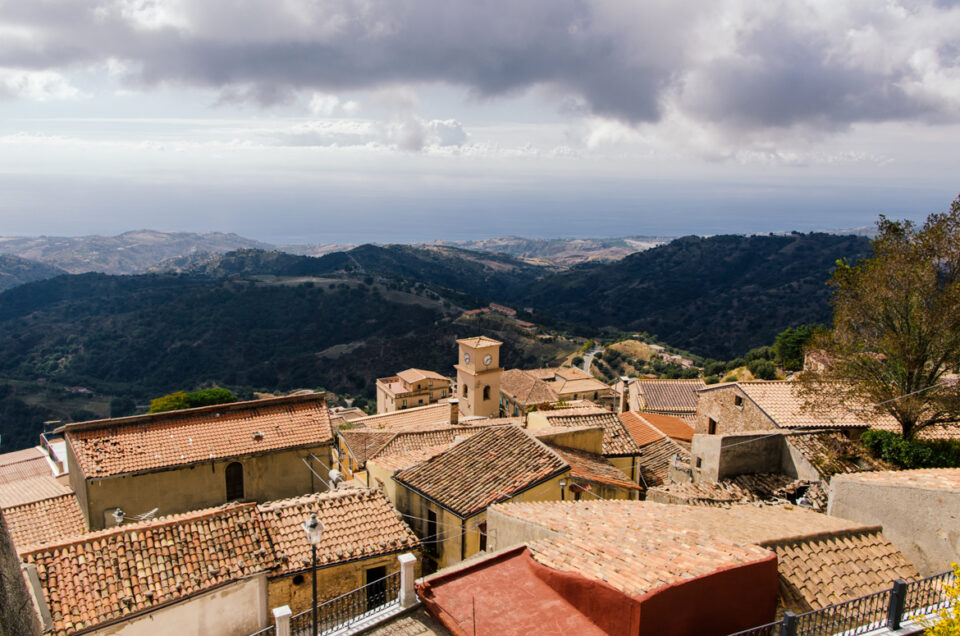
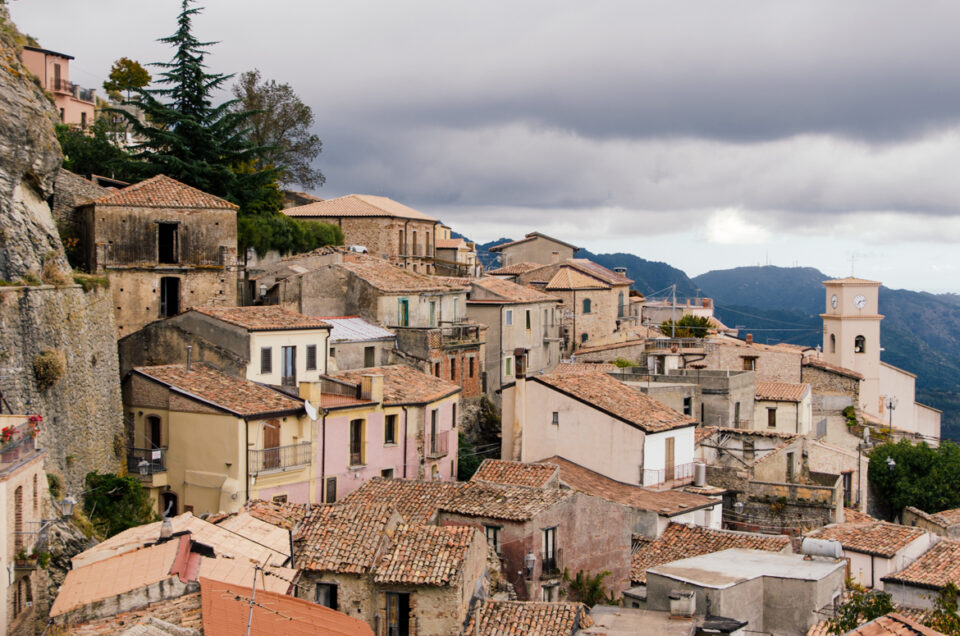
Hidden in the Aspromonte mountains of Calabria, in southern Italy, lies an enclave that would be strangely familiar to any visitor with a Hellenic heritage. The area, historically known as Magna Graecia (Greater Greece), hosts a distinct community that still speaks Grecanico—a dialect with roots tracing back to ancient Greek colonization and the Byzantine era. However, this living testament of a shared Greek heritage is at risk of disappearing, and so is the language which is listed as severely endangered by UNESCO. Fighting to preserve and revitalize the Grecanico culture is a dedicated development agency, the GAL Area Grecanica (Gruppo di Azione Locale).
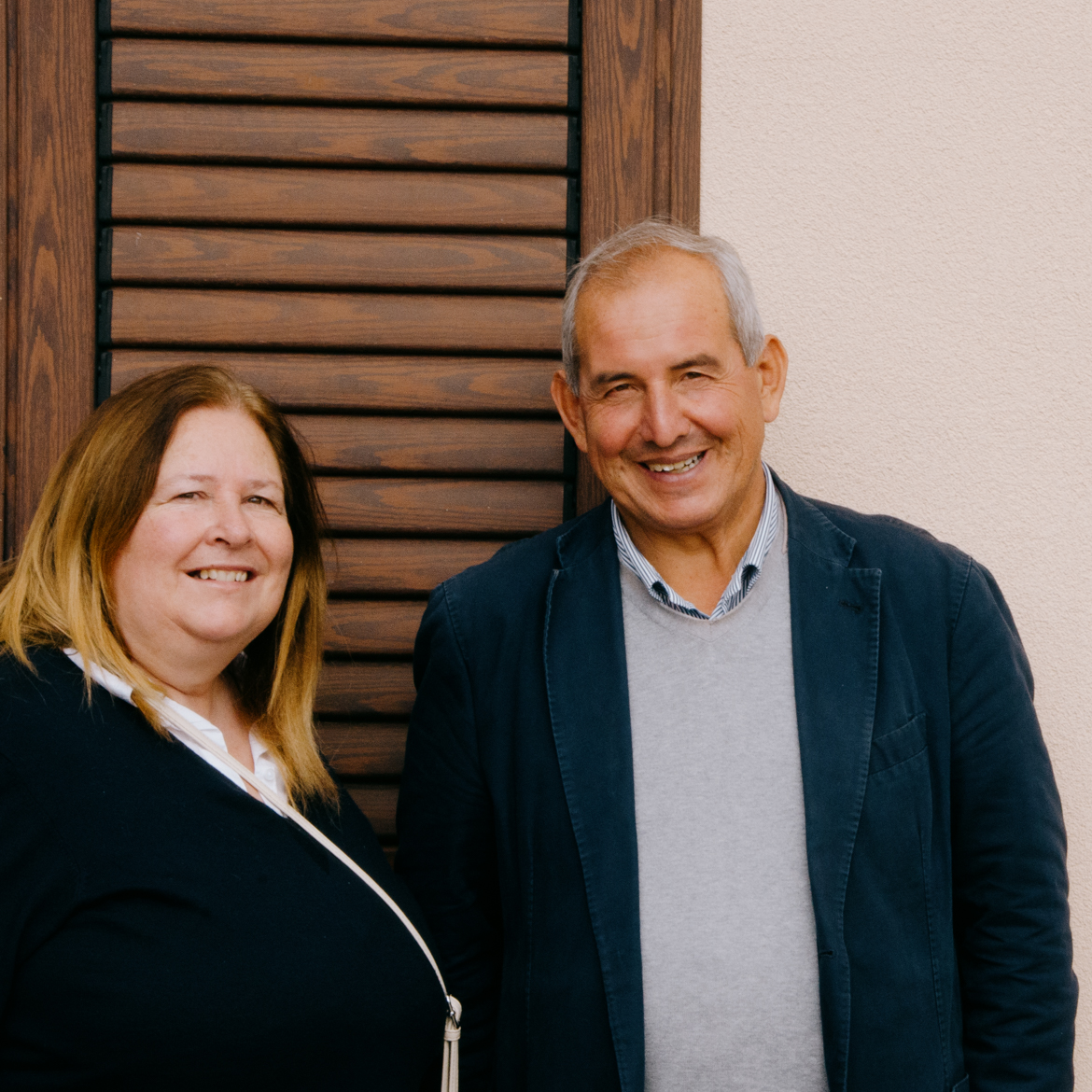
In this special feature interview, the Pappas Post traveled to Bova (the Chora), the cultural capital of Greek Calabria, to meet with Leo Giovanni Andrea Casile, Director of the GAL Area Grecanica and former Mayor of Bova, alongside his colleague Alessandra Ghibaudi, Development Agent, to discuss what it means to be Grecanico and strategies to keep this unique culture alive so it remains viable for generations to come.
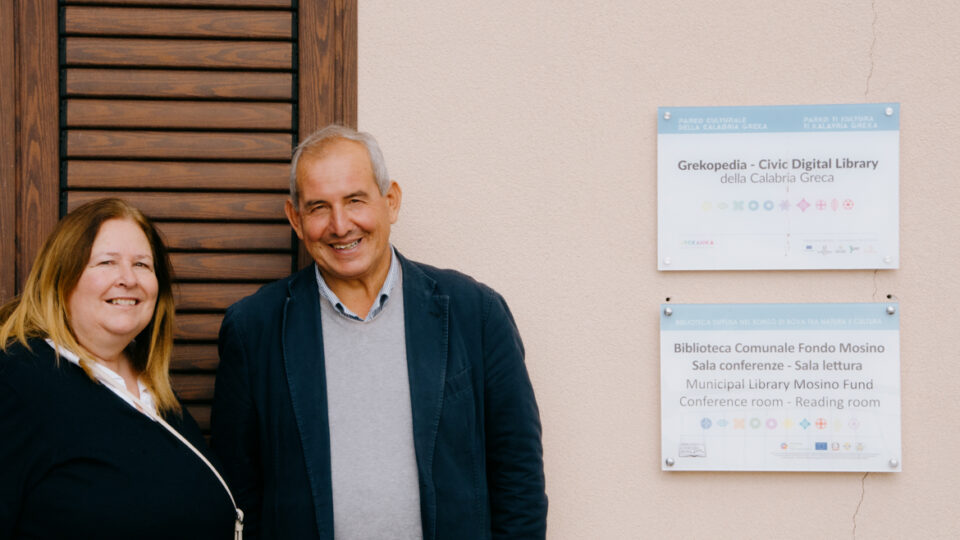
What motivated you to take on a leadership role as Director of the Grecanica community (GAL)?
Leo Giovanni Andrea Casile, the Director of the GAL Area Grecanica (Andrea): It wasn’t a role I simply decided to take; rather, it was the result of a journey working within the area, including having served as the Mayor of Bova. Over the years, the work I did with the community led the Board of Directors—who manage the GAL (Local Action Group/Development Agency)—to identify me for this position. It wasn’t a choice I made alone; it was conferred upon me based on the work I had already done and continue to do. This role has given me the responsibility to continue working for the development of this area, starting with the valorisation of the culture of the Greeks of Calabria and continuing through various projects we develop here.
What does it mean to you personally to be Grecanico?
Andrea: For us, being Greeks of Calabria signifies our history: our past, where we came from, how we are living in the present, and how we will live in the future. The Grecanico identity is something natural to us; it is like the air we breathe. The culture of the Greeks of Calabria is our oxygen. We feel part of this history and do not want to lose it. In Bova, everything draws from Greek—small signs, words, food, music, traditions, and religion. We breathe with two lungs: the Western lung and the Eastern (Byzantine) lung. It is essential for life; without this identity, life would not be the same.
What makes Bova unique among Calabrian towns?
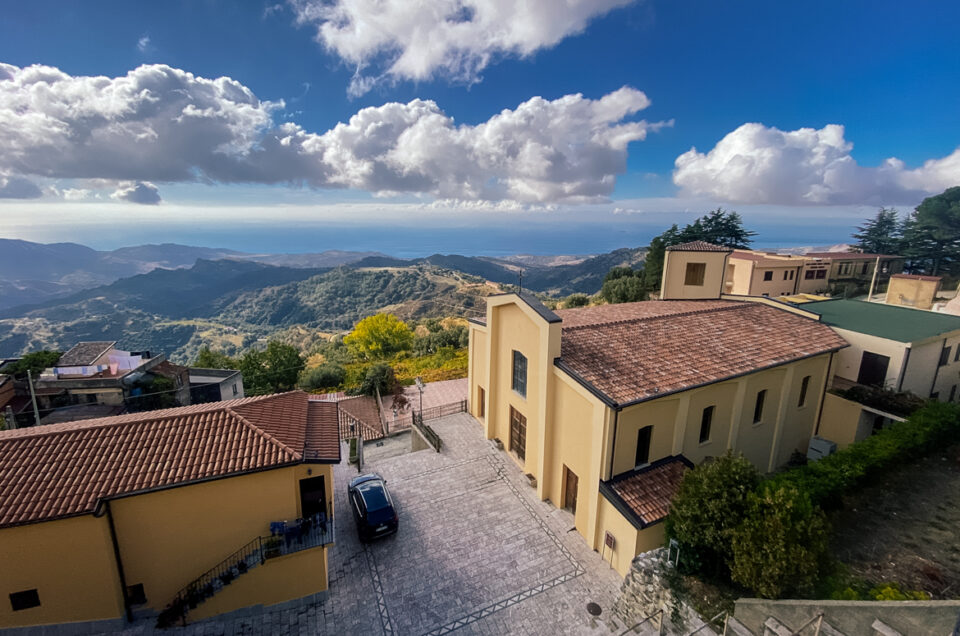
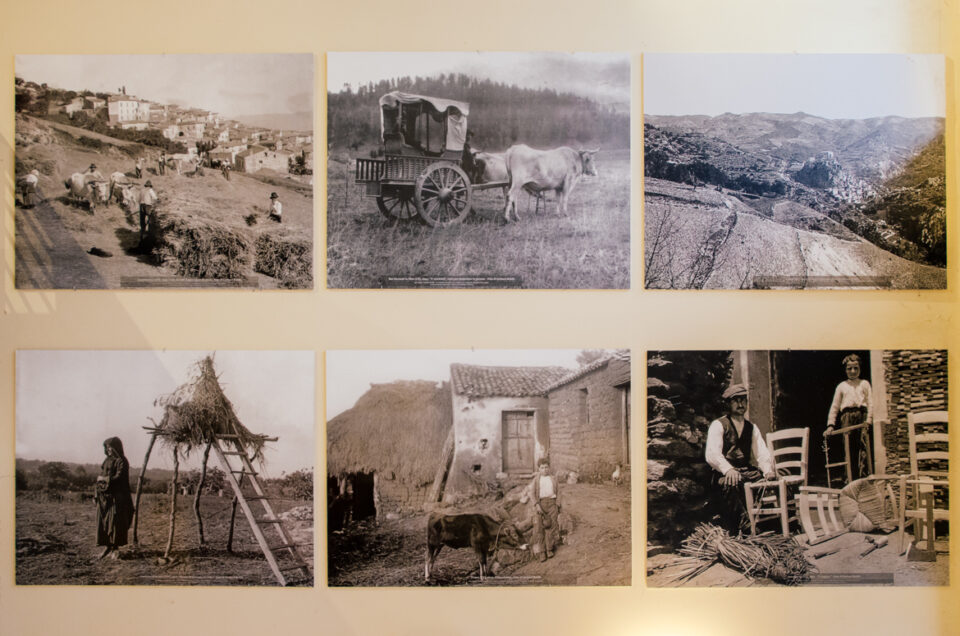
Andrea: Bova possesses an environmental context of absolute value and very important cultural assets. What makes it unique is its 3,000-year history. The name “Vua” means “Land of Oxen” because the first settlers 3,000 years ago were shepherds with oxen. Over time, we have had the presence of many cultures: Normans, Byzantines, Spanish, French, Romans, and of course the Magna Graecia, each who have all left their mark.
Bova was very important as one of the first Catholic dioceses. It was unique because it celebrated the Byzantine rite while remaining under the Pope of Rome. And even as the church became Latinized, people continued to speak and think in Greek for a long time.
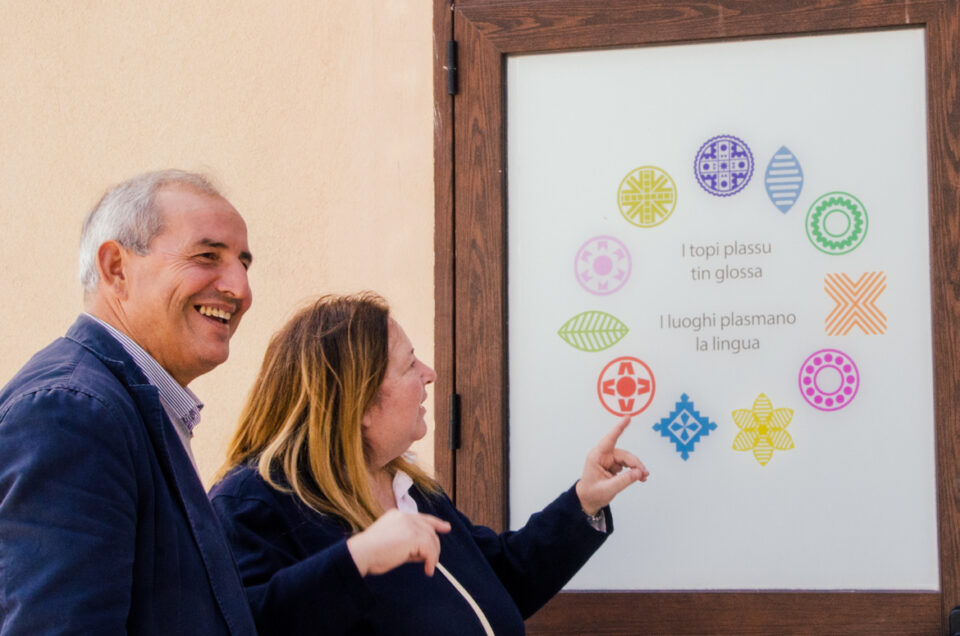
What efforts are being made to preserve Grecanica culture in Bova, and how do you use technology to preserve it?
Alessandra Ghibaudi, Agent of Development (Alessandra): The most important thing for preserving the language is the people. If you don’t have people, you don’t have a language; a place doesn’t speak to you. Our primary effort has been to improve services and living conditions in Bova to give people opportunities to stay. This includes improving tourism—encouraging private individuals to create small enterprises like B&Bs or restaurants for cultural tourists.
Regarding technology, we are a very small minority compared to the French or German speakers in Northern Italy, so we lack the political weight to demand television or radio in our language. However, associations like “Jalo tu Vua” utilize Facebook, Instagram, and WhatsApp to communicate in the language. For children, rather than high-tech solutions, we use “ludolinguistics”—learning through play.
How do you make young people interested in the Grecanico culture?
Alessandra: Music is very important. Young people have the music inside them; they learn instruments like the organetto by listening rather than reading notes, and they know the traditional Tarantella dance. We also take them into nature to learn the names of animals, wild herbs, and trees in our language. It is about making the culture an experience—making food, going on excursions—rather than just a subject of study.
How have the town administrators approached the physical and architectural development of Bova?
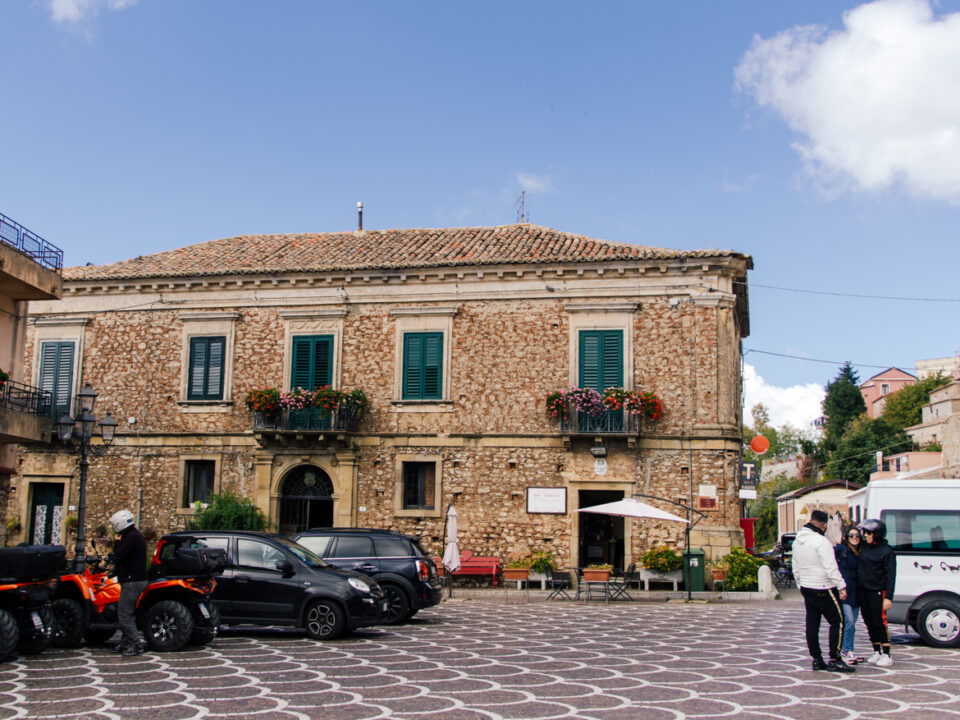
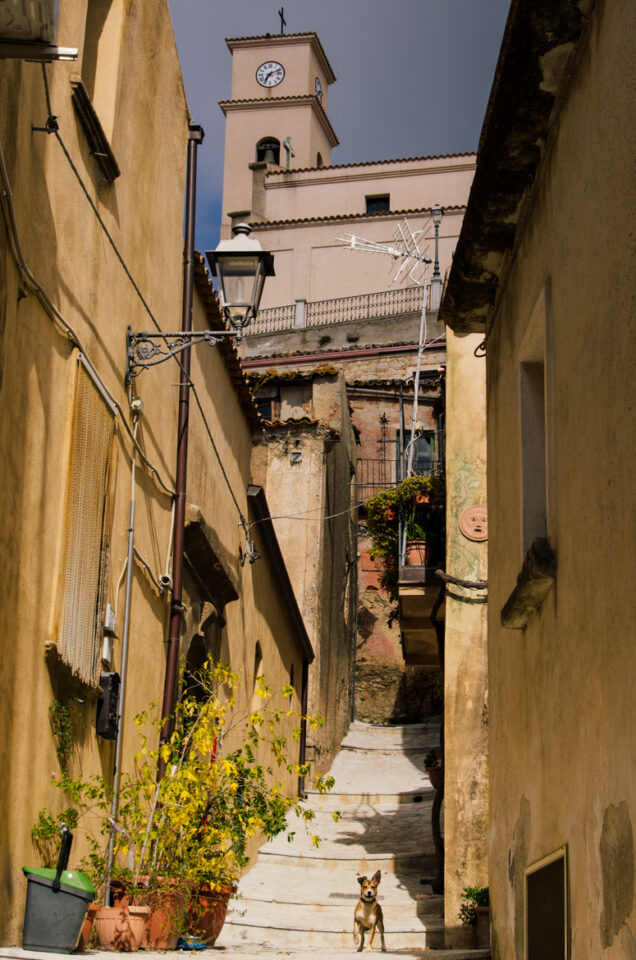
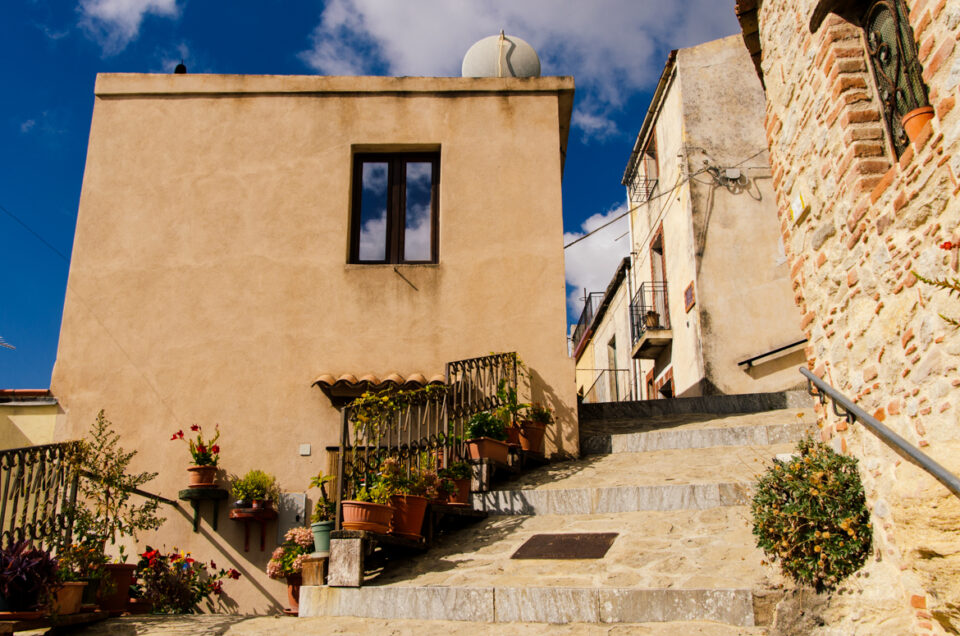
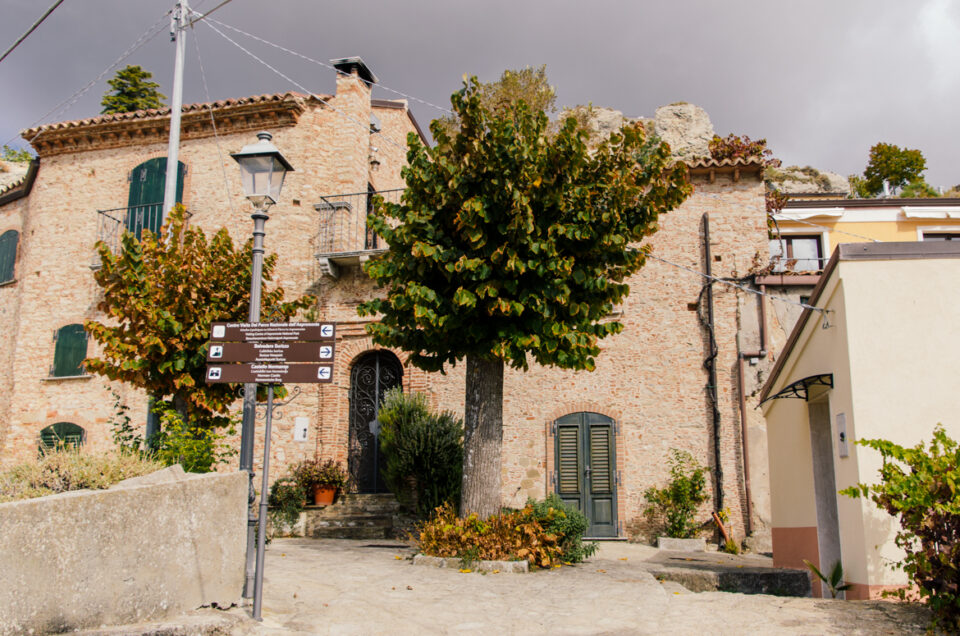
Andrea: Everyone who has administered this community has always worked to maintain our traditions, and preserving the “urban fabric” (tessuto urbano) of our region. We have not modified the original conformation of the village, because that architectural integrity is important.
Alessandra: When we renovate, we do not change the identity. For example, we renovate a house to look as it did in the past; it is impossible to build “new” here. We focus on conservative action so that when people come, they see a real, old village, not a different place with new squares or modern houses.
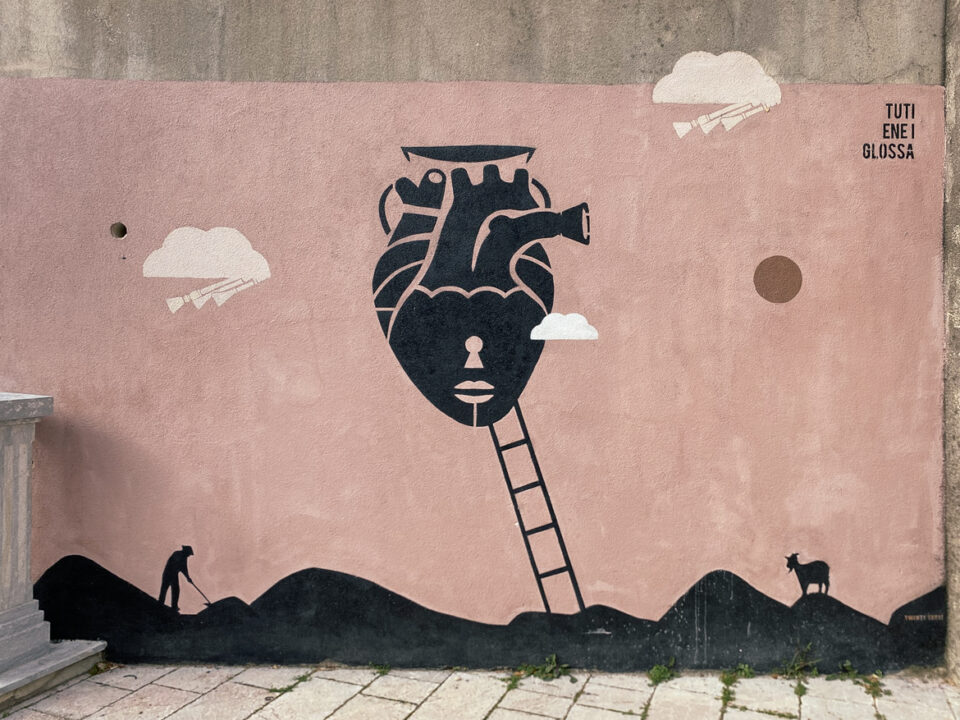
Created by Cypriot street artist Twentythree in 2017
You mentioned the switch from the Byzantine to the Latin rite. Did this change in the church immediately stop the people from speaking Greek?
Alessandra: No. Even after the “anathema” (the change), the people did not change immediately, and the church did not ask them to change their daily lives. However, the church began to teach and pray in Latin. Because of this, over time, the people “forgot.” their Greek. But for many years, even while the church was formally Latin, the people continued to speak and—more importantly—think in Greek…
Alessandra: We want this land to become better. We have taken actions on language and identity because if you have a good identity—if you know your identity—you can do many things. The GAL also creates projects for social and rural development, working to generate income for farms, because the Grecanica area has a strong rural connection, and therefore the land and nature are important resources for communities.
Note: The GAL (Gruppo di Azione Locale) is a development agency. The focus of the GAL Area Grecanica is on preserving their language and identity, while also advancing the region’s sustainable development across its economic, social and cultural dimensions, including through the promotion of experiential tourism.
Linda Tom also contributed to this article.