
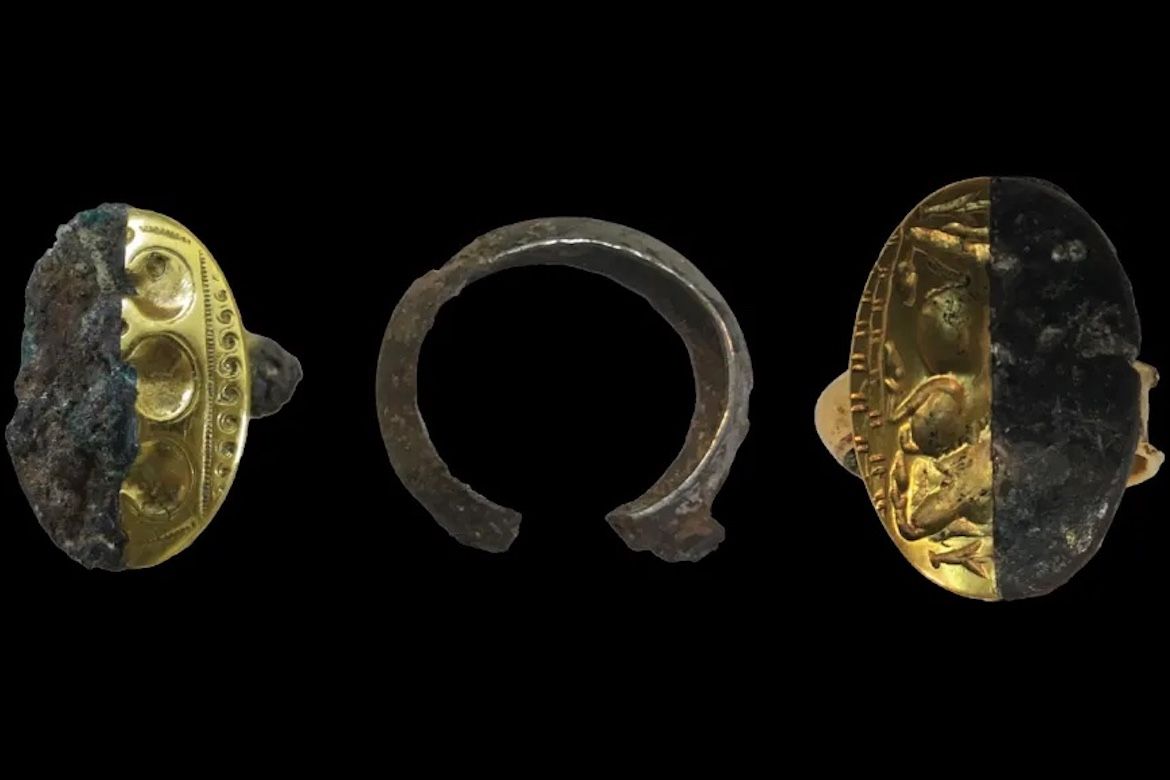
More than 3,000 years ago, some of the most prized jewelry in the Aegean may have been fashioned from a material no mine could produce: iron that had fallen to Earth in meteorites.
A new study of Bronze Age iron objects from Greece and Crete has identified a group of rings believed to have been made with meteoritic iron, suggesting that the rare metal was used by members of the Minoan and Mycenaean elite as a symbol of status and power.
The research, published in the Journal of Archaeological Science under the title Iron in Greece in the Second Millennium B.C.E., was conducted by Matthieu Gounelle of France’s Muséum national d’Histoire naturelle and Eleni Mantzourani, a prehistoric archaeologist at the University of Athens.
The researchers examined 91 iron objects dating from approximately 1800 to 1000 B.C. and originating from 33 archaeological sites across Crete, the Peloponnese, the Aegean islands and mainland Greece.
Using portable X-ray fluorescence technology, which allowed the artifacts to be analyzed without damaging them, the researchers measured their chemical composition.
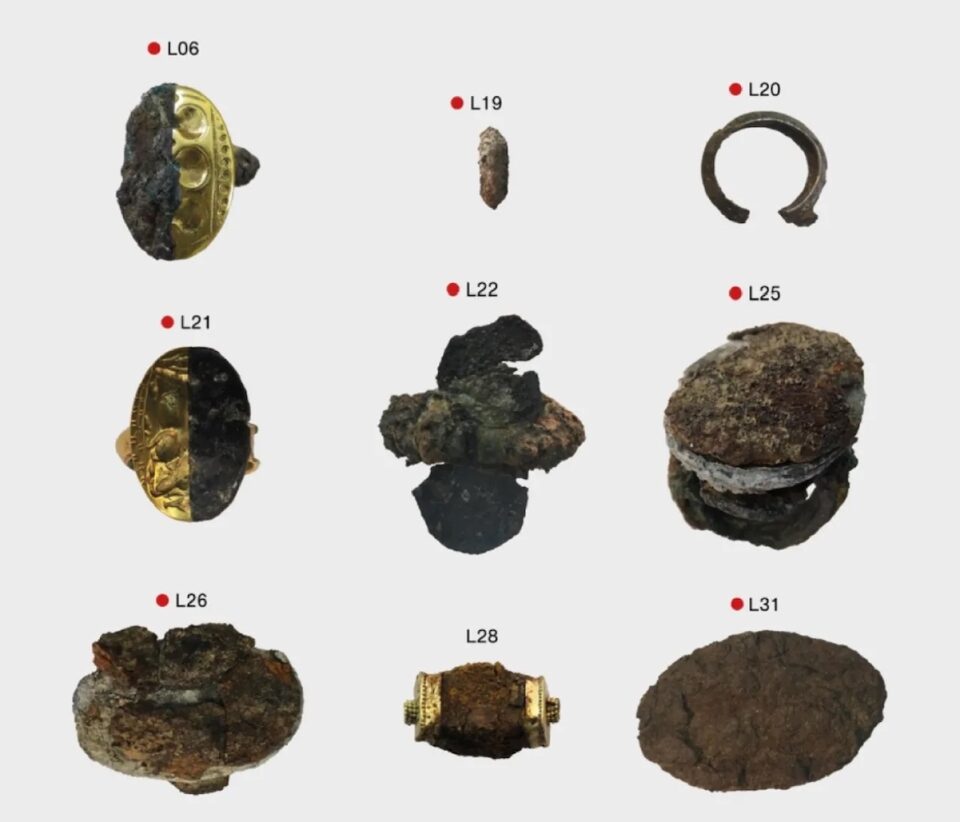
Thirteen of the objects contained significant quantities of nickel — one of the principal indicators scientists use to distinguish meteoritic iron from iron produced from terrestrial ores. Researchers concluded that ten were very likely made from meteoritic iron, while three require additional analysis.
What makes the finding particularly striking is the type of objects involved.
They were rings or parts of rings.
Many came from richly furnished Minoan and Mycenaean burials and were associated with gold, silver, bronze and other valuable objects. Some were elaborate signet rings, while others appear originally to have incorporated engraved plates or additional precious-metal elements.
Examples were found in prominent archaeological contexts including Mycenae, Vapheio and Kakovatos. Another ring, from the Minoan site of Anemospilia on Crete, was discovered on the finger of a man whom excavators have interpreted as a high-ranking priest.
The pattern led the researchers to suggest that meteoritic iron had a very different meaning from ordinary iron.
During much of the Bronze Age, the technology required to extract usable iron from terrestrial ores was either unknown or only beginning to emerge in the Aegean. Meteorites, however, occasionally delivered metallic iron directly to the surface of the Earth.
That made the material extraordinarily rare.
Meteorite iron had already been identified in ancient objects elsewhere in the Mediterranean and Near East. Perhaps the most famous example is the iron dagger buried with the Egyptian pharaoh Tutankhamun, which modern analysis determined was made from meteoritic material.
Until now, however, researchers had not clearly demonstrated comparable use of meteoritic iron among the Bronze Age cultures of Greece.
The new findings suggest that Minoan and Mycenaean craftsmen were not simply experimenting with whatever iron happened to be available. Meteoritic iron appears to have been deliberately reserved for particularly elaborate personal objects associated with people of high status.
Where the meteorites themselves came from remains an open question.
Gounelle and Mantzourani suggest that Egypt is one possibility. Iron meteorites are rarely preserved in Greece, where moisture and other environmental conditions contribute to their deterioration, while the dry deserts of Egypt provide far better conditions for their survival and discovery.
The Minoan and Mycenaean worlds were also connected to Egypt and the eastern Mediterranean through extensive Bronze Age trading networks.
There is, however, no direct evidence yet establishing Egypt as the source of the metal.
The researchers also uncovered another intriguing pattern.
The apparent fashion for meteorite rings seems to disappear around the end of the 13th century B.C. Later rings examined by the team did not contain the elevated nickel levels associated with meteoritic iron.
The change roughly coincides with the collapse of the Mycenaean palace system around 1200 B.C., disruptions to Mediterranean trade networks and the gradual expansion of iron-smelting technology.
The researchers suggest several possibilities. Access to meteoritic iron may have diminished as trading systems changed. The increasing availability of smelted iron may also have altered how the metal was valued.
Or, as Gounelle has suggested, the rings may simply have fallen out of fashion.
Whatever the reason, the findings add an unexpected material to the familiar picture of Bronze Age Aegean wealth.
Alongside gold vessels, engraved seals and elaborate jewelry, some members of the Minoan and Mycenaean elite appear to have possessed something even rarer: jewelry fashioned from metal that had quite literally fallen from the sky.