
Originally inaugurated in 2001 ahead of the country’s hosting of the 2004 Olympic Games, Athens International Airport has outgrown its current capabilities as a global hub and is about to embark on its next chapter.
An international team of architects, engineers and designers called the Anemos consortium is comprised of Grimshaw, Haptic, Athens-based K-Studio, Arup, Leslie Jones, Triagonal and Plan A.
The project will increase the capacity of the airport from 26 to 40 million passengers by 2032 and will be completed through a phased program, delivered within a live operational airport environment.
Originally designed and constructed by Hochtief and completed in 2001 ready for the Athens 2004 Summer Olympics, Athens International Airport is the largest airport in Greece, located 20 kilometres from the city center.
The expansion project considers the current architectural context of the airport proposing, within the masterplan brief, extensions and alterations to the main terminal building (MTB) and satellite terminal building (STB).
The scope of the project also includes landside and airside updates, aircraft stands, gate seating and commercial areas. The new design elements will reflect the city that the airport serves, according to a statement by Grisham.
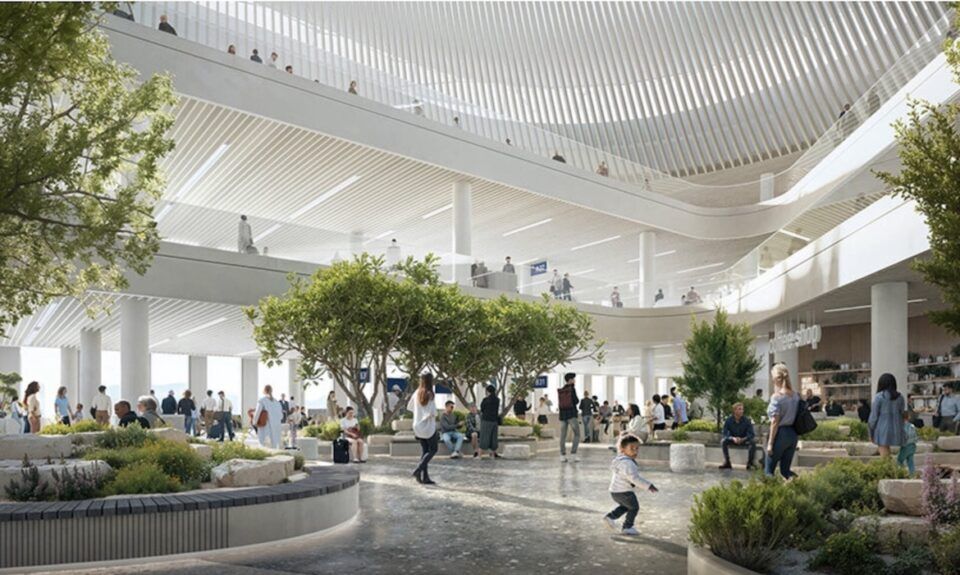
“Unifying the existing airport with the new elements is central to the design concept: an airport that reflects the past, present and future of the city. This is guided and informed by a response to the spirit of Athenian life, the architecture and materiality of Athens, and the celebration of a city that is ingrained with layers of time.”
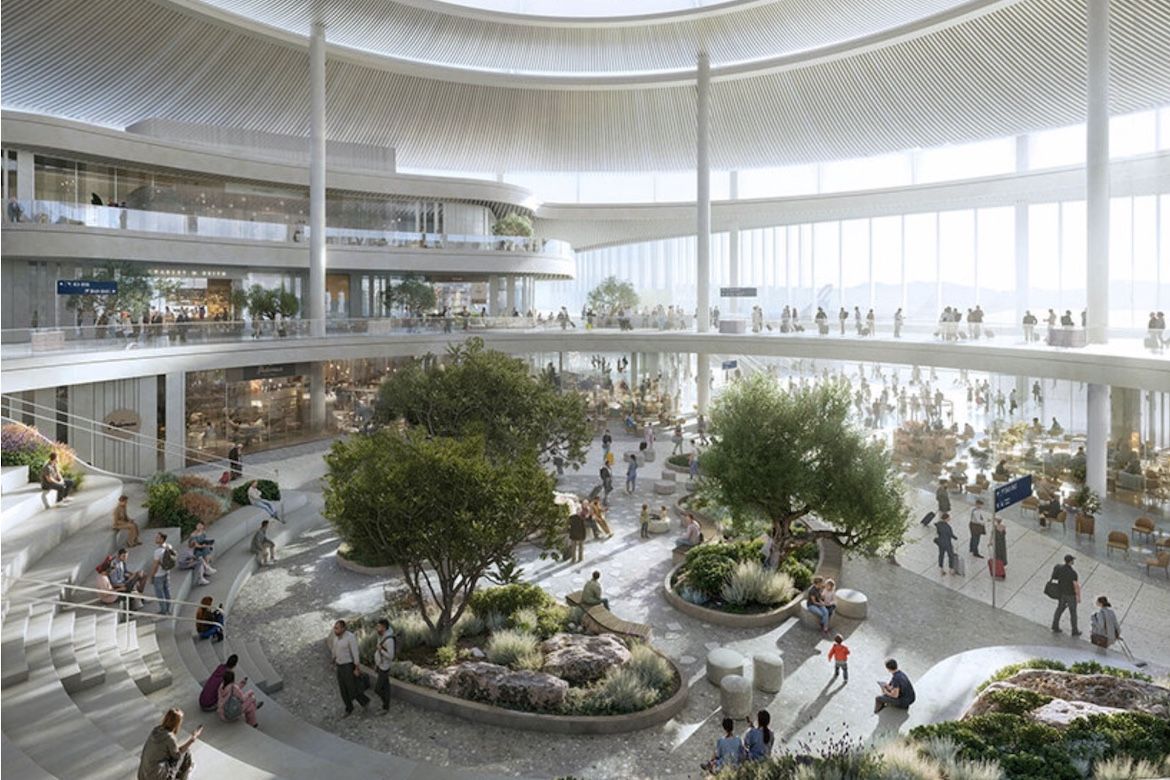
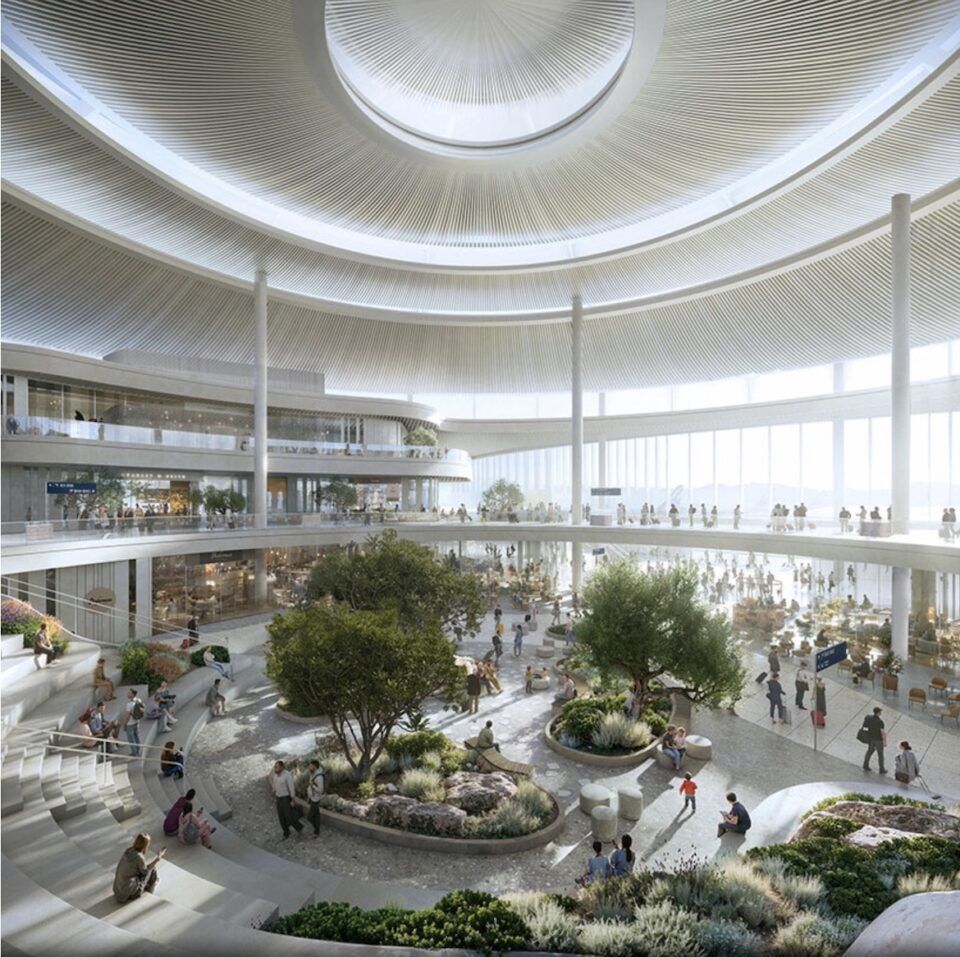
Part of the new design are two oculus destination points.
The north oculus is the primary space, a rich landscaped Mediterranean garden set in a 24.5-metre-high circular, tiered space — a volume that at once impresses and grounds the experience of the terminal and the city beyond. Entering the northern oculus from airside at ground level passengers experience a microcosm of the city life – the hospitality of Athens.
The south oculus is another dwell area where three terraced levels are arranged around an atrium space with generous seating and extensive landscaping alongside smaller F&B units to create a unique and memorable experience. Again, through a lifted soffit, daylight is diffused across the space providing long views across the terminal and navigation towards the departure gates.
The project is budgeted at €650 million.
Meet the consortium:
Architect: Grimshaw →, Haptic → and K-Studio →
Engineer: Arup →
Retail design consultant: Leslie Jones →
Wayfinding: Triagonal →
Design Management : Plan A →